Tavus Griffin AI Fooled 48% in Video Call Test — SkimNews
Get the Tech newsletter
Daily tech — startups, AI labs, chips, the launches that shape the next decade. Free.
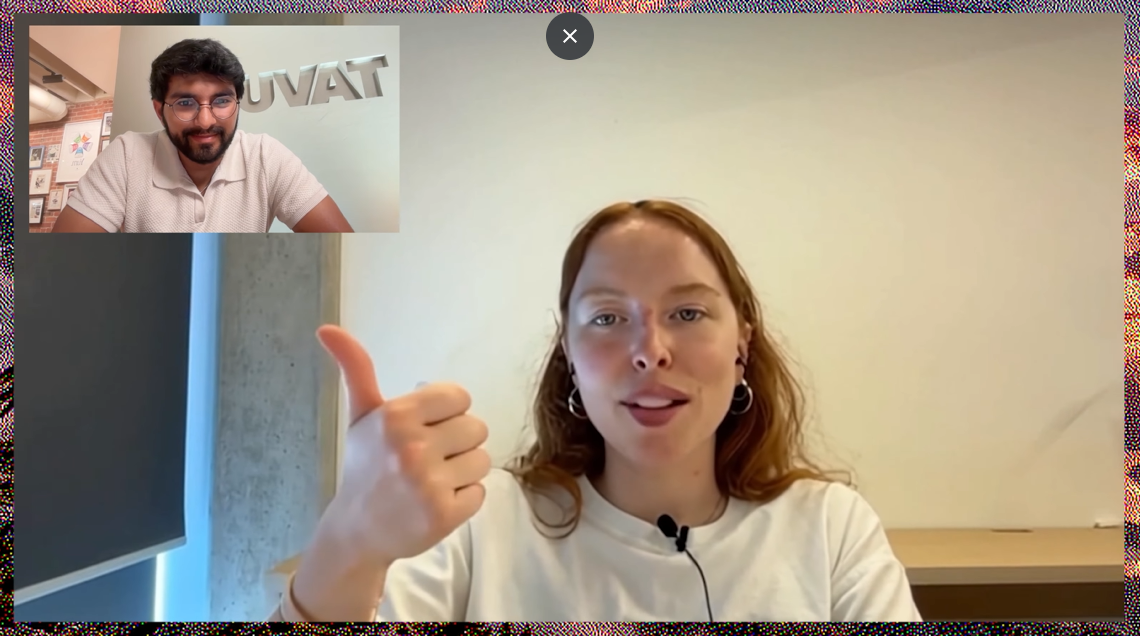
- Tavus unveiled Griffin on October 1, calling it the first 'Human Interaction Model' — 26 of 54 participants (48%) believed Griffin-Lite was a real person after a one-minute video call, versus 1 of 41 (2.4%) for its previous system.
- Griffin-Lite ranked first on Nvidia's VideoFDB benchmark, scoring 3.83 out of 5 on the generation track against 2.80 for the next-best system; the human reference scored 3.92, and Tavus says Nvidia ran the evaluation independently.
- The test was not a classic Turing test — participants were only told they'd be matched with another person and asked afterward whether it had crossed their mind their partner might not be real.
- Tavus acknowledged the results come from its own research page, and a community note on X flagged that they are not independently verified and do not follow a standard protocol.
- Griffin is full-duplex and runs on Nvidia H100 chips, averaging 0.43 seconds of audio-to-video delay, but is currently limited to select trusted testers as a research preview while Tavus works on disclosure features with AI safety organizations.
- Tavus raised a $40 million Series B in November 2025 led by CRV; the system that scored 2.4% had stitched together three separate models for visuals, dialogue and perception.
- The piece situates Griffin alongside active fraud risk, citing January attacks by BlueNoroff (a Lazarus Group subsidiary) using deepfakes on Zoom and Teams, and a 2025 Kraken case where a suspected North Korean applicant was flagged after spontaneous questions.
Why it matters: Griffin's 48% pass rate is striking but the test design softens it: nobody was told an AI could be on the call, and a community note has already flagged the results as unverified self-reported data. The material consequence is that real-time video-call impersonation is crossing from research demo toward a fraud frontier North Korea-linked BlueNoroff already exploited on Zoom and Teams this January.
Ask SkimNews