BRICS Calls 'Maximum Restraint' in Mideast Declaration — SkimNews

Get the Geopolitics newsletter
Daily geopolitics — wars, elections, sanctions, the diplomatic moves that move markets. Free.
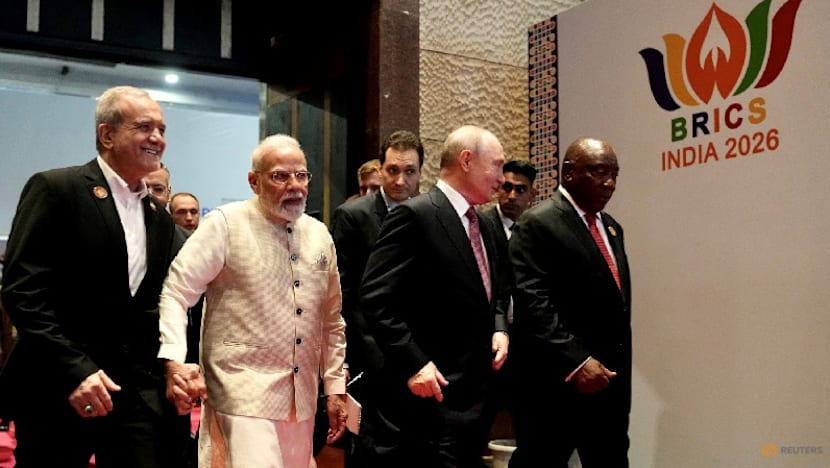
- BRICS adopted the Delhi Declaration unanimously on day one of its New Delhi summit, Indian PM Narendra Modi announced, after six months of failing to issue a joint statement during the Iran war.
- The declaration calls for 'maximum restraint' in the Middle East/West Asia and condemns unilateral wars without naming any country — a compromise text for the bloc whose members include Iran, the UAE and Saudi Arabia, with Iran having attacked the latter two as US proxies.
- Chinese President Xi Jinping told the summit the Middle East war 'does not serve the common interests of the international community,' per Xinhua, while Iranian President Masoud Pezeshkian warned Modi that Iran faces 'critical, dangerous' US economic pressure.
- Modi used bilateral meetings to again urge Putin to end the Ukraine war and to press Pezeshkian on protecting maritime trade, while the bloc urged reform of the UN Security Council.
- Abu Dhabi Crown Prince Sheikh Khaled bin Mohamed met Modi at Hyderabad House, where the two leaders welcomed UAE-based IHC's $11.5 billion integrated greenfield aluminium project in Odisha — billed as India's largest such investment.
- BRICS economist Anuradha Chenoy of JNU told DW the de-dollarization narrative is overstated; member states are pragmatically settling more bilateral trade in local currencies rather than running a coordinated campaign against the US dollar.
- The BRICS bloc now numbers 11 members representing roughly half the world's population and about 40% of global economic output measured by purchasing power.
Why it matters: BRICS's first joint statement since the Iran war began gives India, as summit chair, a tangible diplomatic win — but the unnamed-country compromise exposes the bloc's deep divisions, with Iran, the UAE and Saudi Arabia on opposing sides of an active war. The declaration's emphasis on UN Security Council reform and protecting maritime trade signals an institutional challenge to Western-led order that now carries the weight of 40% of global GDP.
Ask SkimNews