Indonesia's Chinese Fighter Bid Tests ASEAN Trust — SkimNews
Get the Geopolitics newsletter
Daily geopolitics — wars, elections, sanctions, the diplomatic moves that move markets. Free.
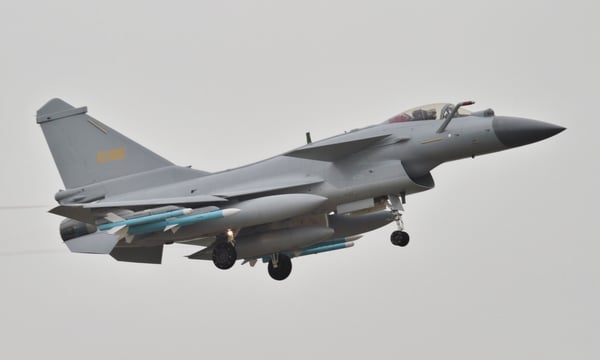
- Indonesia announced plans in October 2025 to acquire at least 42 Chinese-made J-10C fighters and was reported in advanced talks with Pakistan for 40+ JF-17 jets, a Pakistan-China joint platform.
- Jakarta's proposed F-15EX program with Boeing has fallen away, while the country continues receiving French Rafales and has agreed to acquire Turkish KAAN fighters over the longer term.
- Indonesia joined BRICS in 2025, participated in U.S.-led Talisman Sabre and Super Garuda Shield exercises, and is joining Australia's Pitch Black 2026 alongside the U.S., Japan, France, the Philippines, and South Korea.
- In April 2025, China launched a new "2+2" foreign and defense ministerial dialogue with Indonesia—a mechanism Beijing described as the first such format it has created with any nation.
- The article warns that Western allies may become less willing to share electronic signatures, mission data, or communications equipment with Indonesia if Jakarta operates Chinese aircraft in joint exercises.
- The Philippines, Vietnam, and Malaysia would each interpret an Indonesian Chinese purchase differently—Manila questioning crisis reliability, Hanoi offering a subtler critique, and Kuala Lumpur responding mildly, though all face a gradual erosion of confidence in Jakarta as a security partner.
- Finland during the Cold War is cited as the only similar example, but Helsinki eventually consolidated its principal fighter fleet around a single Western platform after the Cold War ended.
Why it matters: An Indonesian air force stocked with fighters from six suppliers—American, French, Russian, Korean, Chinese, and Turkish—would dilute economies of scale, force Jakarta to compartmentalize classified Western systems from Chinese platforms, and leave ASEAN partners uncertain whether Indonesia would back them in a South China Sea crisis.
Ask SkimNews