Inside Miami and Indiana's One-Year Transfer QB Pipeline — SkimNews

Get the Sports newsletter
Daily sports — scores, transfers, the storylines from the leagues you actually follow. Free.
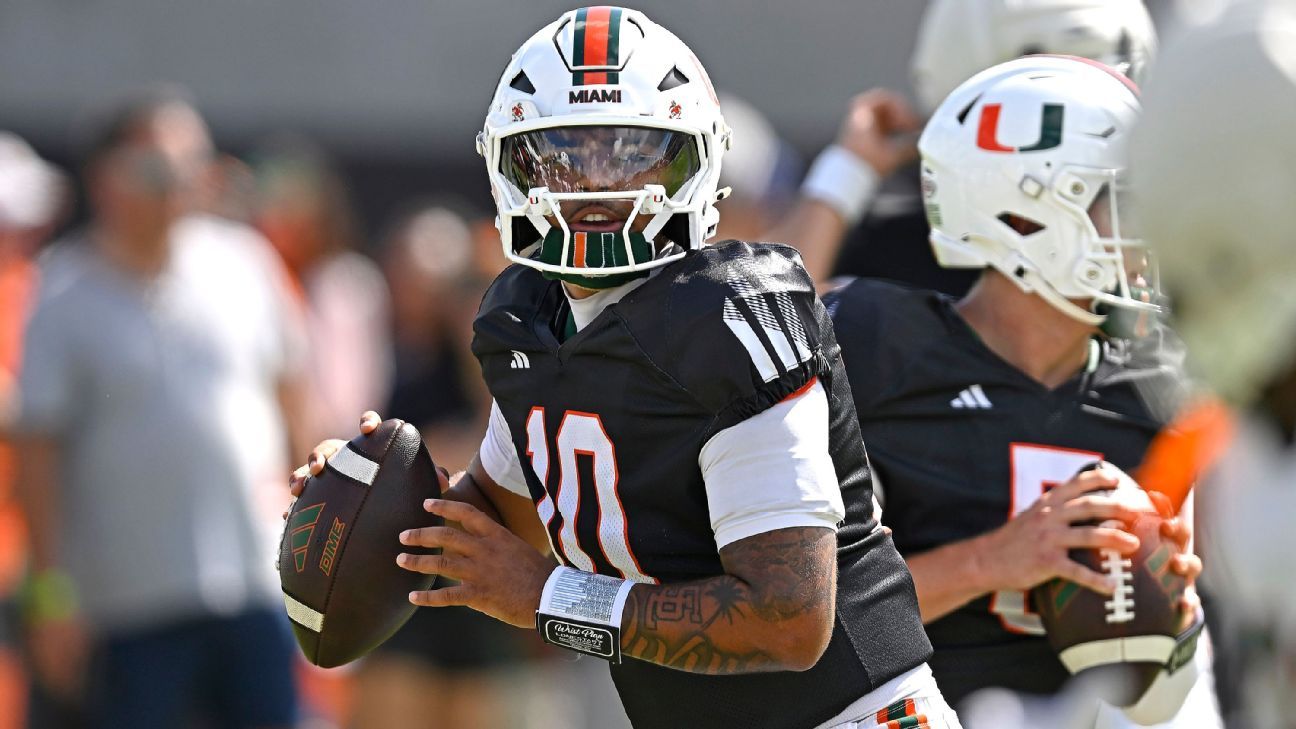
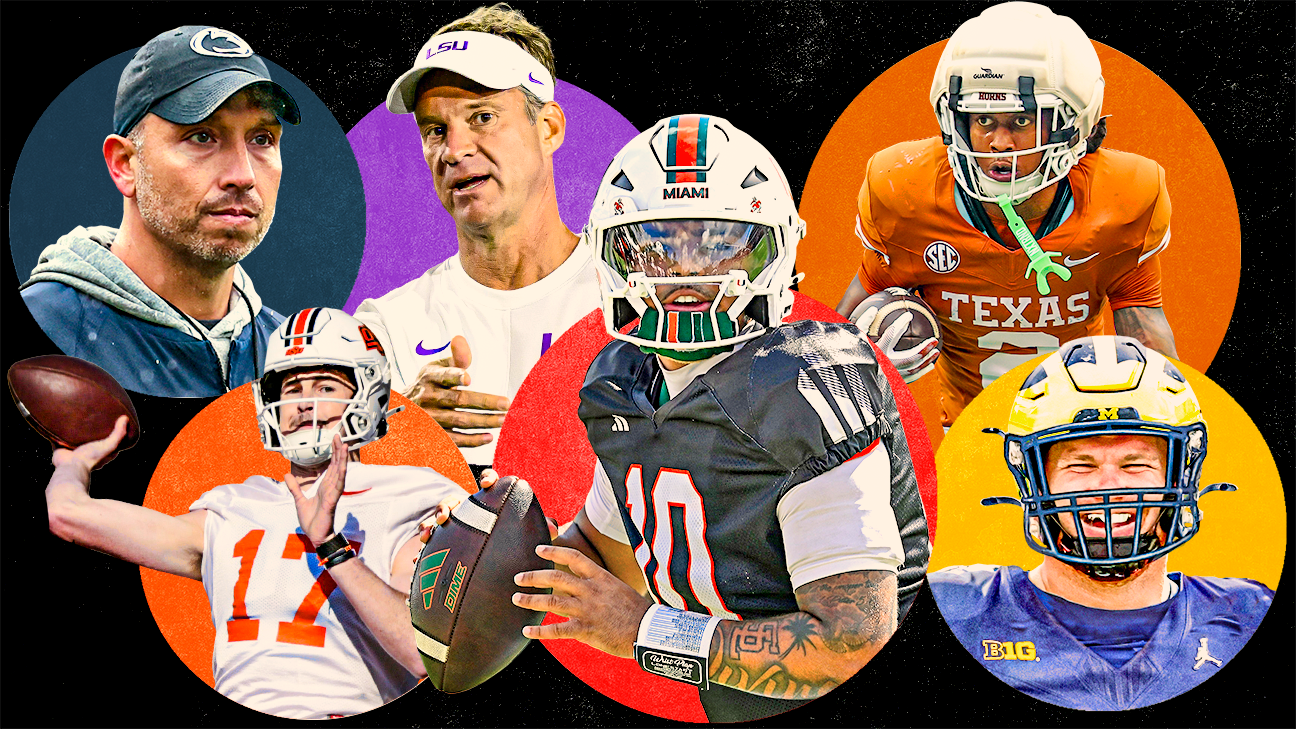
- Miami has become "the epicenter" for one-year transfer QBs, landing Cam Ward (Washington State), Carson Beck (Georgia), and now Darian Mensah (Duke); since Ward's 2024 arrival, the Hurricanes rank second nationally in yards per play, third in passing and total QBR, and fourth in scoring.
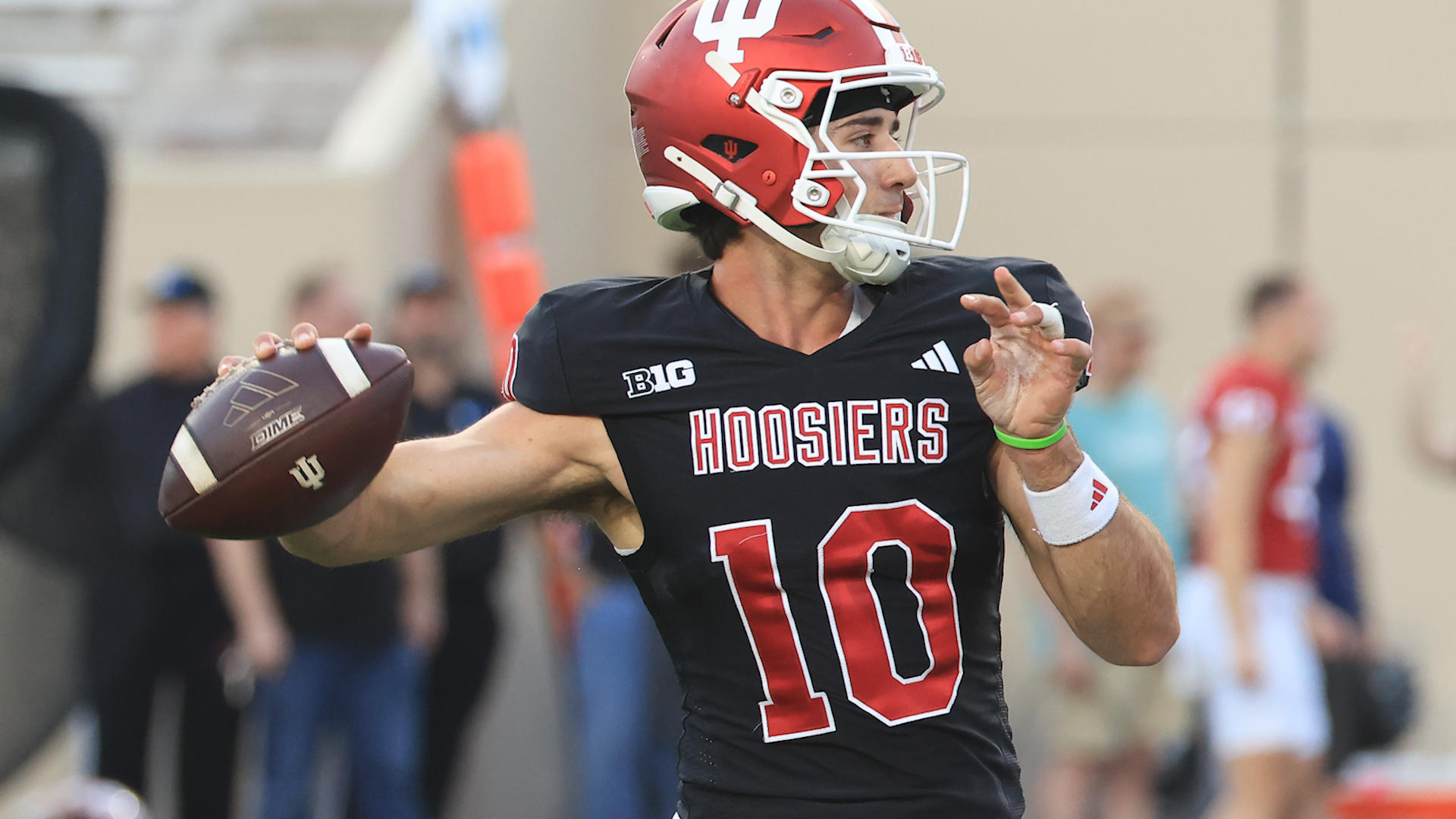
- Indiana built its College Football Playoff championship-game offense around one-year transfers Kurtis Rourke (Ohio) in 2024 and Fernando Mendoza (Cal) in 2025 — Mendoza won the Heisman and went No. 1 in April's NFL draft — and coach Curt Cignetti has already secured his next QB, TCU's Josh Hoover.
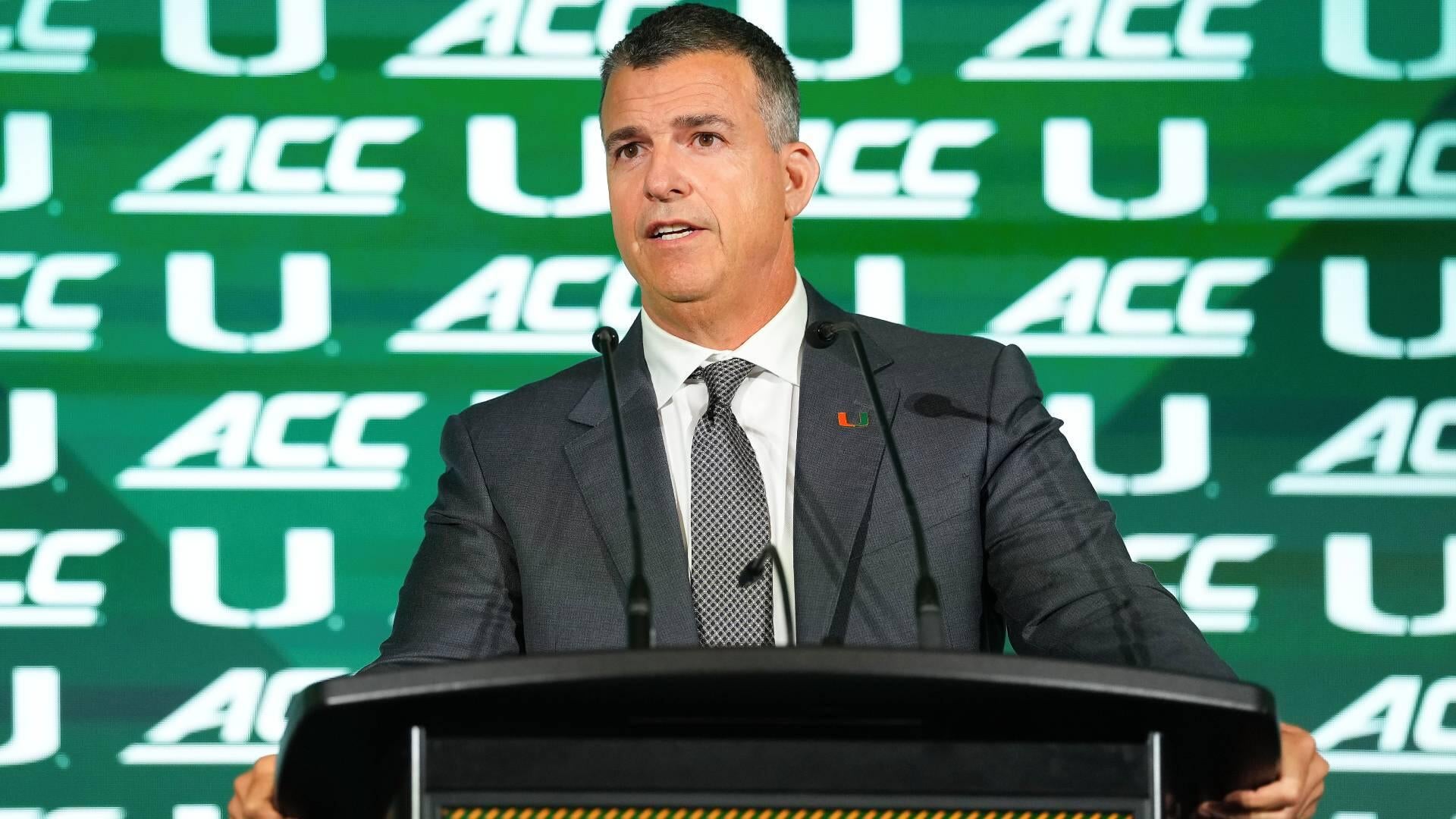
- Miami's intake process relies on senior offensive analyst Max Drisko to walk transfers through the playbook while OC Shannon Dawson is out recruiting; Dawson said he then trims the scheme to what the QB liked at his previous school, adding "I'm not an ego-driven person."
- Louisville coach Jeff Brohm spends as much time as possible with arriving transfers watching film; after three primarily pocket passers (Plummer, Shough, Moss), his current transfer Lincoln Kienholz from Ohio State is a runner hitting 69.5% completions with 15 TDs, 1 INT and a team-high 8 rushing scores.
- Prior coaching ties have driven several hits: Brohm previously coached Jack Plummer at Purdue, Wake Forest OC Rob Ezell reunited with Gio Lopez from their South Alabama days, and Wake Forest coach Jake Dickert worked with Cam Ward alongside Ward's coach Eric Morris when Ward came from Incarnate Word to Washington State.
- Indiana coach Curt Cignetti on the trait linking Rourke, Mendoza, and Hoover: "Great competitiveness. You've got to want to be great," with a "core system" about 70% unchanged while tailoring the rest to each QB's profile — pocket, dual-threat, or in-between.
- Wake Forest coach Jake Dickert prioritizes mobility and "snap throwers" who get the ball out quickly for an RPO-based offense, and calls the first six months with a new QB who lacks a prior connection "the discovery zone" — no game-planning, just learning how each player processes the game.
Why it matters: The approach inverts traditional QB development: staffs that once needed 3-4 years to grow a high-school recruit now acquire proven college talent through the portal, with dedicated personnel like Miami's Max Drisko easing the learning-curve crunch. The pressure is now structural — Indiana lost Mendoza to the No. 1 pick and had already lined up Josh Hoover before the title game ended, turning a one-year gamble into an annual pipeline that programs either master or fall behind on.
Ask SkimNews