Shanwick airspace to re-route flights over contrails — SkimNews

Get the Health newsletter
Daily health & science — research, biotech, public health, the studies worth knowing. Free.
- Shanwick airspace controllers will advise transatlantic pilots to adjust altitude by up to 2,000 feet (600m) starting November, in the £5 million Operation Blue Skies trial powered by Google AI contrail forecasts.
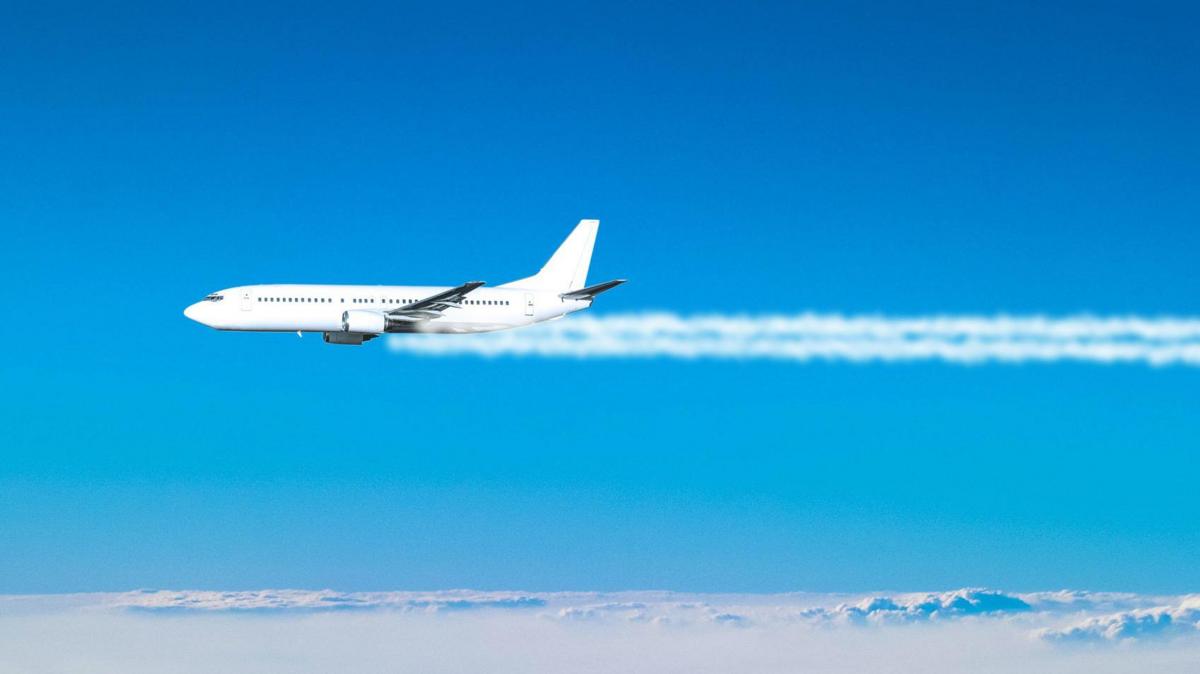
- Contrails account for roughly one-third of aviation's climate impact, and the Shanwick airspace alone is responsible for about 5% of global contrail warming — most of it occurring between November and February.
- Google's AI contrail forecasts previously cut contrail formation by 50–60% in airline trials, and this is the first airspace-scale deployment in which airlines cannot opt out, said Paul Hodgson of Google UK at the 17 August briefing.
- Operation Blue Skies runs two four-month winter trials across 2026–2027 and 2027–2028, with 20–40 test days each season and roughly 10,000 flights expected through the airspace during trial hours annually.
- Re-routed flights will burn an extra ~100 kg of fuel each — a few hundred kilograms of additional CO2 — while the avoided contrail impact is "measured in tonnes or tens of tonnes," Hodgson said.
- University of Cambridge and Imperial College London researchers will analyze the trial data, marking the first time contrail forecasts have been applied across an entire controlled airspace.
Why it matters: The math favors avoidance: roughly 100 kg of extra fuel per re-routed flight versus contrail warming "measured in tonnes or tens of tonnes," per Google UK's Hodgson. With Shanwick accounting for ~5% of global contrail warming, even modest success during the 2026–2028 trials would establish a template for airspace-scale climate routing — and force airlines to participate.
Ask SkimNews