India's Akash missiles enter Central Asia as Russia retreats — SkimNews

Get the Geopolitics newsletter
Daily geopolitics — wars, elections, sanctions, the diplomatic moves that move markets. Free.
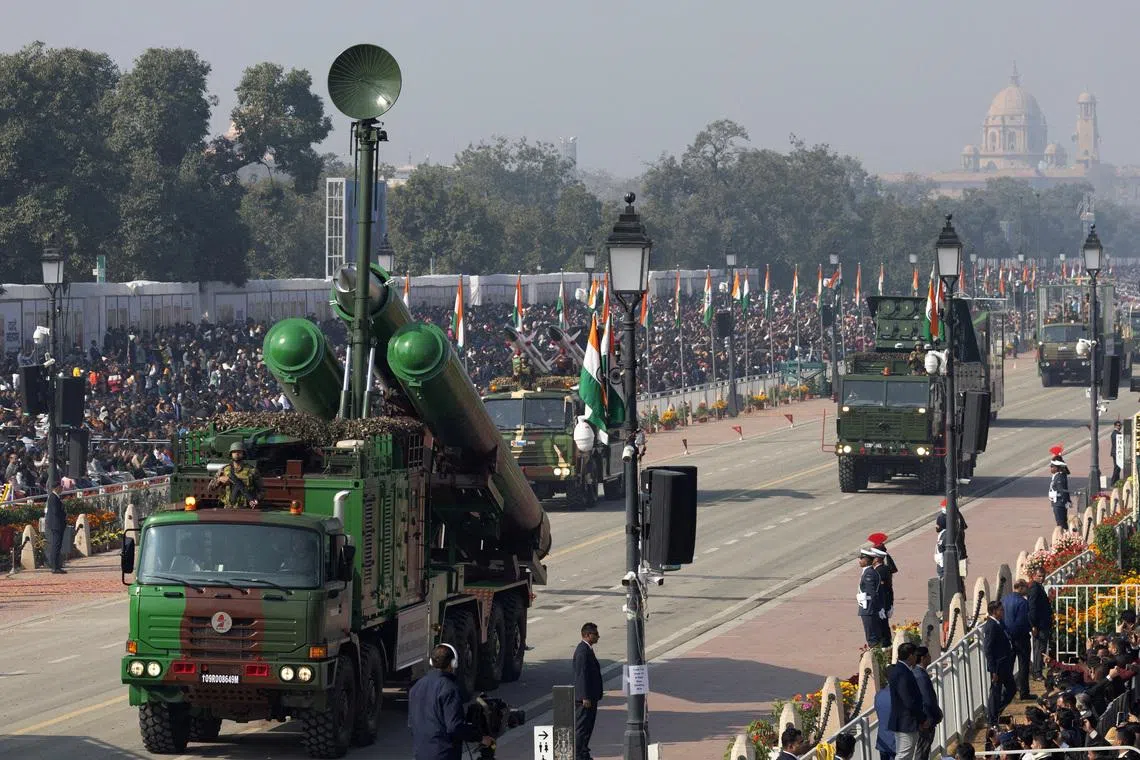
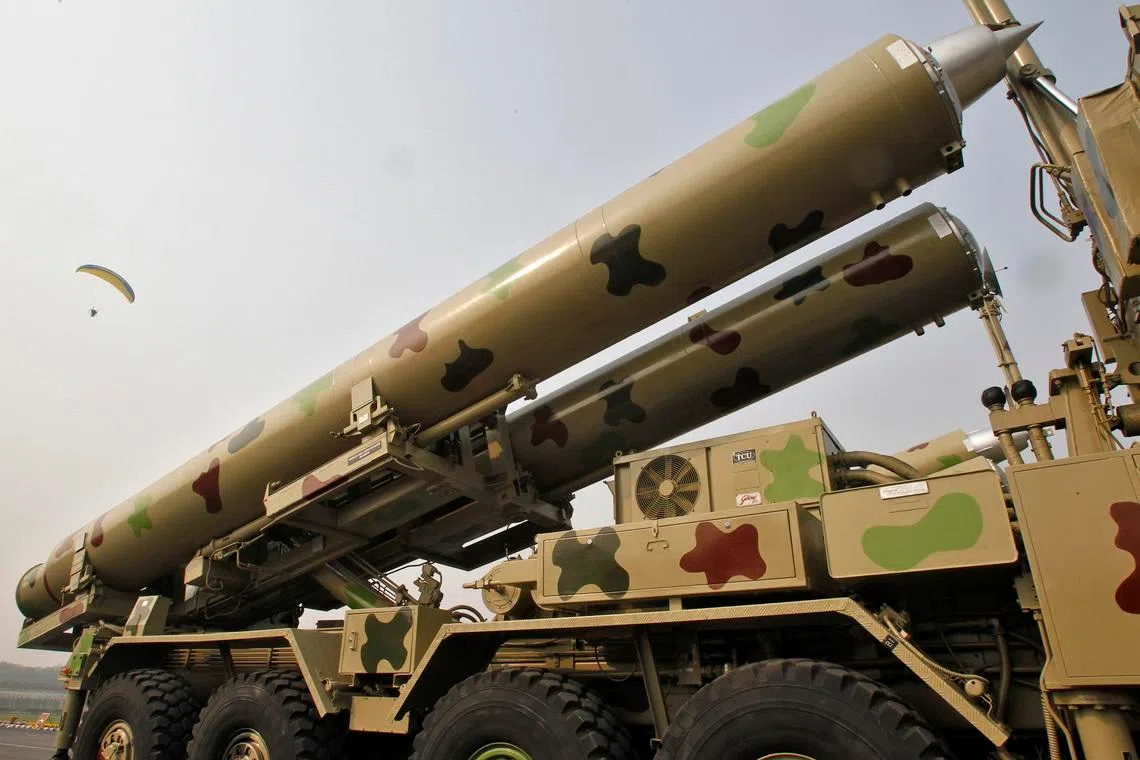
- India's Defense Secretary Rajesh Kumar Singh confirmed export of the domestically developed Akash surface-to-air missile system to Tajikistan and Turkmenistan, packaged with Rajendra radar and maintenance support — the system's first Central Asian sales after a 2022 inaugural deal with Armenia.
- China's J-10CE fighters have arrived in Uzbekistan, with at least six jets visible in official Tashkent footage and a reported order of 24 warplanes, making Uzbekistan the second confirmed foreign operator after Pakistan and marking a breakthrough into a market long dominated by Soviet and Russian manufacturers.
- Russia's major arms exports collapsed 64% between 2016-20 and 2021-25, per SIPRI's March 2026 dataset, shrinking its global export share from 21% to 6.8% and making it the sole top-ten arms exporter to contract, with nearly three-quarters of remaining flows concentrated in India, China, and Belarus.
- A December 2025 Hudson Institute report by Tsiporah Fried argues that Western sanctions and wartime disruptions have reframed Russia as an "unpredictable vulnerability" in Central Asian capitals, exposing the risks of overdependence and accelerating diversification to China, Turkey, the EU, the United States, and India.
- India's "Necklace of Diamonds" strategy is using arms transfers along China's periphery — Akash batteries to Tajikistan and Turkmenistan, Brahmos supersonic anti-ship missiles to the Philippines and Indonesia — to counter Beijing's encirclement via Belt and Road-linked ports in Pakistan, Bangladesh, and Sri Lanka.
- Russia retains structural leverage through approximately $44 billion in bilateral Central Asian trade in 2023 (one-third of regional turnover), CSTO mutual defense pacts with Kazakhstan, Kyrgyzstan, and Tajikistan, and forward deployments including Kant Airbase in Kyrgyzstan and S-300 systems in Tajikistan.
- China has become Uzbekistan's leading trading partner and primary foreign investor, with state enterprises spearheading the China-Kyrgyzstan-Uzbekistan railway and dedicated special economic zones to position the landlocked country as a regional transit corridor, per the February 2026 Journal of Eurasian Studies.
Why it matters: Central Asian states are weaponizing multipolarity to escape dependency on any single patron — India gains its first operational footprint on China's western flank via Akash batteries, while Russia's CSTO allies hedge with Beijing and New Delhi. Moscow's $44 billion in regional trade and Kant Airbase deployments suggest structural grip holds even as its global arms share falls from 21% to 6.8%.
Ask SkimNews