Thailand Hosts Min Aung Hlaing, Pushes Myanmar's ASEAN Return — SkimNews

Get the Geopolitics newsletter
Daily geopolitics — wars, elections, sanctions, the diplomatic moves that move markets. Free.
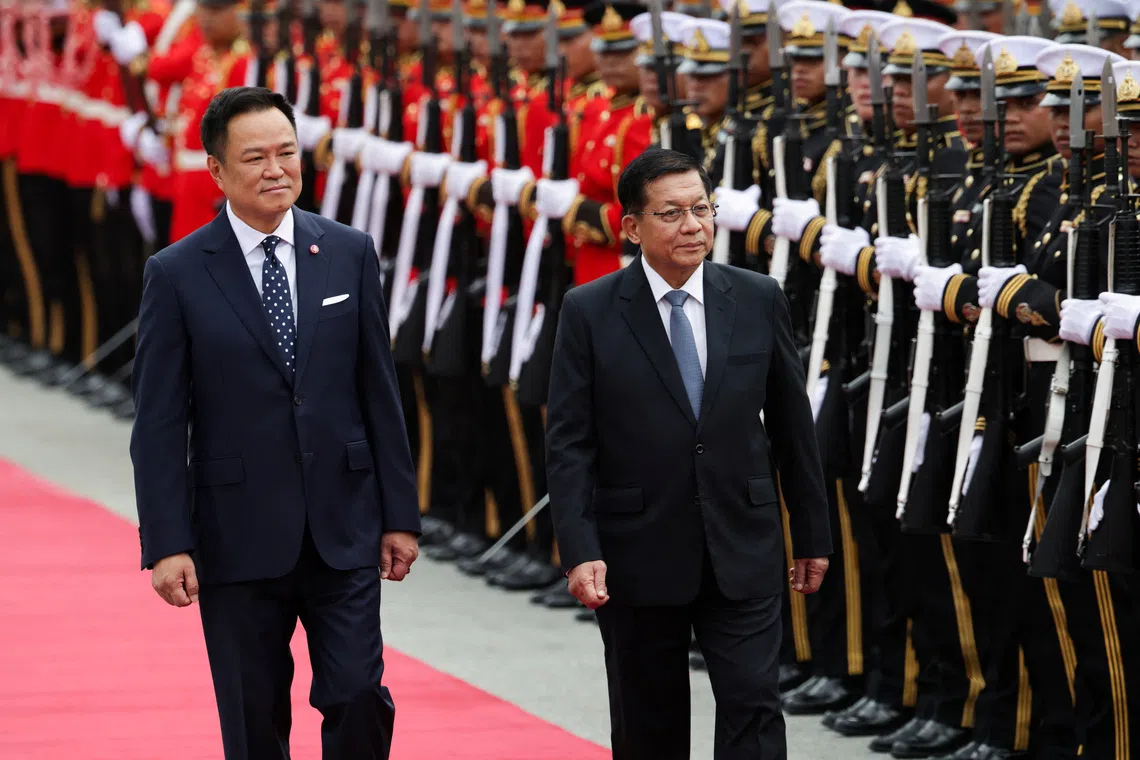
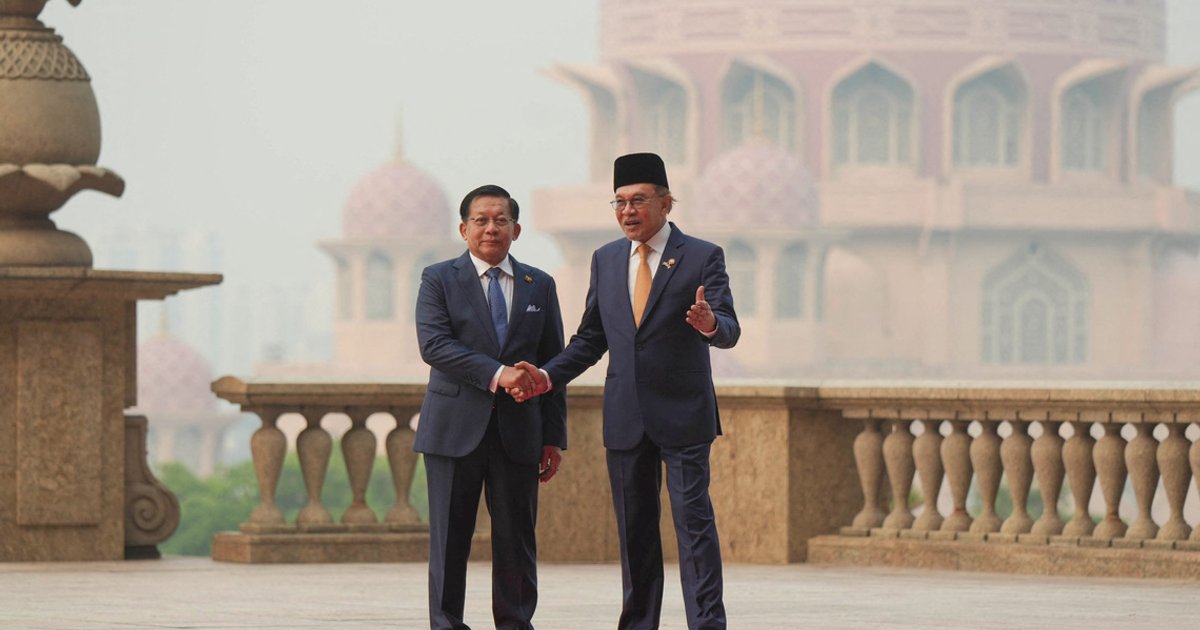
- Anutin Charnvirakul hosted Min Aung Hlaing in Bangkok with a red-carpet welcome and talks at Government House — the Myanmar junta leader's first official Thailand visit since the 2021 coup.
- A joint statement saw Thailand reaffirm its commitment to Myanmar's 'full and equal participation in ASEAN mechanisms,' while Myanmar 'expressed appreciation' for Thailand's role in 'normalization.'
- The two countries signed three bilateral deals covering Burmese migrant labor in Thailand and a joint working group on river pollution from rare-earth mining, and discussed resuming trade via the Second Friendship Bridge between Mae Sot and Myawaddy.
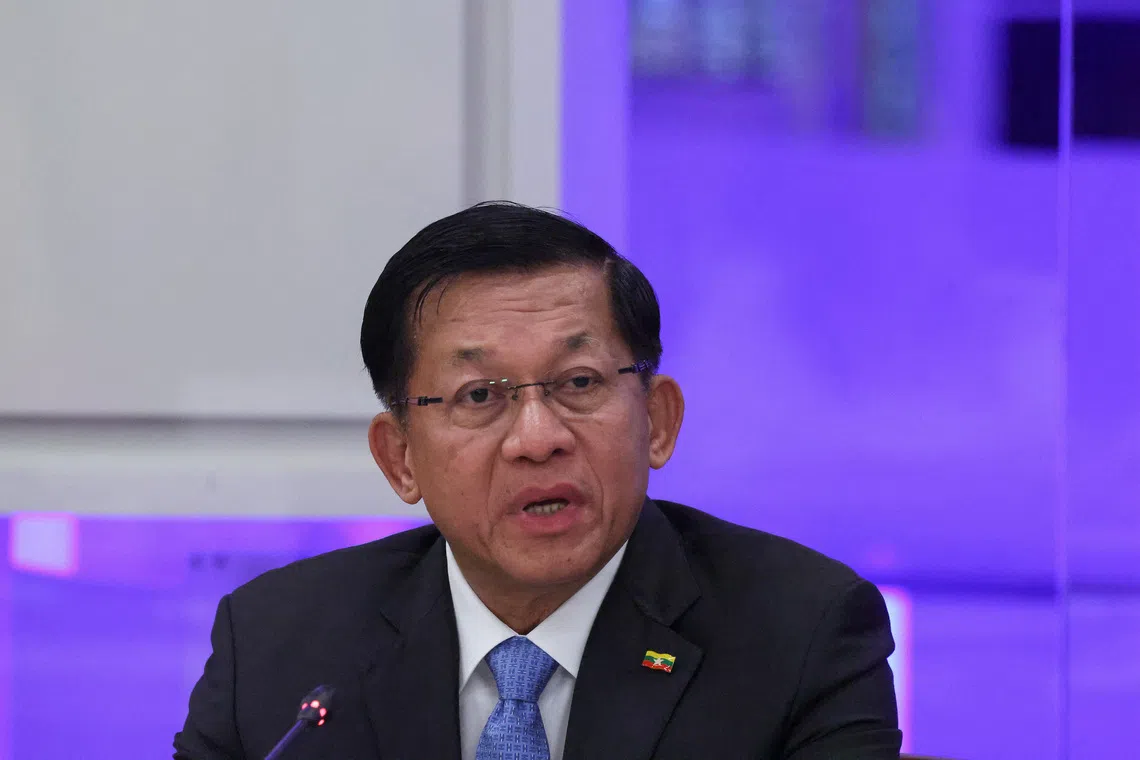
- Min Aung Hlaing told the Thai-Myanmar business forum his government had 'reestablished itself on the path to democracy' and that attendees could 'invest with confidence' in Myanmar's energy, agriculture, manufacturing, and healthcare sectors.
- Human rights advocates condemned the welcome: Phil Robertson of Asia Human Rights and Labour Advocates said Anutin 'should be ashamed,' and The Irrawaddy's Aung Zaw wrote Thailand 'should not lend legitimacy to the thuggish regime in Naypyidaw.'
- Thai Foreign Minister Sihasak Phuangketkeow pushed back at a press conference, saying 'It's not about legitimacy, it's about reality' and that talks with 'those who are in the position of power' were needed to solve border problems.
- The visit deepens a deadlock with ASEAN's formal position: Min Aung Hlaing declared on July 31 that the Five-Point Consensus 'was not the consensus of all ASEAN member states,' even as the bloc's special envoy said Myanmar's full reintegration remained 'far off.'
Why it matters: Thailand's 'calibrated engagement' gambit bets that bilateral pressure can coax Min Aung Hlaing back toward ASEAN's framework, but his July 31 speech rejecting the Five-Point Consensus outright — and junta propaganda accounts already claiming the red carpet 'strongly reinforces legitimacy' — suggests the generals are extracting diplomatic oxygen without conceding on political dialogue.
Ask SkimNews