Eight Nations Urge US-Iran Diplomacy, Not New Strikes — SkimNews

Get the Geopolitics newsletter
Daily geopolitics — wars, elections, sanctions, the diplomatic moves that move markets. Free.
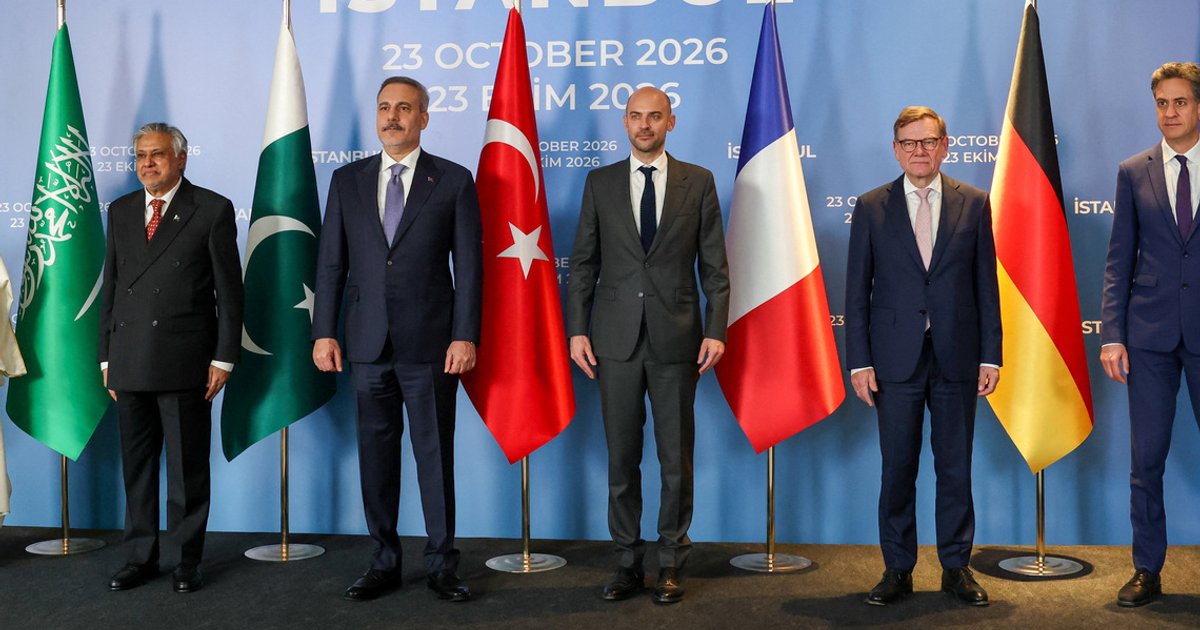
- Hakan Fidan said after Friday's Istanbul meeting of foreign ministers from the UK, France, Germany, Italy, Turkiye, Saudi Arabia, Pakistan and Egypt that none of the participants approved another military intervention or attack on Iran, arguing diplomacy and dialogue are the only way to end the war.
- Jean-Noël Barrot said a further US-Iran escalation "would create nothing but losers" and carry "very serious consequences for hydrocarbon prices," adding that the group of eight will call on both sides to exercise the utmost restraint.
- Antonio Tajani said the aim is "de-escalation to guarantee freedom of navigation" and that the problem "cannot be solved from a purely military standpoint" — dialogue is needed to reopen the Strait of Hormuz.
- Tom Barrack, the US ambassador to Turkiye, said Washington could "absolutely" strike Iran this weekend, while saying Trump is "open and available and accessible to a deal" and that any US action would not target regime change but "rebalancing" so there are "no hostages, no threats."
- Al Jazeera reported the eight-nation Istanbul summit was a "first-of-its-kind" attempt to define the parameters of regional conflicts and possible solutions, with ministers also weighing the war on Gaza and fighting in Yemen; Fidan said the Gulf crisis is affecting other parts of the world.
- Mecca Joint Defence Agreement — Turkiye is seeking to bolster its regional role through it and the trilateral pact launched with Pakistan and Saudi Arabia in August, which Ankara says is aimed at no specific country and remains open to others, including Egypt; Fidan called its informal, flexible structure a way to bring together states with different geographical and political backgrounds.
- Abdel Fattah el-Sisi said Egypt would "carry out any measure to protect" Saudi Arabia, though Cairo has yet to decide whether to join the pact; the Iran-backed Houthis have launched a series of deadly attacks on Saudi Arabia while fighting Yemen's internationally recognised government forces.
Why it matters: Barrot's warning ties escalation directly to hydrocarbon prices, while Barrack's "this weekend" strike option stands in direct contrast to the eight ministers' call for restraint. With Saudi Arabia and Pakistan sitting alongside the E3, the push to reopen Hormuz through dialogue is no longer only European pressure but a joint position from eight foreign ministries.
Ask SkimNews