MultiQ-IT Mass Spec Prototype Holds 10 Billion Charges — SkimNews
Get the Health newsletter
Daily health & science — research, biotech, public health, the studies worth knowing. Free.
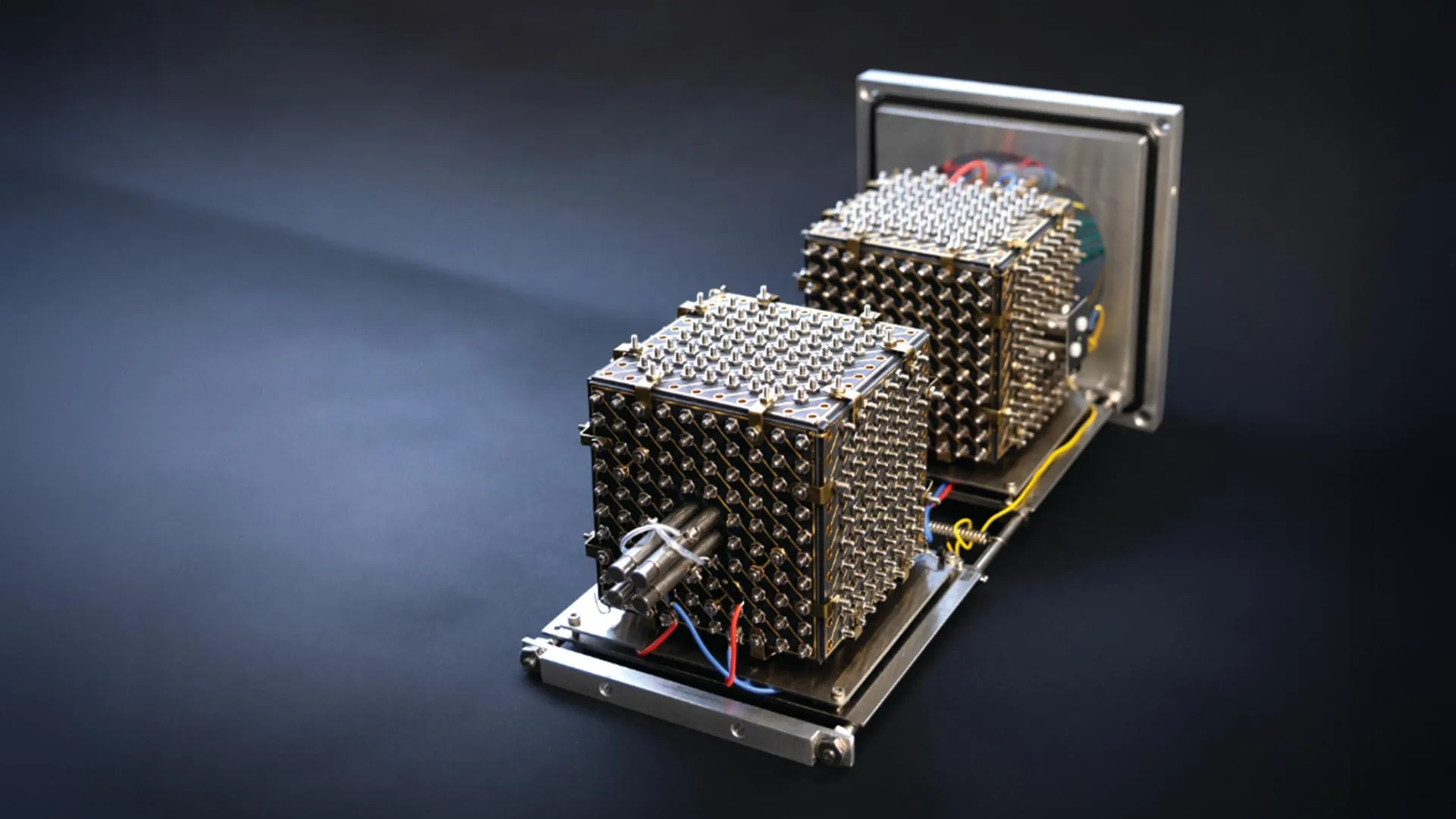
- MultiQ-IT is a new mass spectrometry prototype developed by Brian T. Chait and Andrew Krutchinsky at Rockefeller University that processes large numbers of molecules simultaneously rather than one at a time, as described in Science Advances.
- The cube-shaped ion-trapping chamber replaces a key part of traditional mass spectrometers, scaling from 6 to over 1,000 electrically controlled openings that sort, hold, and direct multiple ion groups at once — a design inspired by how nuclear pore complexes distribute molecular traffic across many small openings in cells.
- A version with 486 ports held up to 10 billion charges at once, about 1,000 times more than conventional ion traps, and improved signal-to-noise ratio by as much as 100-fold.
- A small electrical voltage barrier at the trap exits ejects singly charged background ions while retaining multiply charged ones, which the researchers note are often more biologically important — a filtering mechanism that drove most of the sensitivity gain.
- Chait drew a direct parallel to DNA sequencing — where parallelization took genome costs from $1 billion to roughly $100 — and to GPUs in computing, arguing MultiQ-IT could enable the same kind of step-change for mass spectrometry.
- The boosted sensitivity could enable detection of low-abundance crosslinked peptides for mapping protein complex structures, with broader applications in single-cell proteomics, metabolomics, and drug discovery.
- MultiQ-IT remains a proof of concept rather than a commercial product, but the team describes it as a foundational design for next-generation instruments, noting that decades of industry development followed the first transistor and the first DNA sequencing reaction.
Why it matters: Single-cell proteomics and metabolomics currently miss rare but biologically critical molecules because proteins and metabolites can't be copied or amplified like DNA. A 100-fold signal-to-noise improvement and 1,000x ion capacity could let researchers finally profile the full molecular contents of individual cells, directly benefiting drug discovery pipelines that depend on detecting faint molecular signals in complex samples.
Ask SkimNews