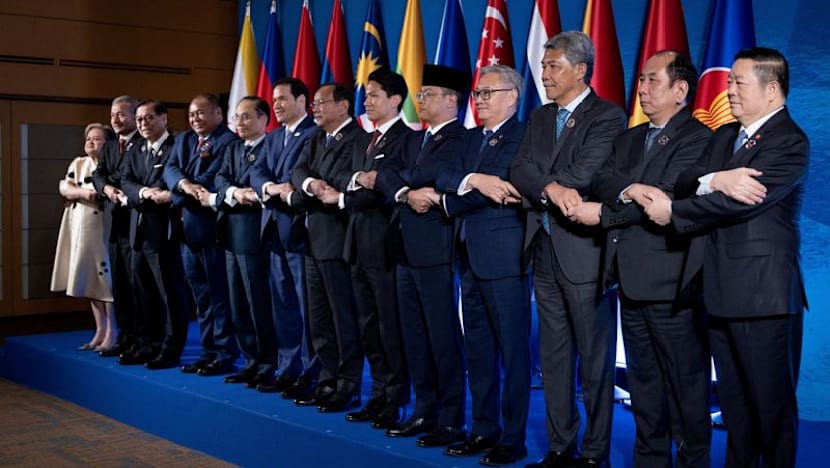
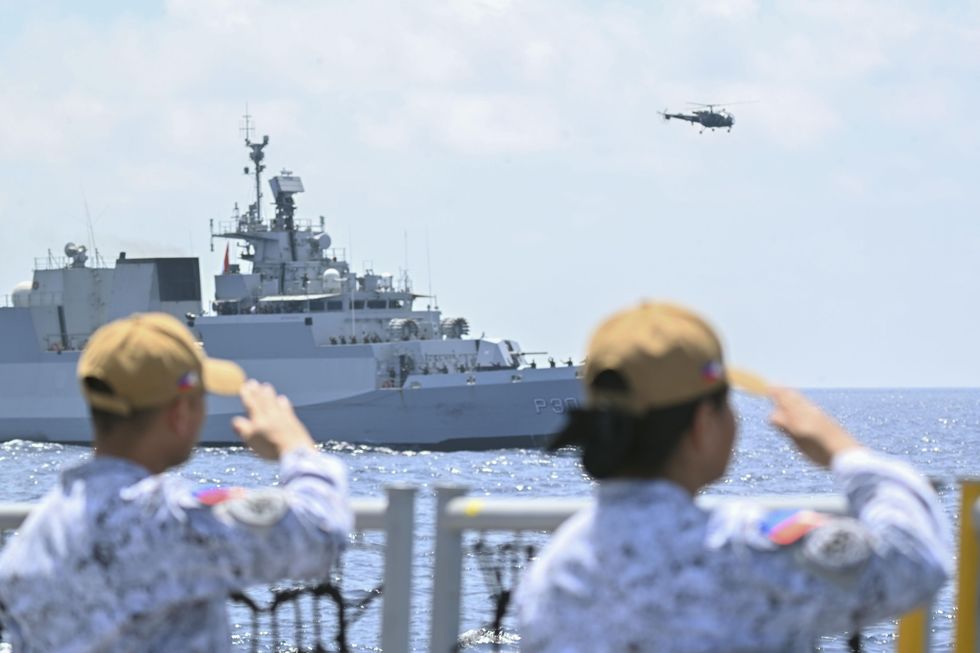
ASEAN consensus keeps South China Sea language frozen

Get the Geopolitics newsletter
Daily geopolitics — wars, elections, sanctions, the diplomatic moves that move markets. Free.
- The Philippines' 2026 ASEAN chairmanship yielded a South China Sea communiqué "functionally identical" to Malaysia's 2025 text, with the 2016 arbitral ruling absent — the same result Laos produced when the ruling was first issued a decade earlier.
- The Philippines built extensive institutional infrastructure during its chair year: the ASEAN Maritime Centre endorsed at the 48th ASEAN Summit in Cebu (May), the Coast Guard Forum framework finalized in Manila (June), and a DOJ maritime law unit established in mid-July.
- Australia announced roughly $18 million in drone support and civil maritime assistance at Philippine Coast Guard headquarters on the AMM's opening day, while Lithuania, Poland, Romania and Sweden acceded to the Treaty of Amity and Cooperation at its 50th anniversary ceremony.
- A 14-country coalition reaffirmed the arbitral ruling as "final, legally binding and definitive" on its 10th anniversary (July 12), but no ASEAN member signed either that statement or a parallel EU endorsement except the Philippines.
- The 2026 communiqué softened Code of Conduct language, dropping the 2025 text's "early conclusion" and "Guidelines for Accelerating" references in favor of "continued efforts in endeavoring to conclude" the COC within the year.
- The communiqué's most distinctive new language concerned Strait of Hormuz transit passage, with the Middle East section expanding from four to seven paragraphs while the South China Sea section held at two — overtaken by the US-Israeli strikes on Iran and the June memorandum of understanding.
- US Section 301 tariffs took effect on July 24, the AMM's closing day, imposing additional duties of 10% to 12.5% on seven ASEAN economies including the Philippines, as a Pew survey found China favorability exceeding US favorability in most of 36 countries polled.
Why it matters: The Philippines invested its full chairmanship — a Maritime Centre, a DOJ unit, a Coast Guard Forum, an 18-million-dollar Australian drone deal — and the South China Sea paragraphs still came out near-identical to the year before. ASEAN's consensus norm, the same principle that holds 11 politically diverse states together, structurally cannot take sides in sovereignty disputes. With US tariffs hitting on the AMM's closing day and Pew showing China now viewed more favorably than the US in most countries surveyed, the hedging pressure on other claimants is tightening even as Manila's bilateral scaffolding outpaces the bloc.