Locus Coeruleus Uses Targeted Norepinephrine Paths — SkimNews
Get the Health newsletter
Daily health & science — research, biotech, public health, the studies worth knowing. Free.
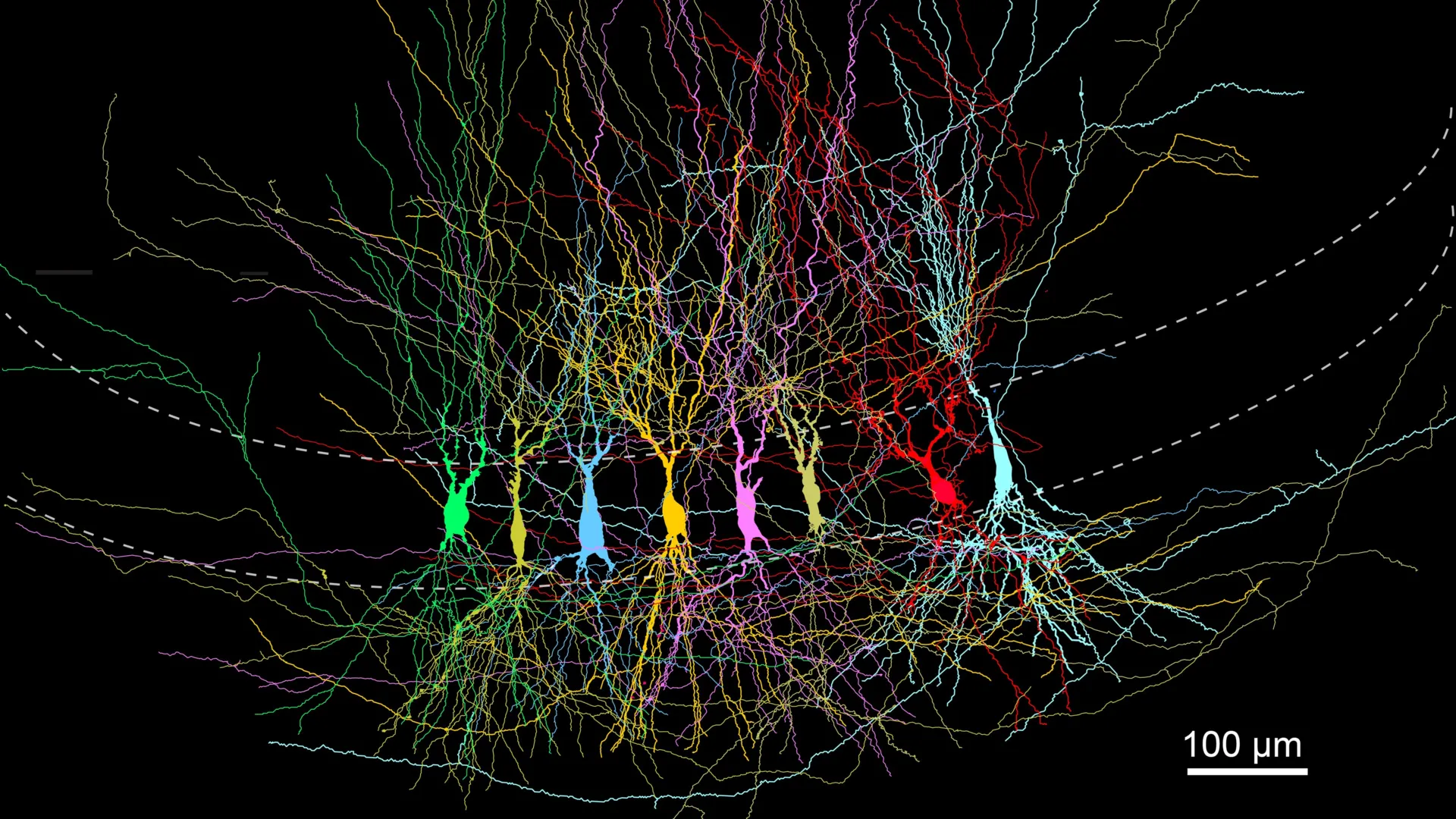
- The locus coeruleus sends norepinephrine through several distinct pathways to specific nervous-system destinations, challenging the long-held view that it broadcasts essentially the same signal throughout the brain.
- Dorsal LC neurons connect mainly to the cerebral cortex and forebrain and increased their activity when mice changed decisions after an unfavorable result, linking the upward branch to learning.
- Ventral LC neurons project mainly to the brainstem and spinal cord and showed increased activity shortly before mice ignored cues that a reward might be available, tying the downward branch to environmental engagement.
- LC neuronal subgroups displayed distinct gene-expression patterns that mirrored their different locations and projections, showing that the specialization extends beyond anatomy.
- The Allen Institute team used whole-brain imaging of nearly 35,000 neurons, genetic profiles from almost 400,000 cells and complete reconstructions of several complex cells in its mouse study, published in Nature in 2026.
- LC axons measured approximately 35 centimeters on average, while one reconstructed axon reached 70.32 centimeters and ranked among the longest single neurons ever measured in a mouse; despite that reach, it supplied norepinephrine to cortex while excluding the cerebellum, brainstem and spinal cord.
Why it matters: For researchers targeting depression, anxiety and ADHD, the Allen Institute’s nearly 35,000-neuron map supplies a more selective framework than treating norepinephrine as one brain-wide system. Existing interventions can help one circuit while causing unwanted effects elsewhere, while the specialized LC pathways offer a defined basis for developing more selective, circuit-specific therapies.
Ask SkimNews