LUT Study: Solar PV Capex May Reach $192/kW by 2050 — SkimNews
Get the Energy newsletter
Daily energy & climate — solar, EVs, oil, the policy fights and tech bets shaping the transition. Free.
- LUT University and Leibniz University Hannover published a systematic literature review of 60 renewable‑energy studies, finding a projected PV Capex range of €166 ($192)/kW to €720/kW in 2050, with the lower figure expressed in 2019 nominal euros and the higher in 2017 nominal euros adjusted for inflation.
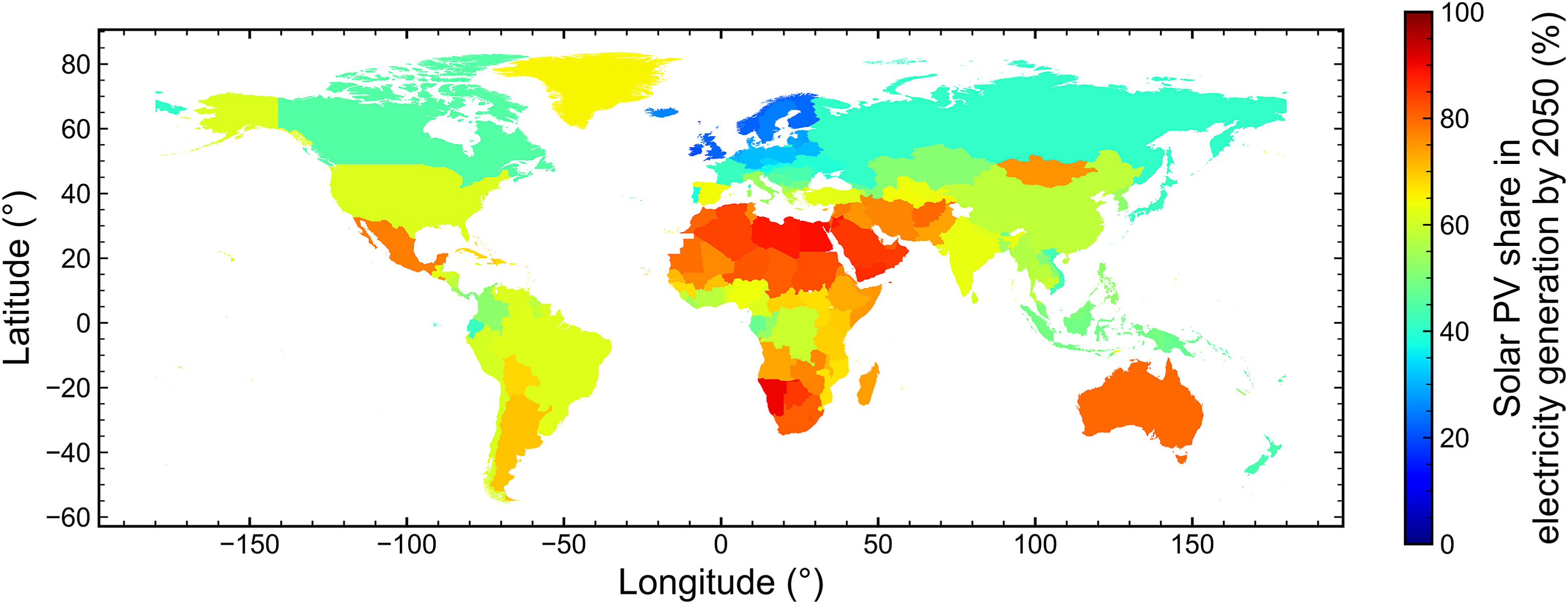
- The 60‑study dataset shows that across scenarios achieving ≥95% renewable electricity by 2050, solar PV and wind together are projected to supply between 80% and 100% of electricity, with lower combined shares explained by strong hydro/geothermal resources or reliance on imports.
- Christian Breyer says many energy‑system models use overly conservative PV Capex assumptions that exceed current market levels, and that low spatial or temporal resolution further underestimates PV’s potential.
- Dennis Bredemeier notes that PV is often modeled as a generic technology, overlooking diverse solutions such as floating, bifacial, agrivoltaic, vehicle‑integrated, building‑integrated, and tracking systems, which could reduce land use and unlock additional deployment.
- Supply‑chain analysts argue that while geopolitical risks and supply‑chain stability affect PV costs, past experience shows manufacturing value chains can be rapidly established across regions with only moderate cost increases.
- Critical‑material outlook indicates that constraints on silver for cell metallization are expected to be mitigated by substitution technologies emerging around 2026, limiting long‑term material bottlenecks.
Why it matters: Policymakers and investors stand to benefit from the lower €166/kW cost projection, which would make solar PV far more competitive and accelerate the 80‑100% renewable electricity target, while models that retain inflated Capex risk under‑estimating PV’s role and could misguide financing and grid‑planning decisions.
Ask SkimNews