USS Benfold Stranded 4 Days Without Power in South China Sea — SkimNews
Get the Geopolitics newsletter
Daily geopolitics — wars, elections, sanctions, the diplomatic moves that move markets. Free.
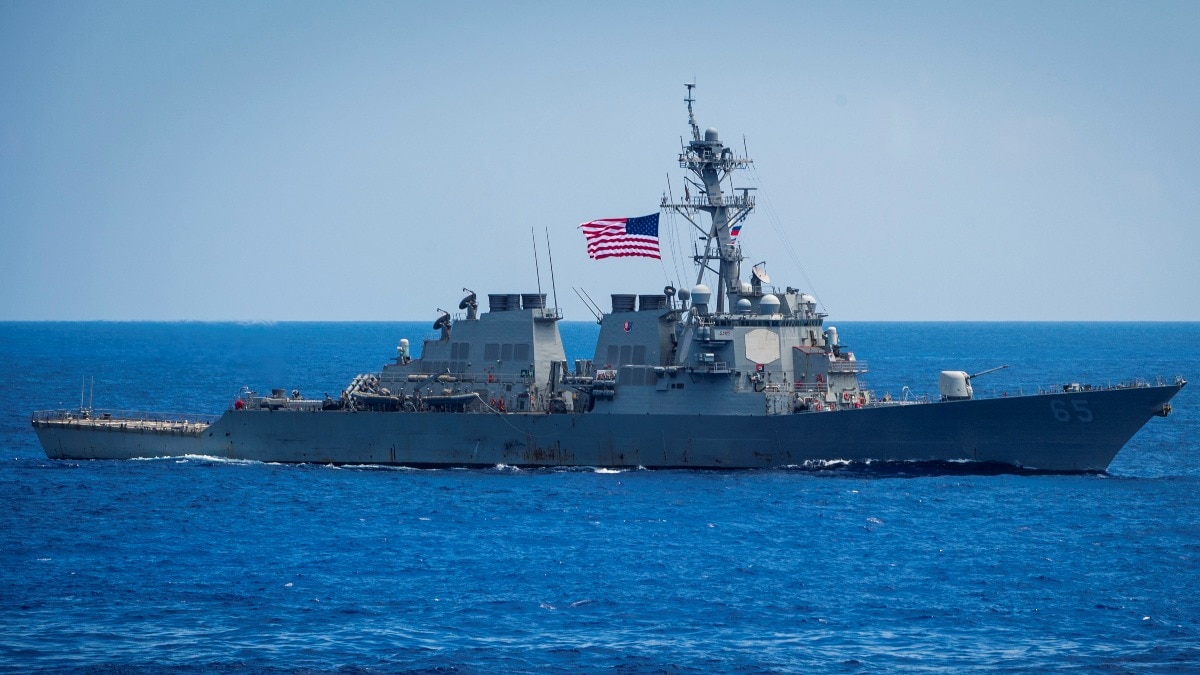
- USS Benfold lost power on July 24 in the South China Sea due to an 'engineering casualty involving its generators,' leaving the nearly 10,000-ton Arleigh Burke-class destroyer without toilets, air conditioning, regular food services, potable water, and the ability to maneuver for four days.
- Regional temperatures reached 37°C (89-98°F) during the outage; the Navy reported no injuries, and 7th Fleet spokesperson Commander Matthew Comer praised the crew's 'resilience, grit, professionalism, and unwavering steadiness.'
- The guided-missile cruiser USS Robert Smalls provided cooked meals to the Benfold while other vessels in the Japan-based USS George Washington Carrier Strike Group assisted; the destroyer was towed to Subic Bay, Philippines, with repairs completed on August 8.
- The USS Higgins, another Arleigh Burke-class destroyer, suffered a similar 'engineering casualty' in its electrical system in May while operating in the Indo-Pacific, losing power and propulsion for several hours—the second such failure within months.
- More than 70 Arleigh Burke-class destroyers are in service, typically carrying crews of 329 to 359 sailors, making engineering and electrical reliability critical to maintaining the Navy's surface fleet operational tempo.
Why it matters: Coming months after the USS Higgins suffered a similar electrical failure, the Benfold incident concentrates attention on the reliability demands placed on the Arleigh Burke class—more than 70 ships that form the backbone of the US surface fleet. A four-day disablement requiring a tow to the Philippines and roughly two weeks of repairs delivers a concrete operational consequence for any warship class that size of fleet depends on.
Ask SkimNews