APOE2 protects neurons by repairing DNA, fighting senescence — SkimNews

Get the Health newsletter
Daily health & science — research, biotech, public health, the studies worth knowing. Free.
- APOE2 neurons showed significantly less DNA strand breaks and activated DNA repair pathways, while APOE4 neurons displayed gene-activity patterns associated with Alzheimer's disease, according to a Buck Institute study in Aging Cell.
- Senior author Lisa M. Ellerby and co-first author Cristian Gerónimo-Olvera compared APOE2, APOE3, and APOE4 in human iPSC-derived GABAergic and glutamatergic neurons engineered to differ only at the APOE locus, and saw consistent protection across both neuron types.
- When stressed with radiation or the chemotherapy drug doxorubicin, APOE2 excitatory neurons showed lower senescence markers (p16 and CRYAB), smaller nucleoli, and better-preserved nuclear architecture than APOE3 or APOE4 neurons.
- Adding recombinant APOE2 protein to APOE4 neurons reduced DNA damage signaling after radiation exposure, indicating the protective effect may be transferable rather than restricted to people born with the variant.
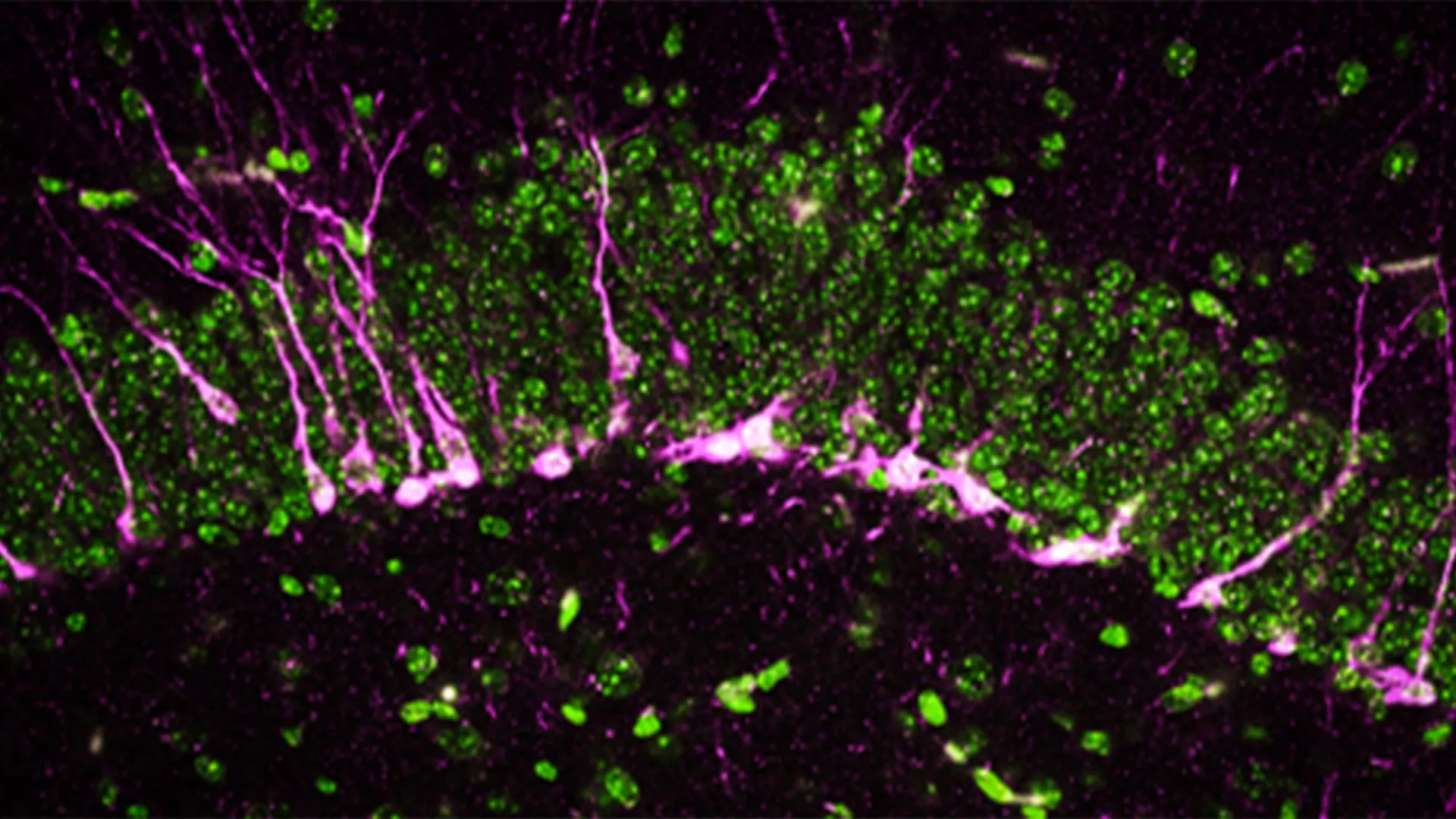
- Older APOE2 knock-in mice had smaller nucleoli, higher levels of the nuclear scaffolding protein Lamin A/C, and better-preserved heterochromatin in the hippocampus than mice carrying APOE3 or APOE4.
- The team plans to test APOE2-mimetic compounds and targeted DNA repair or senolytic strategies as potential therapies for APOE4 carriers, who carry the strongest known genetic risk for late-onset Alzheimer's.
- The work was funded by the National Institute on Aging, the Paul F. Glenn Center for Biology of Aging, the Hevolution Foundation, and a CatalystX award from Alex and Bob Griswold and the Valley Foundation Fellowship.
Why it matters: For decades, APOE Alzheimer's research has centered on cholesterol handling and amyloid-beta; this study links the protective APOE2 variant to genome maintenance and senescence, two central hallmarks of aging biology, expanding the therapeutic target space. The finding that recombinant APOE2 protein partially transferred protection to APOE4 neurons gives drug developers a protein-based — rather than gene-therapy — route toward helping the carriers of the strongest known genetic Alzheimer's risk allele.
Ask SkimNews