The Himalayas are melting faster - and India's economy is 'at risk' — SkimNews

Get the Energy newsletter
Daily energy & climate — solar, EVs, oil, the policy fights and tech bets shaping the transition. Free.
- Systemiq, working with the Integrated Mountain Initiative, ICIMOD and GB Pant National Institute of Himalayan Environment, found Himalayan glaciers are losing mass 65% faster than they were a decade ago, while only about 21 of an estimated 40,000 glaciers across the Himalaya-Karakoram region are being monitored in detail on a sustained basis.
- India's government told parliament in July that 56 glacial lakes had been classified as "very high risk" following a 2025 scientific assessment of 189 high-risk lakes, while the Central Water Commission monitors 2,485 glacial lakes larger than 10 hectares across India's Himalayan river basins.
- Lord Nicholas Stern, chair of the Grantham Research Institute at the London School of Economics, called the Himalayas "the Third Pole" with "hundreds of millions of people living beneath it," warning the ecological system is "approaching a tipping point."
- Systemiq's research estimates roughly a third of Himalayan glacier melt is driven by black carbon — much of it originating from brick kilns in the Indian plains — making soot deposits on snow a locally actionable lever unlike global greenhouse-gas emissions.
- Himalayan water underpins roughly 20% of India's GDP, sustaining wheat, rice, tea, hydropower and pilgrimage economies, yet mountain states capture only about 5% of that value according to the report.
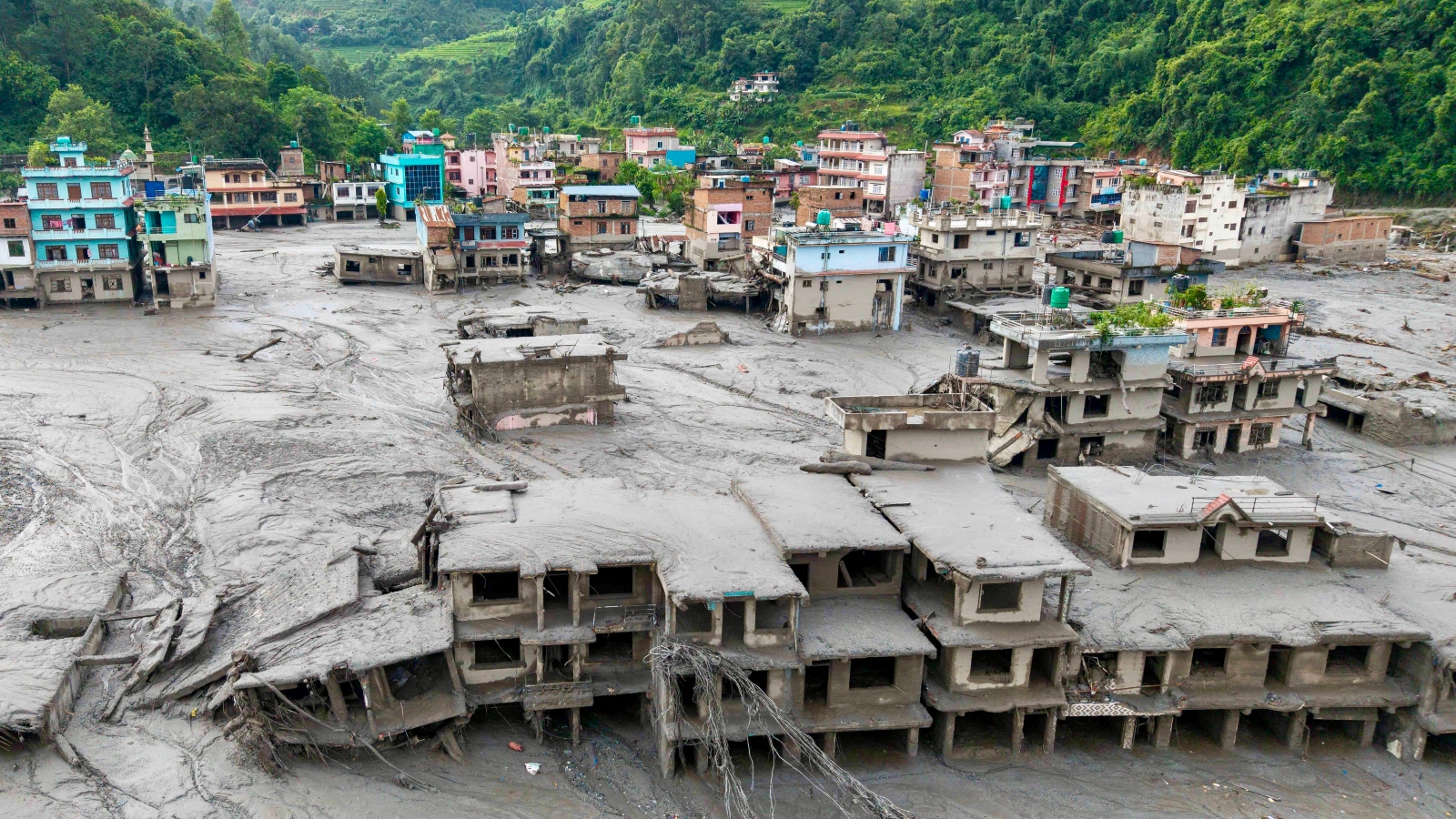
- Past disasters cited in the report include a 2023 Sikkim glacial lake outburst flood that killed at least 70 people and a 2021 Uttarakhand flood through the Rishiganga and Dhauliganga valleys that killed more than 200.
- ICIMOD says "peak water" — the point at which glacier runoff reaches its maximum before declining — is expected around mid-century in most Hindu Kush Himalayan river basins.
Why it matters: India faces a stark asymmetry: 18% of its land is Himalayan but accounts for 35% of disasters, and the water generated there underpins 20% of GDP while mountain states capture only about 5% of that value. With peak water expected by mid-century and just 21 of 40,000 glaciers actively monitored, the cost of inaction falls on the very states least equipped to absorb it.
Ask SkimNews