Iran war leaks past borders as House rebels grow — SkimNews

Get the Geopolitics newsletter
Daily geopolitics — wars, elections, sanctions, the diplomatic moves that move markets. Free.
- US forces struck Iran for a 10th consecutive night, hitting command centers, missile and drone launch sites, and air defenses in Sirik, Bandar Abbas, Qeshm, Shiraz, and Isfahan; CENTCOM wrapped operations at 9pm ET.link ›
- Iran struck tankers in the Strait of Hormuz Monday — two Greek-owned — and the IRGC claimed two more suffered "massive fires" Tuesday; UK Maritime Trade Operations reported a Limah port crew abandoning ship.link ›
- The House voted 214-208 to direct Trump to end hostilities in Iran, with Brian Fitzpatrick, Tom Barrett, Warren Davidson, and Thomas Massie — the same four who crossed over in June — joining every Democrat.link ›
- US intelligence is investigating whether Russia supplied Iran the Kometa-M anti-jamming navigation system that enabled precise drone strikes on CIA facilities, after debris from a failed attack on RAF Cyprus contained the hardware.link ›
- Trump signed a Saudi nuclear cooperation deal letting US firms supply reactors and fuel without requiring Riyadh to forgo uranium enrichment — Sen. Ed Markey called the hypocrisy "enabling Saudi nuclear weapons" while Avigdor Lieberman and Ehud Barak blasted Netanyahu.link ›
- Ukraine fired Defense Minister Fedorov and replaced Commander-in-Chief Syrskii in a single week, even as Russia bled 32,000 troops a month for just 81.1 square kilometers of net 2026 territory, per the Institute for the Study of War.link ›
Ten nights of US strikes on Iran and the war is leaking past Iran's borders. Tankers — including two Greek-owned — are burning in the Strait of Hormuz, the IRGC has hit US HIMARS systems in Kuwait and air defenses in Bahrain, and the House just voted 214-208 to tell Trump to stop, with the same four Republicans defecting for the second time. Three US troops are dead, the administration is pushing $73 billion in war funding, and US intelligence is now probing whether Russia helped Iran target CIA facilities with Kometa-M-equipped Shahed drones. The same week the White House signed Saudi Arabia a nuclear deal with no enrichment restrictions — the very flexibility Washington cites as casus belli against Tehran.
The stories behind this week
U.S. Approves Nuclear Deal With Saudi ArabiaSaudi Arabia gains access to U.S. nuclear technology without binding enrichment restrictions, altering regional power dynamics. Israel faces diminished influence over U.S. security decisions, while the lack of 'gold standard' terms increases proliferation risks in a volatile theater already experiencing active conflict.
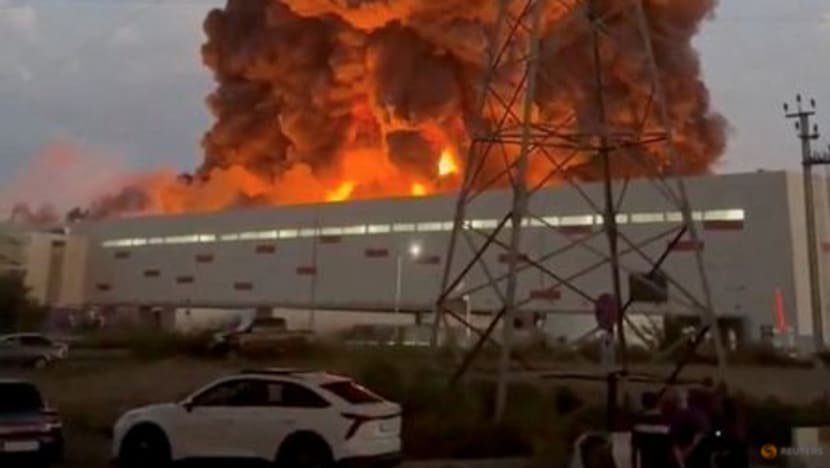
Ukraine Strikes Two More Wildberries WarehousesUkraine is now striking deep into Russia's civilian consumer economy, not just its military-industrial base — and the scale is large enough to move markets: Russia's e-commerce sector hit $147 billion in 2025 sales (+28%), and Ozon shares already dropped 2.3% on contagion fears. A lobbying push for six-month tax deferrals signals the financial toll is forcing policy responses inside Russia.

US Strikes Iran for 10th Night as Tankers Burn in HormuzThe tanker attacks and IRGC counter-strikes on US positions in Kuwait and Bahrain widen the geography of the conflict beyond Iranian territory, while the White House simultaneously claiming strikes will continue indefinitely and that diplomacy is ongoing leaves the offramp undefined; with Democrats now forcing a Senate vote, the war's duration becomes a direct domestic political variable.

House passes 214-208 resolution to end Trump Iran warThe same four Republicans who crossed the aisle in June did so again, showing a stable — if narrow — fracture in GOP unity over an unauthorized war that has already killed three U.S. troops. Even Republicans who voted 'no,' like Chip Roy, publicly demanded more oversight, meaning the symbolic rebuke may pressure leadership on the parallel $73 billion war-funding push.

Ukraine fires top brass as battlefield results improveThe simultaneous ouster of Ukraine's defence minister and top commander while Russia is bleeding troops at record rates and barely advancing suggests Zelenskyy is reshuffling leadership at the moment of strongest battlefield leverage — a gamble that the exposed rift over drone strategy could derail the momentum.

Philippines, China Exchange Protests Over Shoal Clash at ASEANSecond Thomas Shoal has become the flashpoint where U.S.–China rivalry collides with Philippine sovereignty, with Washington publicly invoking its defense treaty with Manila. Yet even amid the rhetorical escalation, both sides committed to finalizing the ASEAN-China Code of Conduct by November — a recurring pattern of theatrical confrontation paired with procedural cooperation that has defined the bloc's diplomacy with Beijing for two decades.

US Probes Russian Role in Iran CIA Site Drone StrikesA confirmed Russian intelligence-sharing role would reframe Moscow from a passive arms supplier to an active enabler of strikes on US intelligence infrastructure, potentially expanding Washington's threat assessment and complicating Rubio's diplomatic channel with Lavrov on Ukraine.

Rahul Gandhi Detained at Delhi Student Protest, ReleasedThe crisis exposes Modi's vulnerability on a youth-driven issue: the CJP has amassed millions of social media followers in just two months, and 2 million students are directly affected by the exam leaks that triggered the movement. Pradhan's combative framing of Gandhi risks deepening perceptions that the government is dismissive rather than responsive to systemic exam-security failures.
Why it matters: The Iran war's geographic expansion into the Strait of Hormuz puts global oil supply at risk in an unauthorized conflict, and the 214-208 House vote — with the same four GOP defectors returning — turns the offramp into a congressional problem rather than a White House one.
Ask SkimNews