Philippines, China Exchange Protests Over Shoal Clash at ASEAN — SkimNews

Get the Geopolitics newsletter
Daily geopolitics — wars, elections, sanctions, the diplomatic moves that move markets. Free.
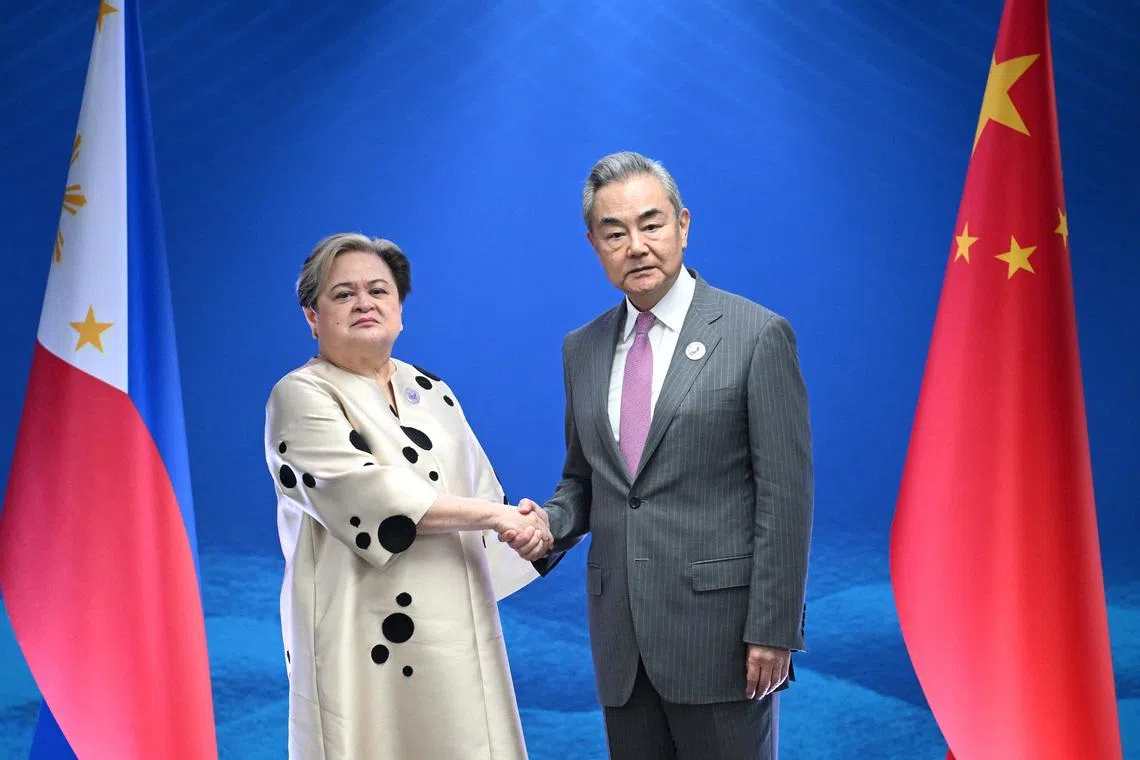
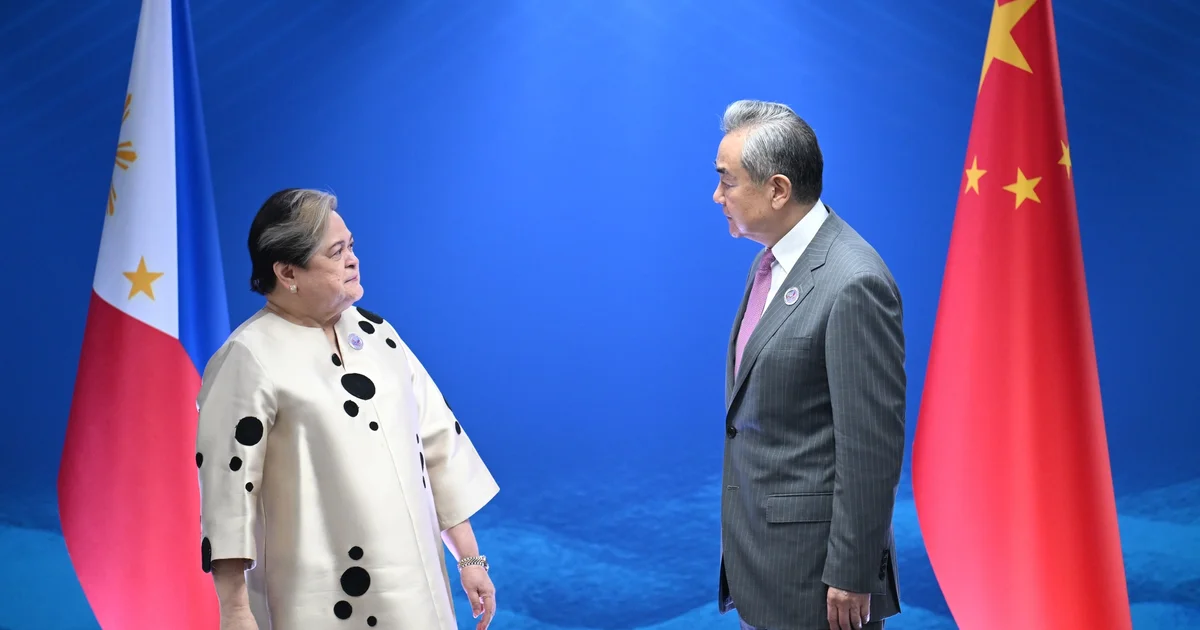
- Philippine Foreign Secretary Theresa Lazaro met with Chinese Foreign Minister Wang Yi in Manila, exchanging "strong" protests over a Monday clash at Second Thomas Shoal where a Philippine marine sustained a significant head injury after being struck with a baton by a CCG sailor near the BRP Sierra Madre.
- Lazaro also lodged a protest over an AI-generated video posted by the state-controlled China Daily on July 10 depicting Filipinos as a karaoke-singing monkey in traditional dress, calling it "deeply offensive, distressing, and unacceptable"; Chinese Ambassador Jing Quan attempted to distance Beijing from the clip.
- Wang Yi declared bilateral relations at a "crossroad," urged the Philippines to stop "provocative actions," and warned that allowing external forces to meddle would reduce Manila to a "pawn manipulated by others," per Chinese state media.
- U.S. Secretary of State Marco Rubio called the incident "escalatory" and reminded Wang that Washington has a defense treaty with Manila and "intends to abide by it," while separately meeting Philippine President Ferdinand Marcos Jr. to mark the 10th anniversary of the 2016 Arbitral Award.
- Japanese FM Toshimitsu Motegi voiced opposition to changing the status quo by force alongside Quad partners Australia and India, while Canadian FM Anita Anand described the incident as "troubling" and rejected "intimidation as a means of addressing disputes."
- Both ministers expressed willingness to conclude the long-negotiated ASEAN-China Code of Conduct for the South China Sea, with Malaysian FM Mohamad Hasan suggesting it could be finalized at the 49th ASEAN Summit in Manila in November.
Why it matters: Second Thomas Shoal has become the flashpoint where U.S.–China rivalry collides with Philippine sovereignty, with Washington publicly invoking its defense treaty with Manila. Yet even amid the rhetorical escalation, both sides committed to finalizing the ASEAN-China Code of Conduct by November — a recurring pattern of theatrical confrontation paired with procedural cooperation that has defined the bloc's diplomacy with Beijing for two decades.
Ask SkimNews