Iowa State AI Outpaces Livestock Virus Mutations — SkimNews

Get the Health newsletter
Daily health & science — research, biotech, public health, the studies worth knowing. Free.
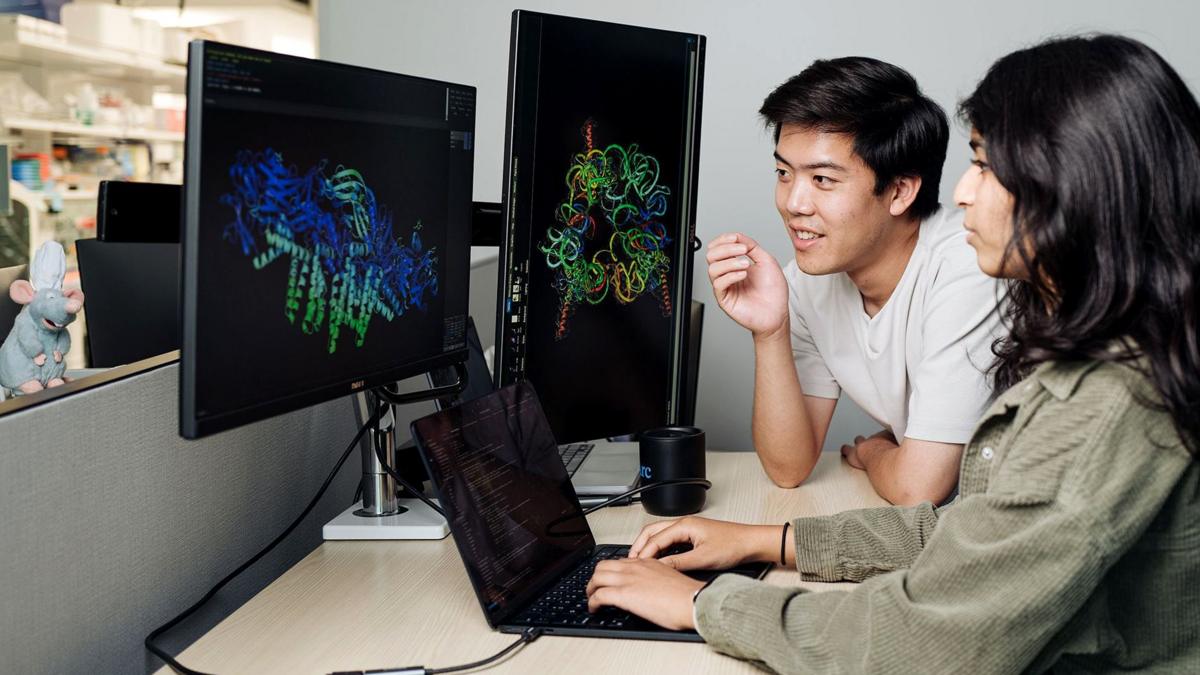
- Ratul Chowdhury, an Iowa State assistant professor of chemical and biological engineering, leads a lab using AI-powered simulations to predict viral mutations and design 'future-proof' vaccines that hold up as viruses evolve.
- PRRS virus costs the global pork industry more than $1 billion annually and has one of the fastest evolutionary rates among animal-infecting RNA viruses, according to Chowdhury.
- Chowdhury's team screened millions of possible protein shapes and mutations using AI modeling tools, a process he estimates ran 100 times faster than traditional approaches.
- A late-2024 study published in Computational and Structural Biotechnology Journal identified 75 epitopes and designed 56 immunogens for PRRS, with a small vaccine trial planned at an Iowa State swine farm later this year.
- The lab also built AstraMEV, a digital platform that identified 258 epitopes for infectious bronchitis virus in chickens, and designed two multi-epitope vaccine candidates: SmallTope (up to 8 epitopes) and BigTope (up to 23 epitopes).
- Mike Roof, former global segment head of vaccine development at Boehringer Ingelheim, now serves as ISU's chief technology officer for vaccines and immunotherapies and mentors Chowdhury on designing research that translates to industry.
- Iowa State's Veterinary Diagnostic Laboratory conducted more than 1.7 million tests last year — a new annual high — giving the university a livestock disease data pipeline few other institutions can match for training AI models.
Why it matters: The $1 billion annual toll of PRRS underscores the scale of what an evolution-resistant vaccine could save pork producers. Chowdhury's approach — combining AI mutation prediction, the VDL's 1.7 million-test annual data stream, and the CYVAX commercialization pathway — positions Iowa State to license mutation-resistant vaccine tool kits to animal health companies that currently scramble to keep up with viral drift.
Ask SkimNews