Google backs 86 MW solar-storage project at WV coal mine — SkimNews
Get the Energy newsletter
Daily energy & climate — solar, EVs, oil, the policy fights and tech bets shaping the transition. Free.
- Google will buy the energy, capacity, and clean energy attributes from the 86 MW Mammoth Solar project in Kanawha County, West Virginia — built on a former coal mine site by developer MN8 and zinc-battery maker Eos Energy Enterprises, with solar targeted for 2028 commercial operation and storage coming online in 2029 and 2030.
- The project pairs 86 MW of utility-scale solar with 10 MW/100 MWh of zinc-based long-duration storage and 70 MW/280 MWh of lithium-ion storage, designed to match clean capacity with Google's regional data center load profiles throughout the day.
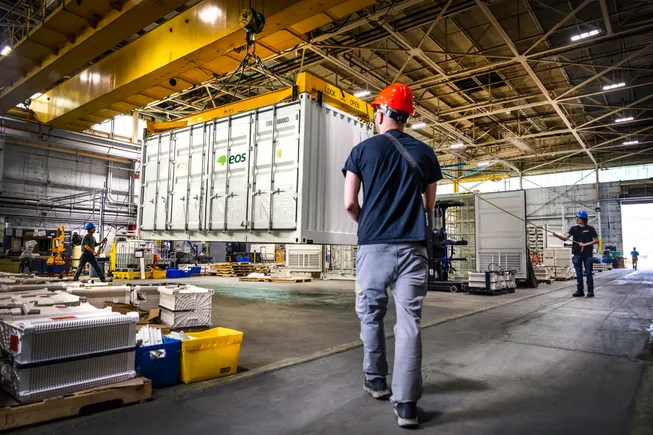
- Eos Energy Enterprises is supplying what the companies call one of the largest zinc-based battery deployments to date — the U.S. Department of Energy says most operational zinc batteries have power ratings of 1 MW or less, while Eos's nonflammable zinc electrolyte enables 8+ hour discharges.
- The build sits inside PJM Interconnection, where recent capacity auctions hit the price ceiling and a one-time backstop auction this fall is set to fill a nearly 7 GW shortfall.
- MN8 and Eos signed a supply agreement last October covering up to 750 MWh of Eos Z3 battery modules, with first deployments combining 200 MWh of 10-hour storage with solar.
- Google separately is funding a 300 MW/30 GWh iron-air battery deployment in Minnesota with Form Energy and Xcel Energy that the manufacturer says can discharge at full power for up to 100 hours.
Why it matters: The Mammoth Solar deal gives Google a 24/7 clean-energy match for data center loads inside PJM, where capacity auctions have already hit the price ceiling — and it gives Eos Energy a marquee customer to push zinc-based long-duration storage past the sub-1 MW deployments that dominate today's market, with first power flowing in 2028.
Ask SkimNews