China's PLA Militarizes Humanoid Robots — SkimNews

Get the Tech newsletter
Daily tech — startups, AI labs, chips, the launches that shape the next decade. Free.
- PLA Daily called on researchers two days after the August World Humanoid Robot Games to accelerate transferring humanoid technology to military training grounds for robotic "combatants"
- Chinese manufacturers accounted for roughly 95% of global humanoid shipments in 2025, per BofA Global Research, giving the PLA access to an expanding commercial industry while developing its own military applications
- PLA procurement records show a May 2025 tender for a humanoid robot, a September 2025 tender for an "embodied humanoid robot intelligent perception and dexterous operation system," and a June tender that budgeted about US$300,000 for camera, radar, and motion data collection
- NUDT researchers published an August 2025 paper modelling an urban assault force in which six "combat robots" split between two assault teams clear enemy-occupied buildings floor-by-floor and room-by-room — equipment the authors projected could be available in five to ten years
- Norinco's Fuxi robot is described in August company materials as capable of sentry duty, all-weather reconnaissance, and intelligent patrol, and can be paired with a teleoperation system that lets a human operator control it remotely
- Reuters found no evidence that China has deployed an armed humanoid with an operational PLA unit, and experts note humanoids remain energy-intensive and unreliable outside controlled demonstrations
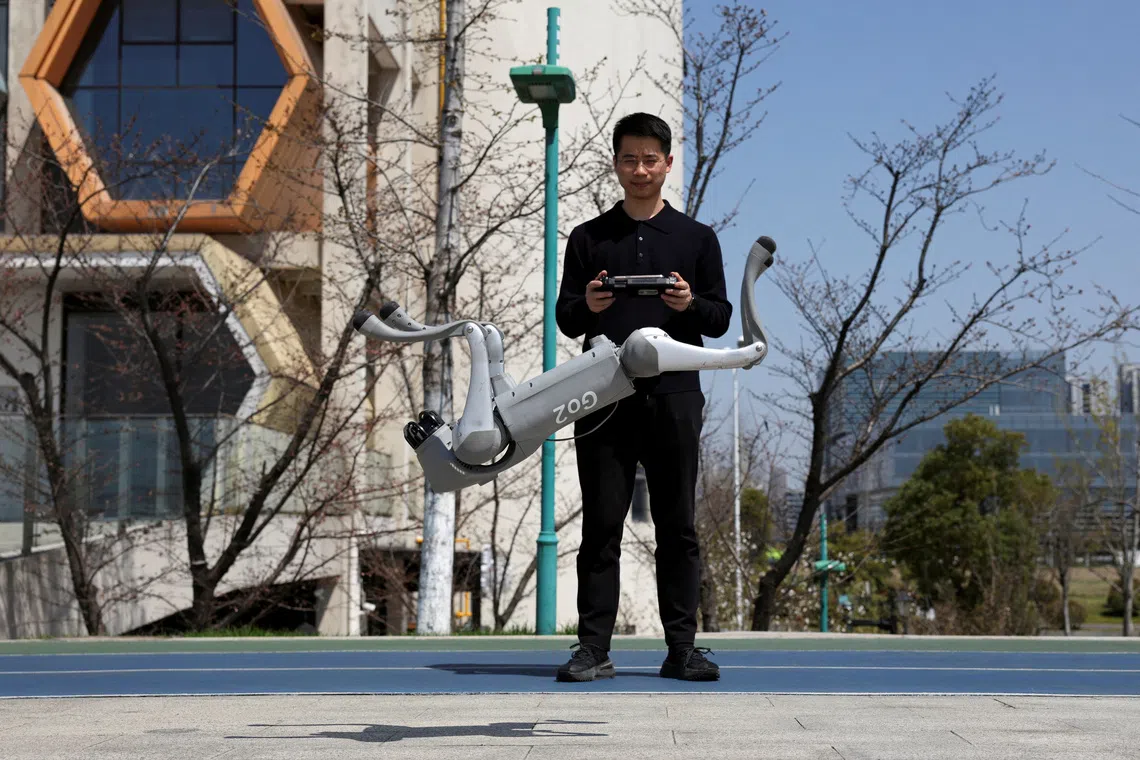
- The US Army launched a 2025 competition for "militarised humanoid capabilities" with up to US$1.25 million in follow-on contracts and 2026 testing — though Reuters reports the US robotics industry trails far behind China's, with Unitree's robot-dog designs reportedly tracing back to US military-funded innovations
Why it matters: China hasn't yet fielded an armed humanoid, but its commercial grip — roughly 95% of global shipments — combined with accelerating PLA procurement and published urban-assault doctrine suggests battlefield deployment within five to ten years, putting US competitors, who launched their own competition but depend on a smaller domestic industry, on the back foot.
Ask SkimNews