China's PLA Pushes Humanoid Robots to Military Training — SkimNews

Get the Tech newsletter
Daily tech — startups, AI labs, chips, the launches that shape the next decade. Free.
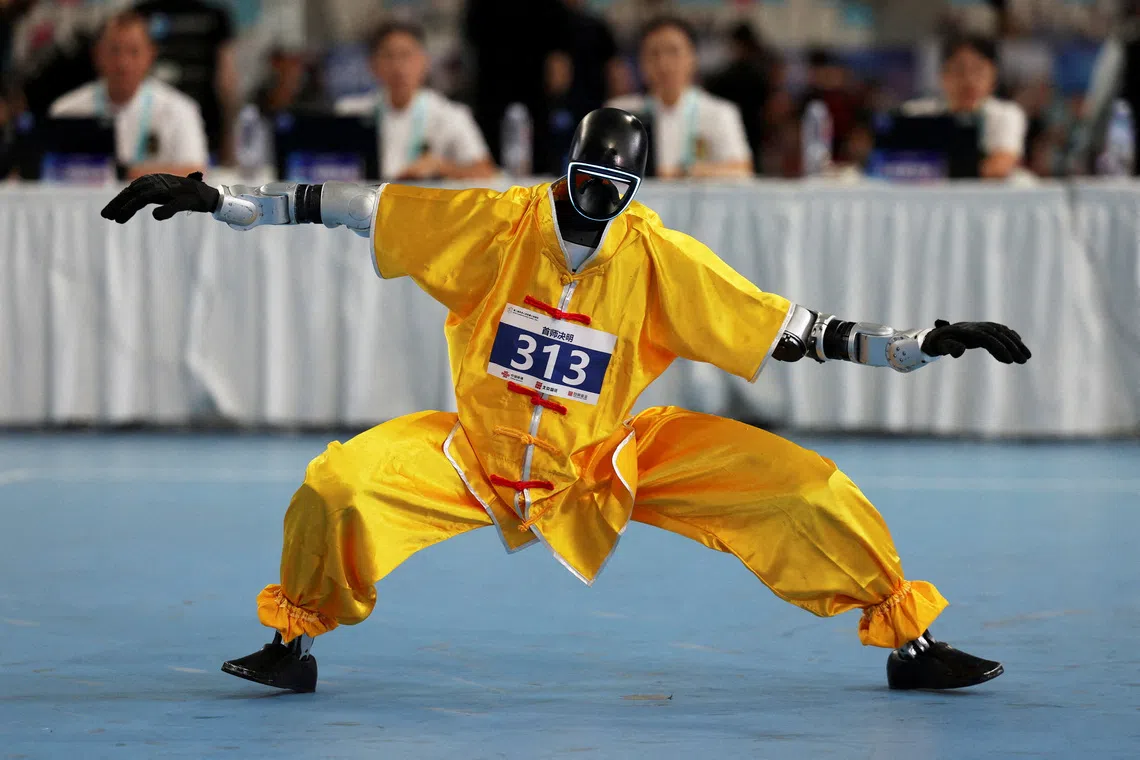
- Tiangong Ultra humanoid robot ran 100m in 8.64 seconds at the World Humanoid Robot Games in Beijing, surpassing Usain Bolt's human world record of 9.58 seconds
- The People's Liberation Army's official newspaper called for researchers to accelerate moving humanoid robots from laboratories to military training grounds, referring to them as "combatants"
- Modern humanoids combine 400Nm torque actuators, carbon fiber and aluminum bodies, and reinforcement-learning software trained through millions of trial-and-error scenarios in virtual simulations like Gazebo and ROS 2
- Humanoid robots are uniquely suited for urban warfare — they can climb vertical fire-escape ladders, operate standard door handles, and squeeze through debris-filled stairwells built for human soldiers, tasks tracked or wheeled drones cannot perform
- The modern humanoid robotics surge was kickstarted by US DARPA's Robotics Challenge, which funded bipedal robots specifically to respond to disasters like the Fukushima nuclear meltdown
- Military-grade robotics frameworks like ROS-M, alongside simulation tools and training datasets, are largely public and shared across global academic communities, enabling adversaries to replicate advanced robotic behavior
Why it matters: The PLA's explicit demand for humanoid "combatants" arrives at the moment when the hardware (400Nm actuators, carbon fiber bodies), software (millions of reinforcement-learning simulations), and manufacturing pipeline are already integrated into a unified industrial system — and because the underlying software ecosystem is largely open-source, any state or non-state actor with sufficient skill can replicate the capability.
Ask SkimNews