China Dominates Beijing Humanoid Robot Games — SkimNews

Get the Tech newsletter
Daily tech — startups, AI labs, chips, the launches that shape the next decade. Free.
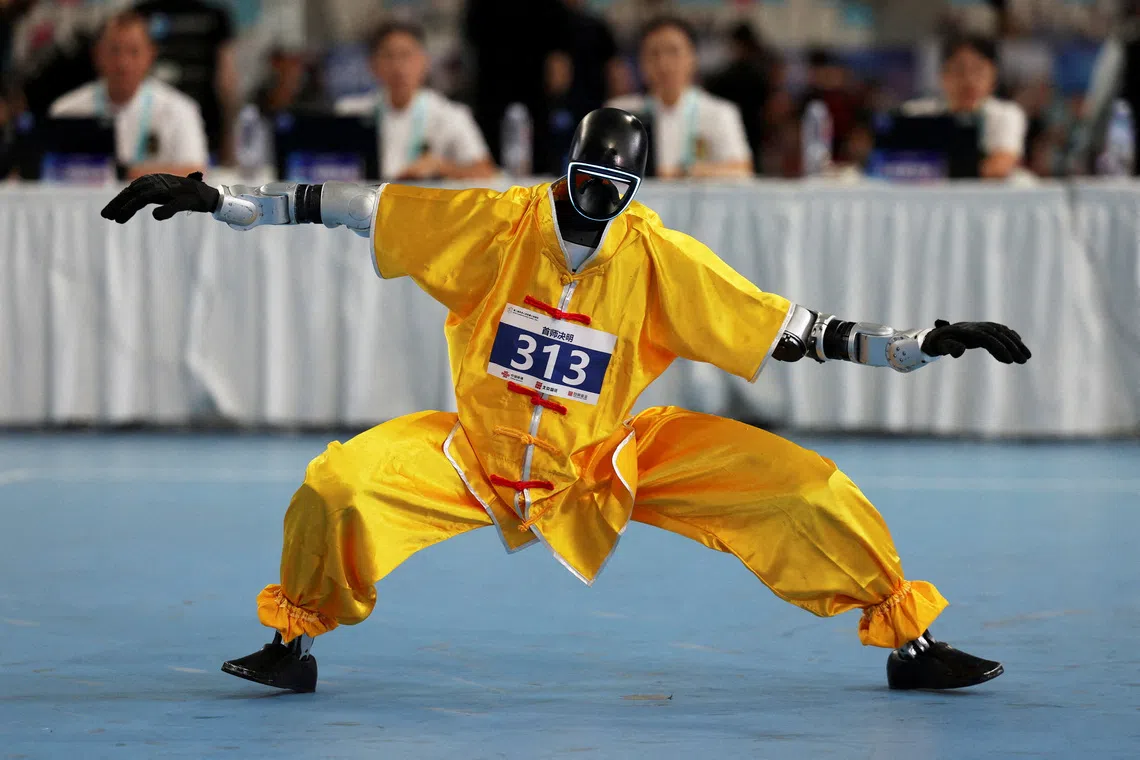
- The World Humanoid Robot Games wrapped after five days at Beijing's National Speed Skating Oval (a former Olympic venue), with robots routinely losing limbs, crashing into walls, bursting into flames, and being carried off on stretchers
- Records fell dramatically: one humanoid ran the 100m sprint in 9.39 seconds — beating Usain Bolt's 2009 world record of 9.58 — before lowering its own mark to 8.86 seconds; another bot cleared 2.88m in standing high jump, nearly half a meter above the 1993 human record
- Chinese teams dominated: 641 of 666 teams were Chinese, representing 157 companies and 200 universities, with AgiBot and Tien Kung each winning more medals than nearly every other competitor combined
- Major US humanoid players — Tesla, Boston Dynamics, and Figure — were absent from the games, despite the event being framed as a global competition
- Events blended athletics and practical tasks, including sprinting, football, boxing, weightlifting, gymnastics, tug of war, and table tennis alongside bed-making, parcel delivery, shelf stacking, clothes folding, hammering nails, and a firefighting contest
- Autonomy remained limited: while some events (gymnastics, football, tug of war, table tennis, some track events) required fully autonomous operation, others allowed teleoperation with a scoring penalty, underscoring how far humanoids remain from reliable real-world deployment
- Beijing has confirmed another humanoid half-marathon for April and plans to open its first robot-run hotel next year, while Washington trails China in robotics manufacturing, deployment, and hardware despite retaining an edge in frontier AI and advanced chips
Why it matters: With 641 of 666 teams being Chinese, the medal results reflect a coordinated national industrial push, not just engineering talent. Major US players — Tesla, Boston Dynamics, Figure — skipped the event entirely, while Washington has not treated embodied AI as a strategic priority. China is rapidly closing the gap in frontier AI while pulling ahead in robotics hardware, deployment, and manufacturing — and recent US efforts to ban foreign robots could backfire because domestic firms remain dependent on Chinese components.
Ask SkimNews