UC Berkeley Maps Deep Sleep-Growth Hormone Brain Circuit — SkimNews
SkimNews Take
A single feedback loop linking deep sleep to growth hormone release reframes sleep as a prerequisite rather than a consequence of metabolic health, meaning hormonal and metabolic therapies may quietly underperform when sleep architecture is fragmented.
Get the Health newsletter
Daily health & science — research, biotech, public health, the studies worth knowing. Free.
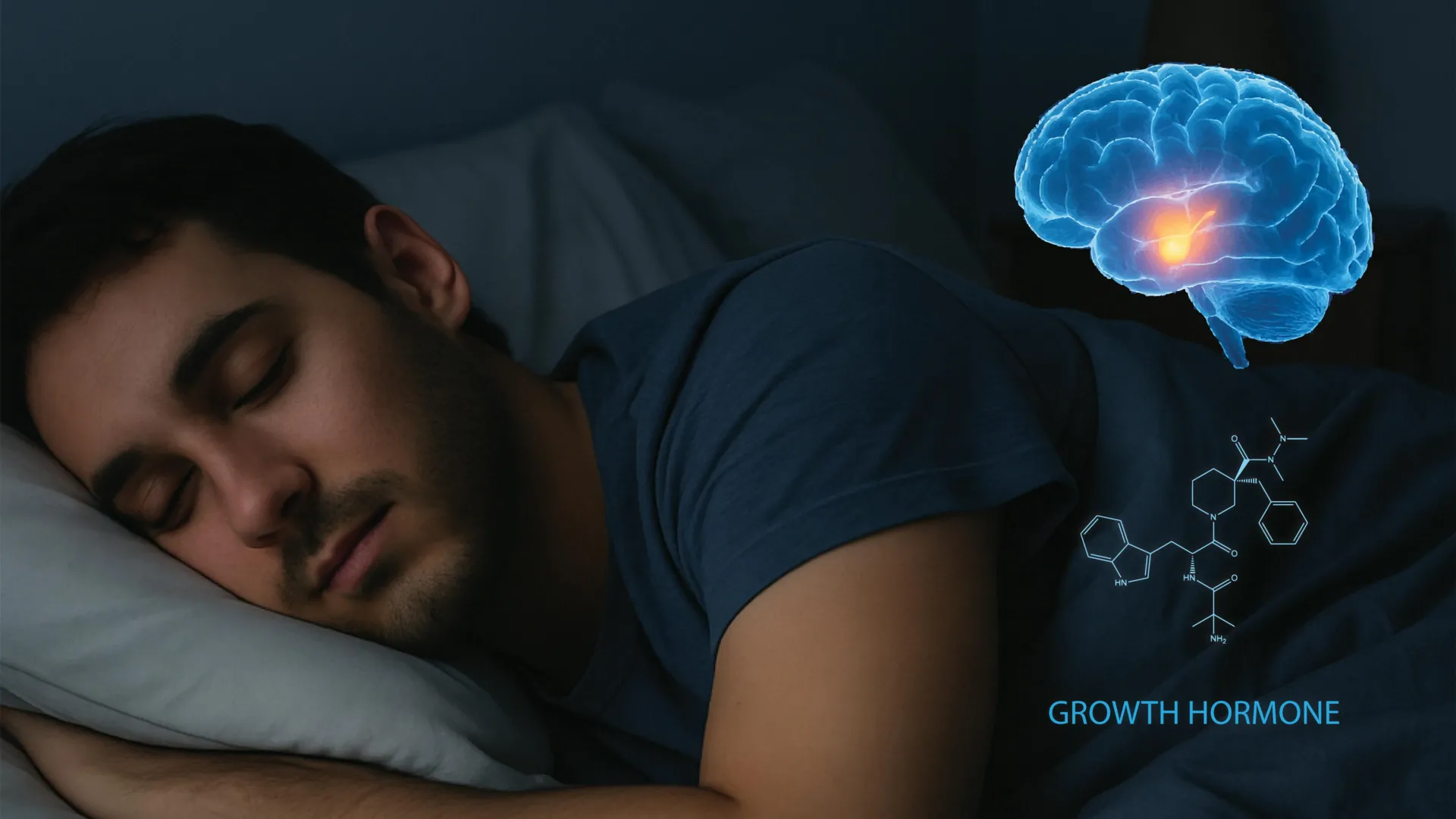
- UC Berkeley researchers identified the brain circuitry linking deep sleep to growth hormone release, publishing the work in the journal Cell (2025; DOI: 10.1016/j.cell.2025.05.039).
- First author Xinlu Ding and colleagues directly recorded neural activity in mice by placing electrodes in their brains and stimulating hypothalamic neurons with light, the first time neural activity — not just blood hormone levels — has been observed during sleep-driven growth hormone release.
- Two hypothalamic neuron populations — GHRH neurons and somatostatin neurons — behave differently by sleep stage: during REM sleep both rise, driving greater growth hormone release, while in non-REM sleep somatostatin falls and GHRH rises only moderately.
- Locus coeruleus in the brainstem is part of a newly described feedback loop: as growth hormone accumulates during sleep it stimulates this alertness region, but excessive locus coeruleus activity flips to promoting sleepiness, keeping the system in balance.
- Co-author Daniel Silverman said the findings could yield 'a novel handle' for experimental gene therapies targeting the locus coeruleus to improve sleep quality or restore growth hormone balance in disorders including Alzheimer's and Parkinson's.
- Lead investigator Yang Dan led the team in her UC Berkeley lab of neuroscience and molecular and cell biology; the work was supported by the Howard Hughes Medical Institute and the Pivotal Life Sciences Chancellor's Chair fund.
- Poor sleep chronically reduces growth hormone release, which the researchers note also regulates glucose and fat metabolism, linking sleep disruption to elevated risk of obesity, diabetes, and cardiovascular disease.
Why it matters: The study gives drug developers a specific neural target — the locus coeruleus–hypothalamus feedback loop — for the first time, rather than the blunt option of hormone injections. Patients with sleep-tied metabolic disease, Alzheimer's, Parkinson's, or growth disorders become the clearest downstream beneficiaries, per the researchers' stated goal of building 'a basic circuit to work on' for future therapies.
Ask SkimNews