mAxialtrode: a needle-thin brain fiber doing three jobs at once — SkimNews
Get the Health newsletter
Daily health & science — research, biotech, public health, the studies worth knowing. Free.
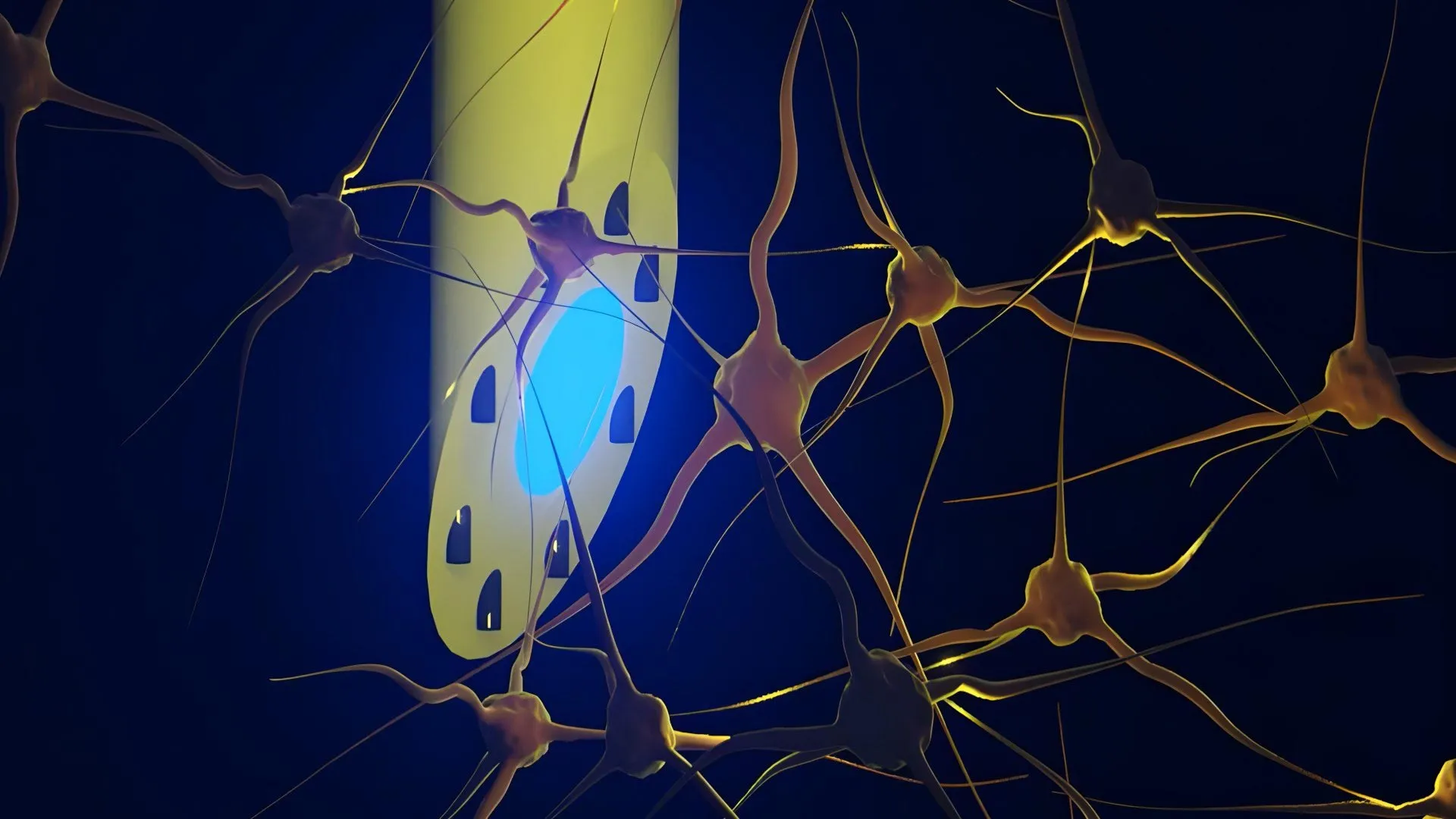
- The mAxialtrode, developed by DTU with the University of Copenhagen and University College London, is a flexible fiber less than half a millimeter across featuring eight microscopic fluid channels surrounding a light-conducting core that can also hold metal wires for electrical recording.
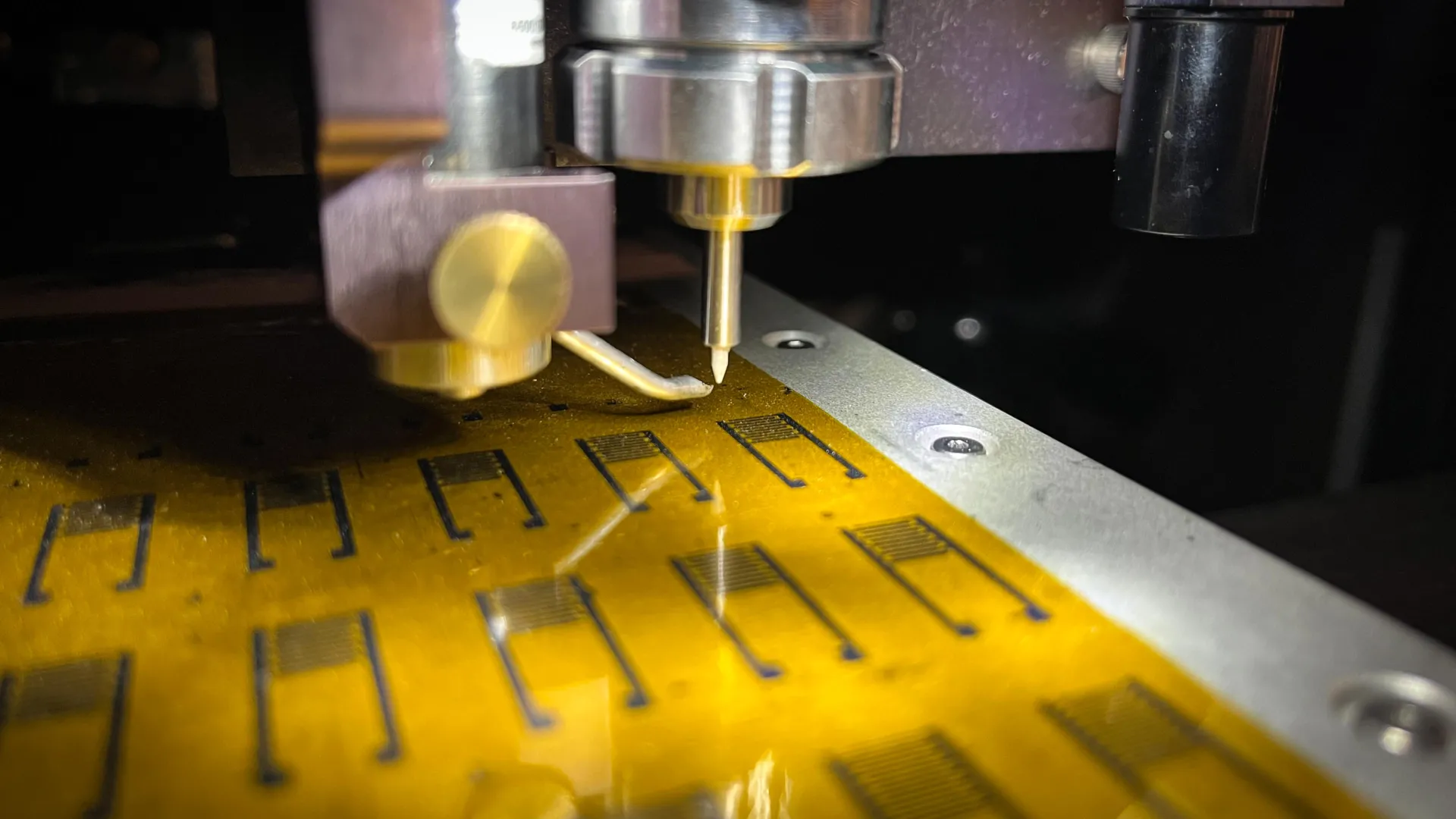
- Kunyang Sui and Christos Markos at DTU built the device from soft, plastic-like optical fibers with an angled tip, contrasting with rigid silicon-based implants that the researchers say can irritate brain tissue and trigger inflammation.
- When tested in living mice, the implant stimulated neurons using both blue and red light while simultaneously recording electrical activity from the cerebral cortex and hippocampus through a single fiber, with the animals carrying it without obvious signs of discomfort.
- Researchers delivered different substances at separate depths — with delivery points nearly three millimeters apart** — through the same single fiber, demonstrating layered drug access alongside recording and stimulation.
- Unlike conventional optical fibers that only interact with brain tissue at their flat distal tip, the mAxialtrode offers multiple functional points along its length, letting scientists probe several brain layers and deeper regions without repeated insertions.
- The study was published in Advanced Science (DOI: 10.1002/advs.202519744), and the DTU team is now working to patent the technology while assessing what's needed before any clinical testing in patients.
- Collaborators Rune W. Berg (University of Copenhagen) and Rob C. Wykes (UCL) contributed epilepsy-model expertise, with the researchers flagging future therapeutic use cases such as combining targeted drug delivery with electrical or light stimulation for conditions like epilepsy.
Why it matters: By combining recording, drug delivery, and light stimulation into a single soft fiber under half a millimeter wide, the device lets researchers probe several brain layers with one implant instead of stacking multiple devices — a precision and tissue-comfort gain in mice studies, with the DTU team now seeking a patent.
Ask SkimNews