T. rex could become most expensive fossil ever - but it's a problem for scientists — SkimNews
Get the Health newsletter
Daily health & science — research, biotech, public health, the studies worth knowing. Free.
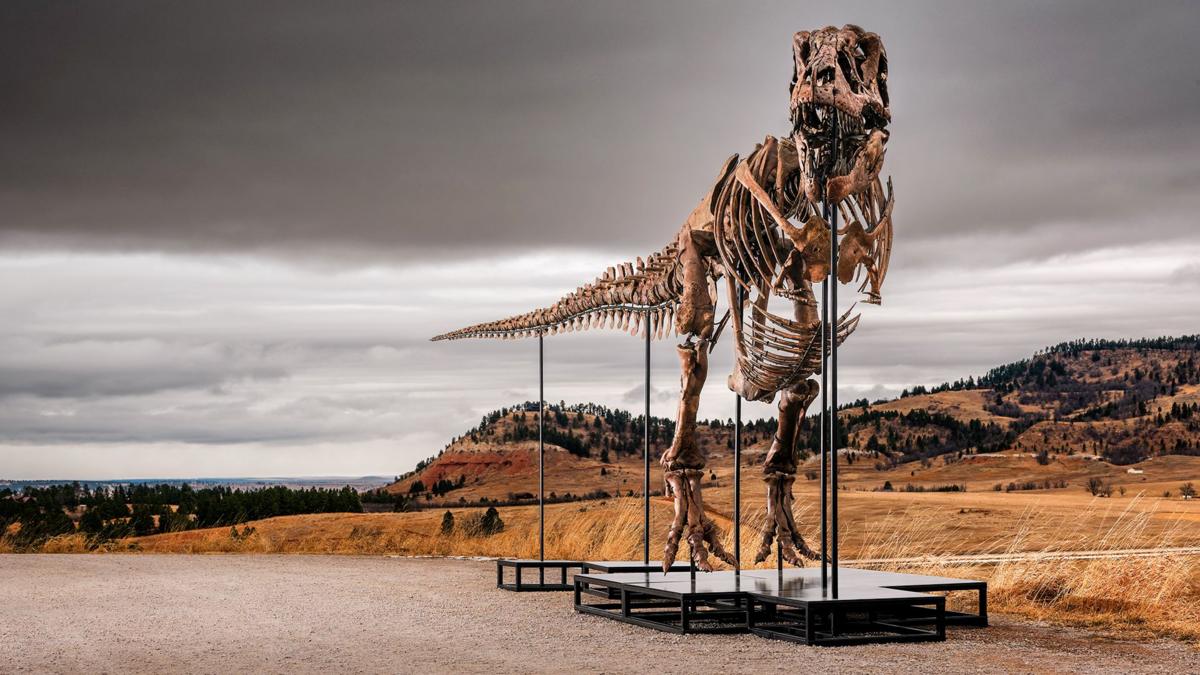
- Gus, a T. rex discovered in South Dakota's Badlands and 61% complete, goes under the hammer at Sotheby's Tuesday with a $30m pre-sale valuation and a $19m minimum bid after a six-year excavation and lab reconstruction completed in 2023.
- Prof Susannah Maidment of London's Natural History Museum says major museums are already "priced out" of acquiring such specimens, warning that palaeobiology has never been more important as Earth faces a potential mass extinction.
- Sotheby's Cassandra Hatton argues the steep price reflects the brutal realities of fossil hunting — people die on excavations, dig seasons are limited to months between thaw and freeze — and that the excavators themselves are often "living hand to mouth," not wealthy collectors.
- The most respected scientific journals will not publish studies based on fossils held in private collections, meaning whichever private buyer wins Gus could effectively decide whether the specimen contributes to research or vanishes from science.
- The auction record for a dinosaur belongs to Apex, a Stegosaurus Sotheby's sold for $44.6m in 2024 — 11 times its original estimate — purchased by Citadel hedge fund CEO Kenneth Griffin, who has since loaned it to the American Natural History Museum for four years.
- Gus bears visible combat damage including a large bite mark on the skull and broken, healed ribs, offering rare insight into the life of a Tyrannosaurus, with 61% of its bones identified — roughly twice the rate of a typical major find.
Why it matters: With a $30m valuation and a $19m minimum bid, even leading natural history museums say they cannot compete — so whichever private collector wins Gus decides whether a 61%-complete T. rex fuels research on the planet's current mass extinction or disappears into a vault that top journals refuse to study. The bottleneck is access, not just money: a buyer's willingness to make Gus publicly available over decades, not merely a one-time loan, is what separates a scientific asset from a trophy.
Ask SkimNews


