GAE Procedure Helps Knee Pain Patients Avoid Surgery — SkimNews
Get the Health newsletter
Daily health & science — research, biotech, public health, the studies worth knowing. Free.
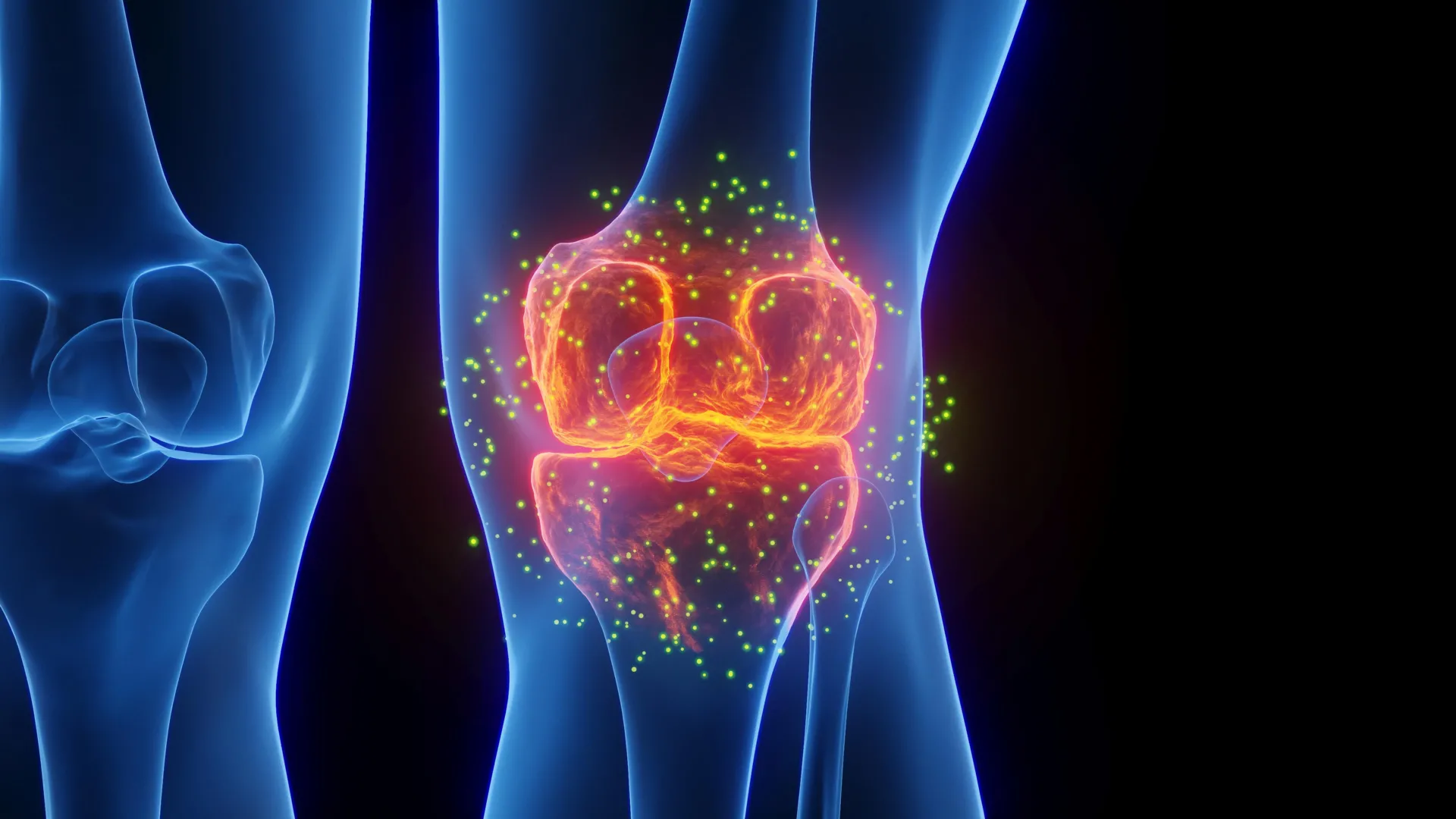
- Genicular artery embolization (GAE) is an outpatient procedure that reduces chronic knee pain by threading a catheter through the femoral artery to release microscopic beads that block blood flow to inflamed, abnormal vessels inside the joint.
- Leigh Casadaban, MD, MS, assistant professor of radiology at the University of Colorado Anschutz School of Medicine, says about 70% of patients see "phenomenal results," with pain scores cut in half or more and some patients reporting no pain at all afterward.
- Cynthia Schraf-Fletcher, 74, says her GAE results on her right knee nearly a year later are comparable to the total knee replacement she previously had on her left knee, allowing her to comfortably return to gardening and stationary cycling.
- GAE typically takes one to two hours under conscious sedation, with patients monitored briefly and usually sent home the same day, filling a treatment gap between conservative therapies like steroid injections and full knee replacement.
- GAE was originally developed in Japan more than a decade ago, and since 2021 the FDA has granted "breakthrough device status" to multiple GAE-related devices in the United States, with Japanese four-year data and U.S. two-year data suggesting pain relief can last years.
- Casadaban is currently leading two clinical trials at CU Anschutz, including one evaluating a temporary arterial treatment device called Nexsphere-F designed to block small blood vessels contributing to knee inflammation.
- Researchers are beginning to explore GAE for musculoskeletal conditions beyond the knee, including frozen shoulder, tennis elbow, and plantar fasciitis, though it is currently approved only for knee use.
Why it matters: Osteoarthritis affects millions and the standard end-of-line treatment — total knee replacement — is major surgery with months of recovery; GAE offers a same-day outpatient alternative for the roughly 70% of patients who respond well, potentially keeping working-age and active older adults out of the OR. With the FDA already granting breakthrough device status to multiple GAE tools and U.S. clinical trials underway, the procedure could soon move from a niche option at academic centers to broader availability.
Ask SkimNews