Pentagon Reviews Tactical Nuke Options Amid China, Russia Buildup — SkimNews

Get the Geopolitics newsletter
Daily geopolitics — wars, elections, sanctions, the diplomatic moves that move markets. Free.
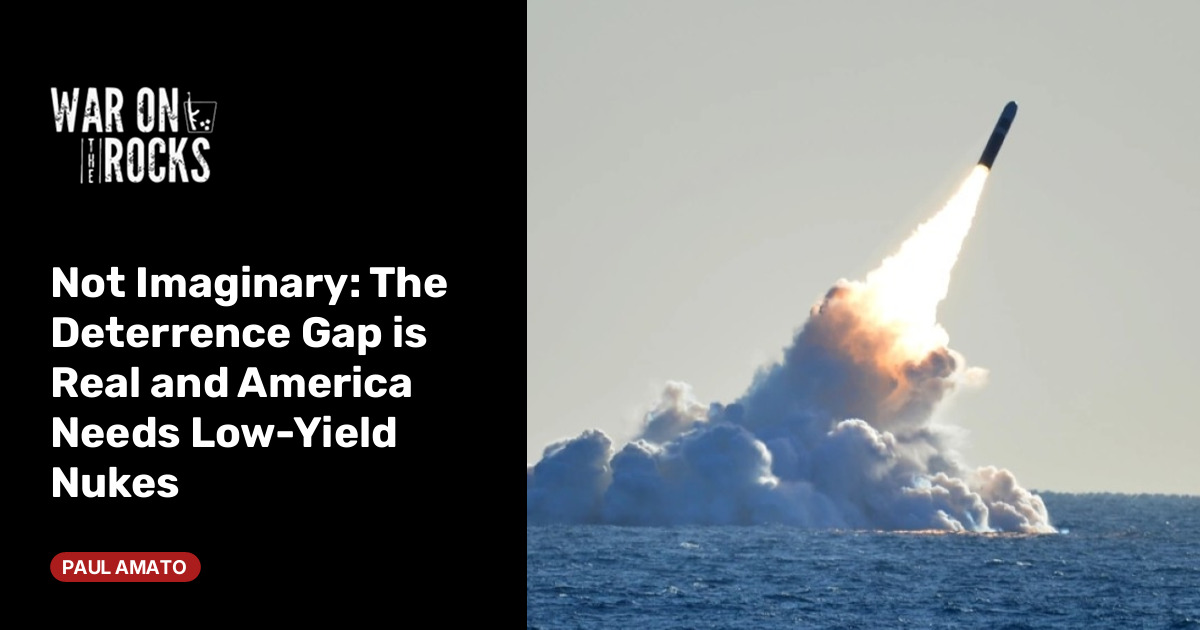
- The Pentagon initiated a classified review of US nuclear employment guidance to expand tactical nuclear strike options, with Undersecretary Elbridge Colby citing the need for "rational nuclear options" against potential regional conflicts with China or Russia.
- The US nuclear arsenal remains overwhelmingly weighted toward strategic weapons — approximately 1,670 of 1,770 deployed warheads (94%) sit with the strategic triad, leaving only 100 tactical gravity bombs stationed in Europe, per March 2026 Bulletin of the Atomic Scientists data.
- Admiral Richard Correll, head of US Strategic Command, said the military seeks "escalation maneuver" space across non-kinetic, conventional, and limited nuclear domains, though declaratory policy remains unchanged.
- China's nuclear buildup has reached roughly 620 warheads and is expanding through new solid-fuel ICBM silos, Type 094/096 SSBNs carrying JL-3 SLBMs, and air-launched missiles on H-6N bombers, with projections to exceed 1,000 warheads by 2030.
- Russia is finalizing a multi-decade nuclear overhaul totaling around 4,400 warheads, increasingly leaning on tactical systems like the Oreshnik and Iskander ballistic missiles plus the Kinzhal hypersonic weapon to deter NATO after its conventional forces were "badly battered" in Ukraine.
- Japan's nuclear latency is gaining prominence — Defense Minister Shinjiro Koizumi broke taboo by saying Japan must address the nuclear issue, PM Sanae Takaichi has advocated reconsidering the "no entry" nuclear-sharing aspect, and Osaka University's inertial confinement fusion reactors could provide "virtual" testing capability.
- The expiry of New START, combined with China's rise, North Korea's modernization, and Iran's nuclear ambitions, is pushing US deterrence planning beyond Cold War bilateral frameworks, the article concludes.
Why it matters: With 94% of deployed US warheads on strategic delivery systems and no proportional option between conventional strikes and full strategic exchange, the Pentagon is explicitly recalibrating for a multipolar nuclear order. China's projected 1,000-plus warheads by 2030 and Russia's Oreshnik-ambiguity signaling in Ukraine have made the old binary untenable, forcing Washington to build tactical flexibility before New START's bilateral constraints fully lapse.
Ask SkimNews