Ex-Pentagon Director Rebuts 'Imaginary Nuke Gap' Claim — SkimNews
Get the Geopolitics newsletter
Daily geopolitics — wars, elections, sanctions, the diplomatic moves that move markets. Free.
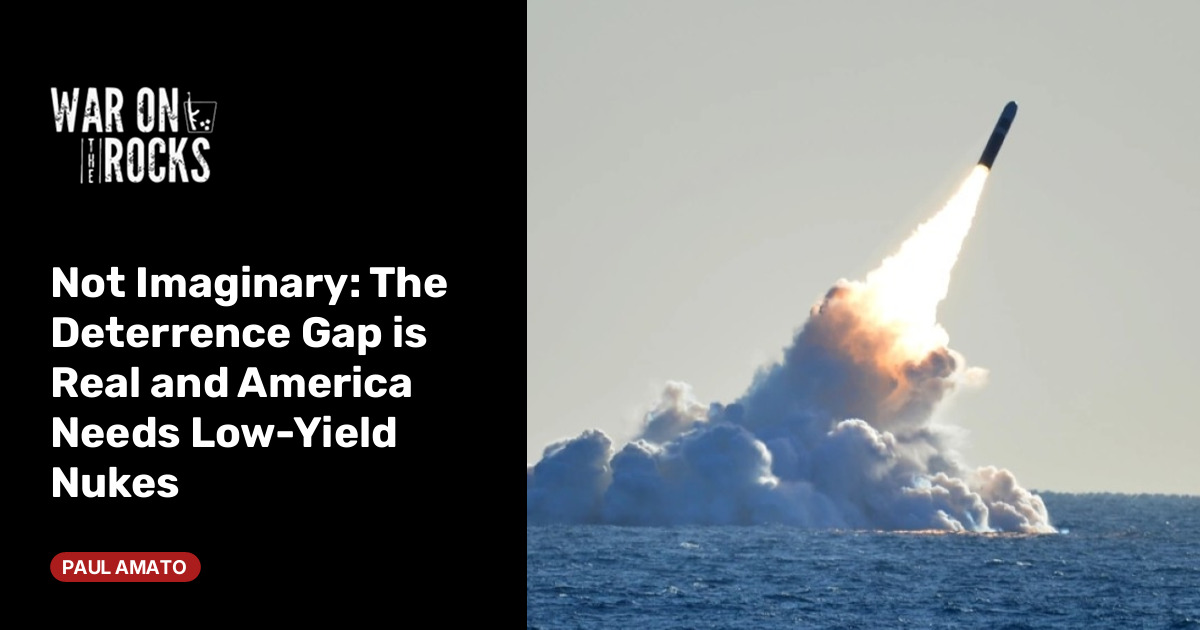
- The 2018 Nuclear Posture Review called for two supplemental low-yield nuclear capabilities — the W76-2 SLBM warhead and a nuclear-armed sea-launched cruise missile — to give the president proportionate response options short of an all-out strategic exchange, particularly against Russia's theater nuclear advantage.
- Congress in 2024 resurrected the nuclear-armed sea-launched cruise missile after the Biden administration cancelled it, directing the Defense Department to pursue the capability.
- The author, who spent 12 years as director for Nuclear Deterrence Policy in the Office of the Under Secretary of Defense for Policy, personally organized the 2018 and 2022 Nuclear Posture Reviews and is rebutting Jay Tilden's claim that supplemental low-yield advocates are 'contriving imaginary gaps in nuclear deterrence.'
- Russia retains a 'significant advantage' over the US and allies in theater-range nuclear systems in both numbers and diversity, according to the source, and Putin boasted at the June 2026 St. Petersburg International Economic Forum that Europeans are 'more or less defenseless' against Russian tactical nuclear weapons.
- Greg Weaver, former deputy director for strategic stability at the Joint Staff and deputy director for policy and plans at US Strategic Command, published a 2025 article identifying operational attributes credible US theater nuclear systems should possess — including survivability without lengthy preparation, continuous forward deployment in both Europe and Asia, and high penetration probability even in limited strikes.
- US and allied dual-capable aircraft have served as NATO's deterrence backbone for six decades delivering nuclear gravity bombs forward-deployed in Europe, but the source notes fixed operating bases and weapons storage sites would be vulnerable to conventional attack during extended conflict before the nuclear threshold is reached.
Why it matters: With the nuclear-armed sea-launched cruise missile program revived by Congress in 2024 and Putin openly boasting at the June 2026 SPIEF that Europeans are 'more or less defenseless' against Russian tactical nukes, this debate will directly shape whether the US fields new theater-range nuclear capabilities. The W76-2 was already fielded; the SLCM is the live policy question.
Ask SkimNews