Bitcoin's 32% Drop Is the Shallowest of Any Cycle — SkimNews
Get the Finance newsletter
Daily finance — markets, central banks, M&A, the prints that move money. Free.
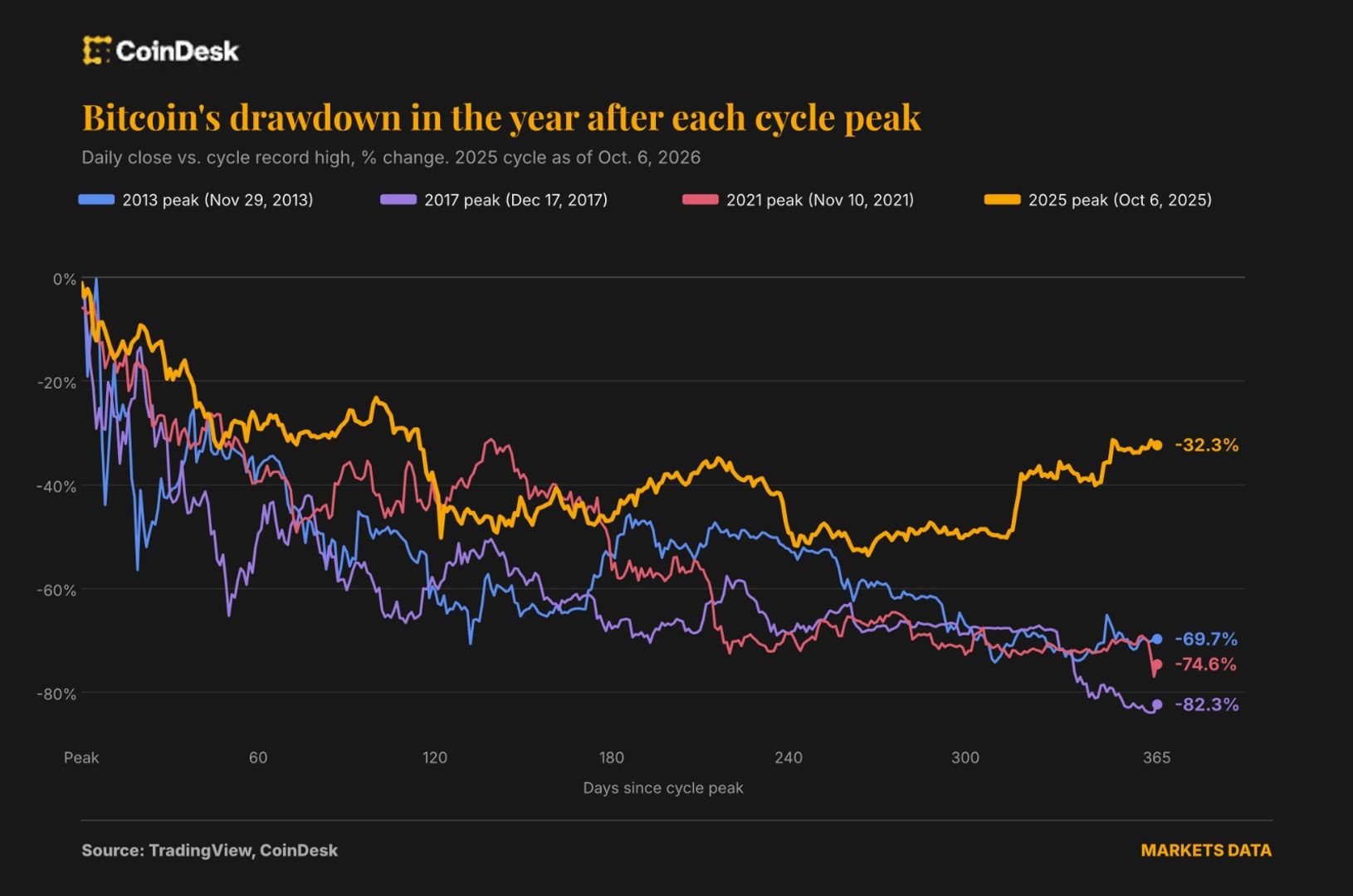
- Bitcoin trades at $85,453, down 32% from its Oct. 6, 2025 record of $126,000, versus 69.7%, 82.3%, and 74.6% one-year declines after the 2013, 2017, and 2021 peaks, per CoinDesk calculations.
- Bitcoin's bear-market bottom hit $59,000 on June 30 — a 53% peak-to-trough drop arriving at roughly nine months, compared with 77%–85% drawdowns and one-year-or-longer troughs in prior cycles.
- Institutional ETF inflows and reduced leverage reshaped the 2023–25 cycle: most leverage was cleared on Oct. 10, 2025, when a macro sell-off triggered more than $19 billion in crypto derivatives liquidations.
- Bitcoin's annualized realized volatility has fallen to roughly 40% from a long-term norm above 80% since U.S. spot ETFs debuted in early 2024, with options DVOL pinned around 35, per Primal Fund's Griffin Ardern.
- The 30-year U.S. Treasury yield recently hit 5.7% — a level last seen in April 2002 — climbing more than 80 basis points year-to-date; Ardern warned the long end, not Crypto, will determine the depth of the next decline.
- The Treasury's August bond buyback expansion briefly lifted bitcoin from roughly $64,000 to nearly $80,000, but yields have continued climbing since on what some analysts attribute to fiscal rather than growth concerns.
- Bitcoin options show implied volatility near its lowest percentile on record with one-year skew neutral to bearish — Ardern notes traders are paying for downside protection but not for upside calls.
Why it matters: Bitcoin's institutional-led cycle has delivered shallower drawdowns and faster repairs, but the 30-year Treasury yield — now at 5.7%, an April 2002 level — is the external swing variable, and Ardern warns that if the long-end defense keeps failing, the next decline may not stay shallow. With options skew neutral and no premium for upside calls, positioning remains asymmetric toward further downside if yields keep rising.
Ask SkimNews