Why bitcoin is down 'just' 32% a year after its record high of $126,000 — SkimNews
Get the Finance newsletter
Daily finance — markets, central banks, M&A, the prints that move money. Free.
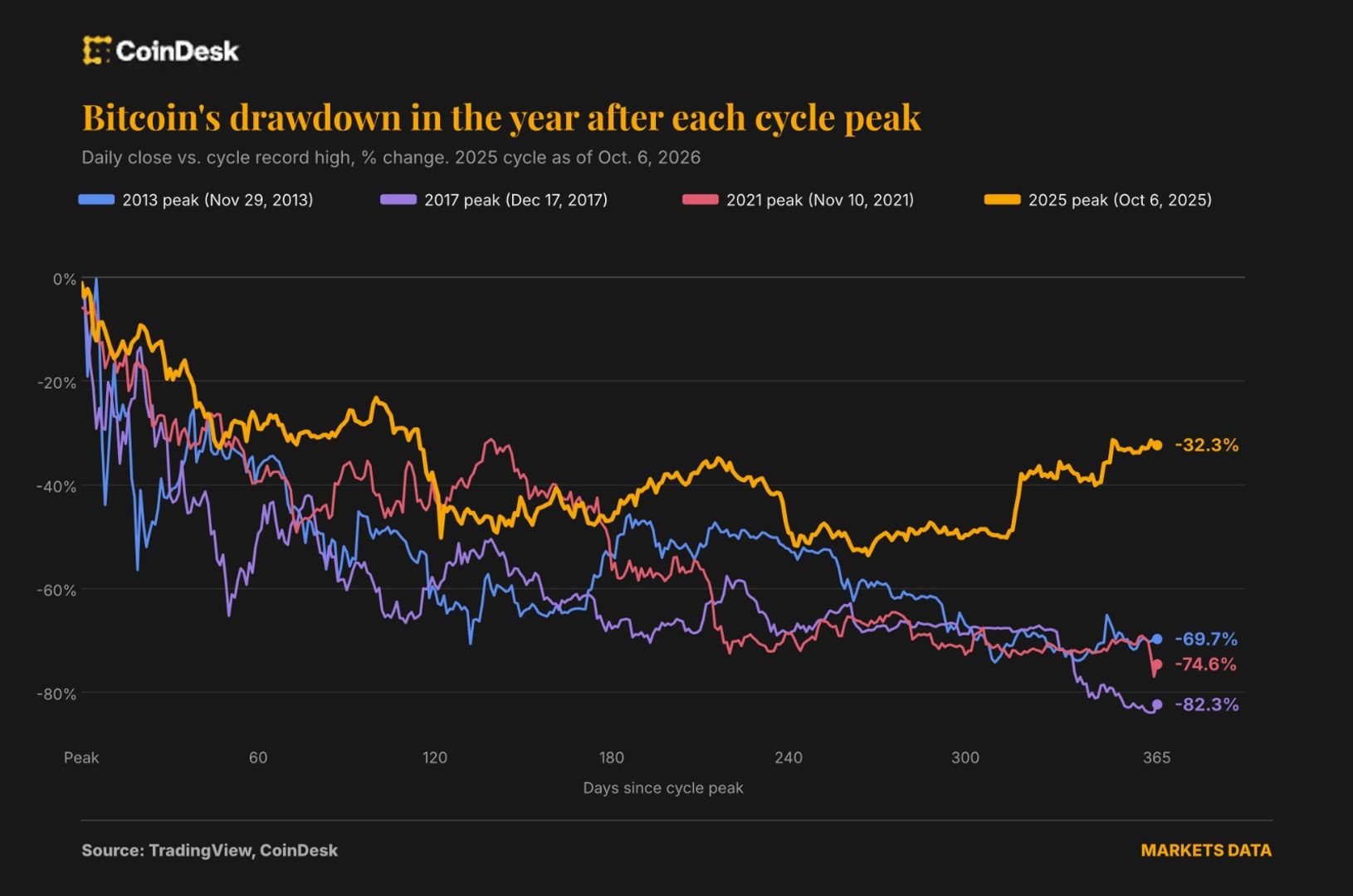
- Bitcoin is down 32% one year after hitting a record high above $126,000 on Oct. 6, 2025, now trading at $85,453 — versus declines of 69.7%, 82.3%, and 74.6% one year after the 2013, December 2017, and November 2021 peaks.
- The bear market trough arrived at roughly nine months — bitcoin bottomed just below $59,000 on June 30, down 53% from peak — earlier and shallower than past cycles, which saw 77-85% declines with bottoms arriving around the one-year mark or later.
- Institutional ETF inflows drove the 2023-25 upcycle, replacing the retail leverage that fueled and crashed previous bull runs, with most leverage cleared out on Oct. 10, 2024, when a macro sell-off triggered more than $19 billion in crypto derivatives liquidations.
- Bitcoin's annualized volatility has dropped to roughly 40% from historical levels above 80%, with the DVOL options index pinned around 35 points since U.S. spot ETFs debuted in early 2024.
- The 30-year U.S. Treasury yield, recently at 5.7% — its highest since April 2002, up more than 80 basis points this year — could determine the depth of bitcoin's next decline, according to Primal Fund's Griffin Ardern.
- The U.S. Treasury's August expansion of its bond buyback program pushed bitcoin from roughly $64,000 to nearly $80,000 in days, but yields have continued climbing on fiscal concerns rather than growth fears.
Why it matters: The 'shallow crash' only stayed shallow because ETF allocation money rebalances into weakness by design — take that institutional floor away and the cushion disappears. With the 30-year yield at 5.7% and one-year options skew still neutral to bearish, traders aren't yet paying for upside, meaning the next leg is being decided in the Treasury market, not on bitcoin's chart.
Ask SkimNews