Pakistan Hosts Saudi, Egypt, Turkey for Iran De-escalation — SkimNews
Get the Geopolitics newsletter
Daily geopolitics — wars, elections, sanctions, the diplomatic moves that move markets. Free.
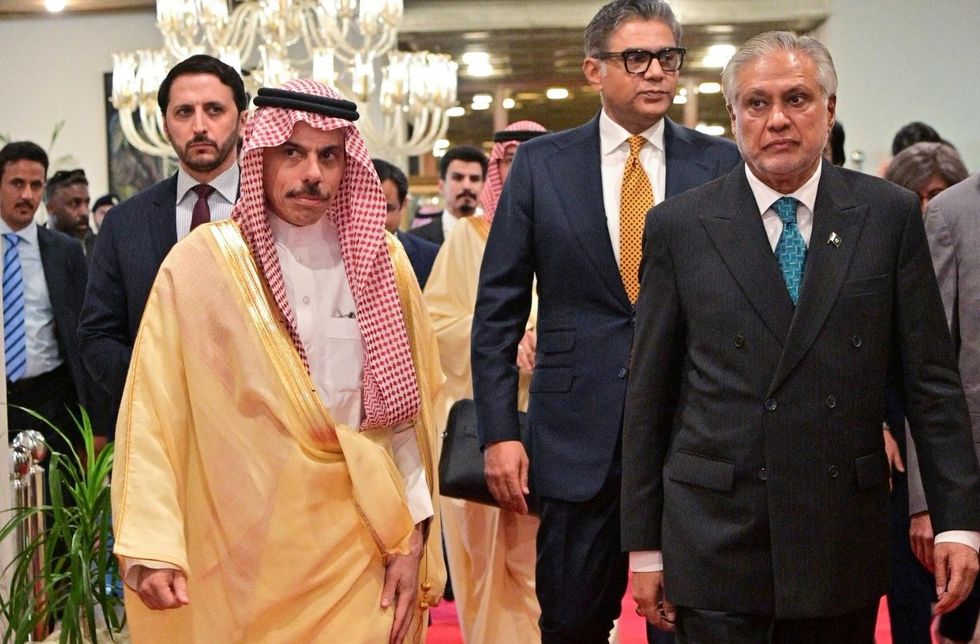
- Pakistan hosted a two-day meeting starting Sunday with Saudi Arabia, Egypt, and Turkey, exploring de-escalation and the possibility of hosting direct U.S.-Iran negotiations on Pakistani soil.
- The talks run alongside a five-point initiative announced jointly by Pakistan and China to restore peace and stability in the Gulf and Middle East.
- Strait of Hormuz disruption, through which roughly a fifth of the world's oil supply passes, has already triggered energy price spikes and risks disrupting global supply chains and food security.
- Pakistan's mediating role is driven by necessity: it shares a ~550-mile border with Iran, holds a defense pact with Saudi Arabia, and cannot afford to take sides given its energy and economic ties to the Gulf.
- Turkey's Foreign Minister Hakan Fidan has floated the idea of a more institutionalized political bloc of Muslim-majority states building on the OIC—a platform where, the article argues, the 'moribund Arab League' has consistently fallen short.
- Key structural obstacles include the trust deficit between Iran and the U.S., Israel's absence from the process despite its role in the conflict, and Washington's 'strategic ambiguity' of signaling openness to dialogue while maintaining coercive pressure.
Why it matters: Pakistan, Saudi, Egypt, and Turkey each face binding constraints—shared borders, defense pacts, energy dependence—that make escalation costly for all of them, giving the effort real stakes but also divided incentives. With Israel absent and Washington sending mixed signals, this 'coalition of the constrained' can slow the pace of escalation but cannot substitute for direct U.S.-Iran diplomacy, leaving the Strait of Hormuz and global energy supply exposed in the interim.
Ask SkimNews