Pakistan hosts Egypt ministers on US‑Israeli war — SkimNews

Get the Geopolitics newsletter
Daily geopolitics — wars, elections, sanctions, the diplomatic moves that move markets. Free.
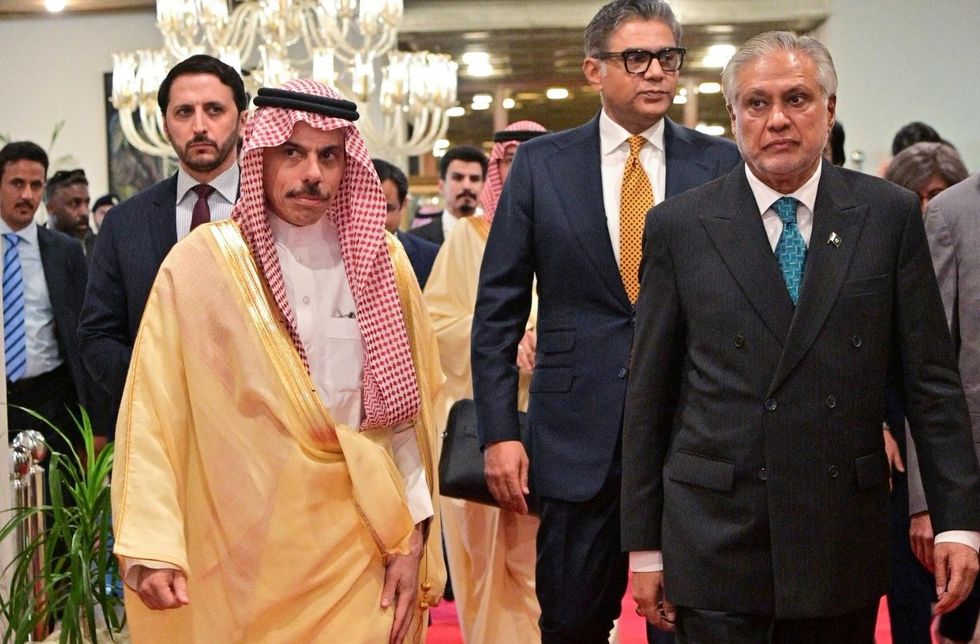
- Pakistan hosted foreign ministers from Turkey, Saudi Arabia and Egypt in Islamabad for two days of talks aimed at de‑escalating the US‑Israeli war on Iran, with Deputy Prime Minister Ishaq Dar leading the meeting.
- Ishaq Dar held a phone call with Iran’s foreign minister Abbas Araghchi, during which Tehran agreed to allow 20 Pakistani‑flagged vessels to transit the Strait of Hormuz at two per day as a confidence‑building measure.
- Donald Trump announced a 10‑day extension of his deadline for Iran to reopen the Strait of Hormuz and offered a 15‑point cease‑fire plan that Iran rejected, instead demanding an end to US‑Israeli aggression and reparations.
- Analysts described Pakistan’s role as a “very delicate balancing act,” acting as a messenger between the US and Iran while lacking leverage to impose solutions, and warned that success could boost Islamabad’s diplomatic standing while failure would hurt the country.
- Gulf countries face severe economic pressure as the closure of the Strait of Hormuz has cut oil and gas exports, and Iranian drone and missile attacks on regional energy facilities have forced petroleum firms to declare force majeure.
- Turkey’s President Erdogan urged Arab states not to join the war against Iran, and Turkish Foreign Minister Hakan Fidan’s travel to Arab capitals is part of a broader effort to prevent the conflict from spreading.
- Mahmoud Alloush suggested the Islamabad gathering could lay groundwork for an “Islamic alliance” to counter Israeli influence and fill geopolitical vacuums created by the war.
Why it matters: If the talks succeed, the limited reopening of the Strait of Hormuz eases a bottleneck that handles about 20 % of global oil and gas, relieving pressure on Pakistan’s energy imports and Gulf revenues; a failure would deepen Pakistan’s economic strain and diplomatic isolation.
Ask SkimNews