Greer: Trump to Pursue Trade Stability in May Xi Meeting — SkimNews
Get the Geopolitics newsletter
Daily geopolitics — wars, elections, sanctions, the diplomatic moves that move markets. Free.
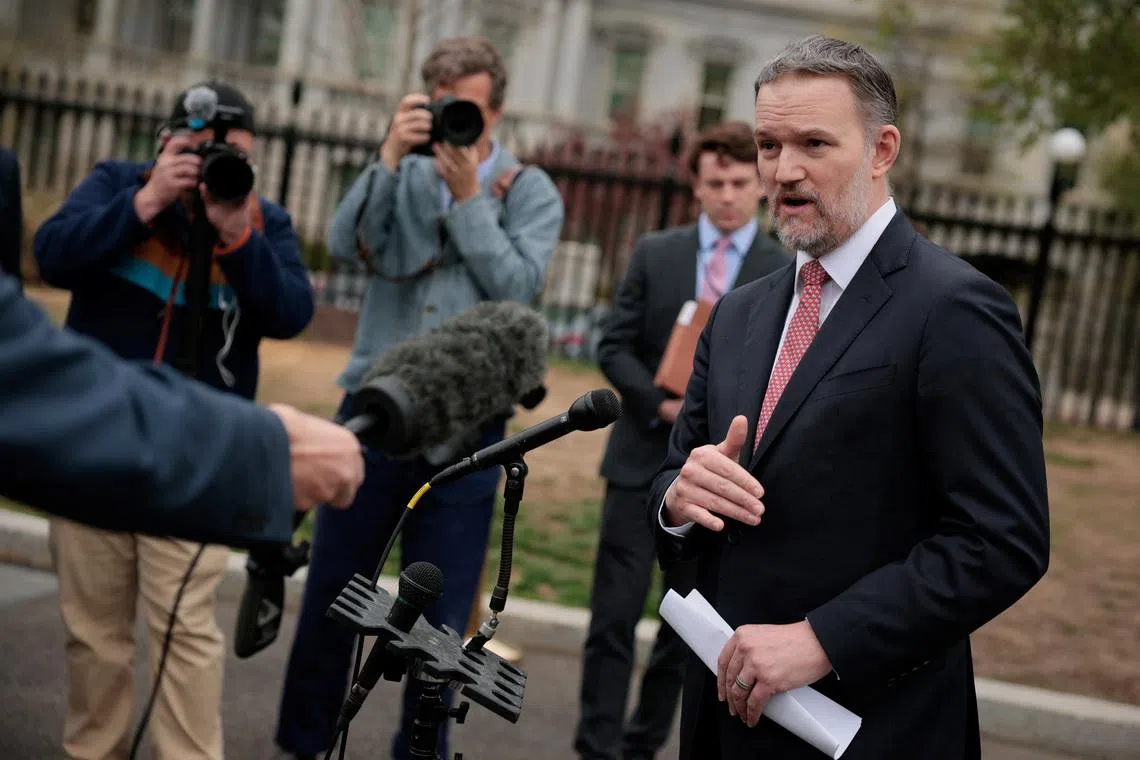
- USTR Jamieson Greer told the Hudson Institute on April 7 that the US-China economic relationship is stable and that Trump will aim to keep it that way at a May meeting with Xi, stating: "What we are not looking for is massive confrontation or anything like that."
- Rare earths are the central agenda item, with Greer saying the US needs to "continue to get rare earths from the Chinese" and noting that he, Treasury Secretary Scott Bessent, and Chinese Vice-Premier He Lifeng discussed the issue in Paris in March — including minerals routed through third countries before reaching the US.
- An initial Trump-Xi summit in Beijing was postponed due to the Iran war, but Greer said minister- and staff-level consultations on rare earths have continued, adding it "would be nice" to resolve the issue below the leaders' level.
- The US and China are working to form a Board of Trade mechanism for Trump and Xi to consider that would define what the two countries could sustainably trade without crossing national security red lines, with a narrower Board of Investment also under discussion for discrete company-level issues.
- The US is pursuing plurilateral agreements to diversify critical mineral supply chains, but Greer said these need price floor mechanisms to protect producers from potential future predatory price cuts by China.
- Trump has said he'd be open to Chinese EV maker BYD building a US plant, but US lawmakers have called allowing such state-supported investment an "existential threat" to the market-driven economics of the American auto industry.
- Greer drew a sharp line on the investment track, saying "we're not at the point in our relationship with the Chinese where we want to talk about the investment programmes either way" and that getting the trade deficit under control must come first.
Why it matters: Greer framed the relationship as stable, but his own remarks expose real frictions the "stability" rhetoric glosses over: the US is dependent on Chinese rare earths, alternative supply chains remain unprotected without price floors, and the BYD debate is already splitting Washington. If formed, the proposed Board of Trade would be the first formal US-China governance body to define what each side can sustainably exchange without triggering national security red lines — a concrete deliverable Trump could bring to the May summit.
Ask SkimNews