Conservation ‘gateway drug’: farmers embrace ancient craft of hedge laying — SkimNews

Get the Energy newsletter
Daily energy & climate — solar, EVs, oil, the policy fights and tech bets shaping the transition. Free.
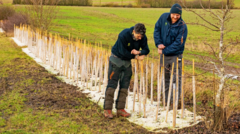
- Hedge laying ranked among the four most popular grant categories in a £225m UK government capital grants pot, with 2,500 English farmers applying to restore 1,300km (800 miles) of mature hedgerows — roughly the distance from Land's End to Hadrian's Wall and back.
- Megan Gimber of the People's Trust for Endangered Species called hedge laying one of the most effective tools farmers have to respond to the climate crisis, noting the craft largely stopped after the war and triggered a huge decline in hedgerows.
- Stephen Budding, chair of the National Hedgelaying Society, said the greatest biodiversity gain comes from laying older hedges and that members are seeing a surge in work that wouldn't be happening without the government grants.
- Robert Rose of Rosewood Farm in Yorkshire is awaiting Defra approval to lay blackthorn, hawthorn, ash, and willow hedges across 50 metres, calling hedge laying "a bit of a gateway drug" into broader conservation.
- About 5,000 additional applications were for planting new hedges — roughly 2,500km — but UK Centre for Ecology and Hydrology data showed 61% of newly planted hedges surveyed since 2007 had been lost by 2023.
- Defra opened a new round of environmental land management capital grants in July with up to £225m available; the round has now closed following strong uptake, with peak hedge laying season running October through February.
Why it matters: For England's 2,500 grant applicants, the £225m scheme turns hedge laying from a forgotten craft into a funded conservation tool that captures more carbon per hectare than forests, supports thousands of species, and absorbs rainwater to reduce flooding — but UK data showing 61% of newly planted hedges lost since 2007 underscores that the grants fund management, not just planting.
Ask SkimNews