‘It’s really taking off’: hedge revival as farmers rediscover ancient tools — SkimNews

Get the Energy newsletter
Daily energy & climate — solar, EVs, oil, the policy fights and tech bets shaping the transition. Free.
- 2,500 farmers applied for grants to lay 1,300km of mature hedgerows — enough to stretch from Land's End to Hadrian's Wall and back — making hedge laying one of the four most popular categories in the government's £225m capital grants pot
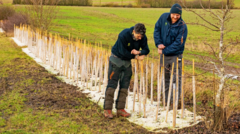
- Megan Gimber of the People's Trust for Endangered Species called hedge laying one of the most effective tools farmers have to respond to the climate crisis, noting the practice 'really stopped after the war'
- Stephen Budding, chair of the National Hedgelaying Society, said members are seeing 'quite a surge in work' but stressed the surge depends on government grants
- Yorkshire farmer Robert Rose is awaiting Defra approval to lay old blackthorn, hawthorn, and willow hedges across his 220-acre Rosewood Farm in the Lower Derwent valley
- UK Centre for Ecology and Hydrology data from 2023 shows 61% of newly planted hedges surveyed had been lost since a 2007 baseline through over-trimming and undermanagement, despite record planting efforts
- Roughly 5,000 additional applications sought to plant new hedges (about 2,500km, equivalent to Newcastle to Naples), but without ongoing management the new hedges will not survive, per Gimber
- Peak hedge laying season runs October through February, putting pressure on Defra to approve applications in time for farmers to work this winter
Why it matters: The £225m grant pot has drawn enough farmer interest to restore 1,300km of mature hedgerows, but with 61% of previously planted hedges lost since 2007 through undermanagement, the promised carbon, biodiversity, and flood benefits only materialize if farmers follow through on maintenance — not just the planting.
Ask SkimNews