Leipzig team finds hidden π–π switch in BAI2 receptor — SkimNews

Get the Health newsletter
Daily health & science — research, biotech, public health, the studies worth knowing. Free.
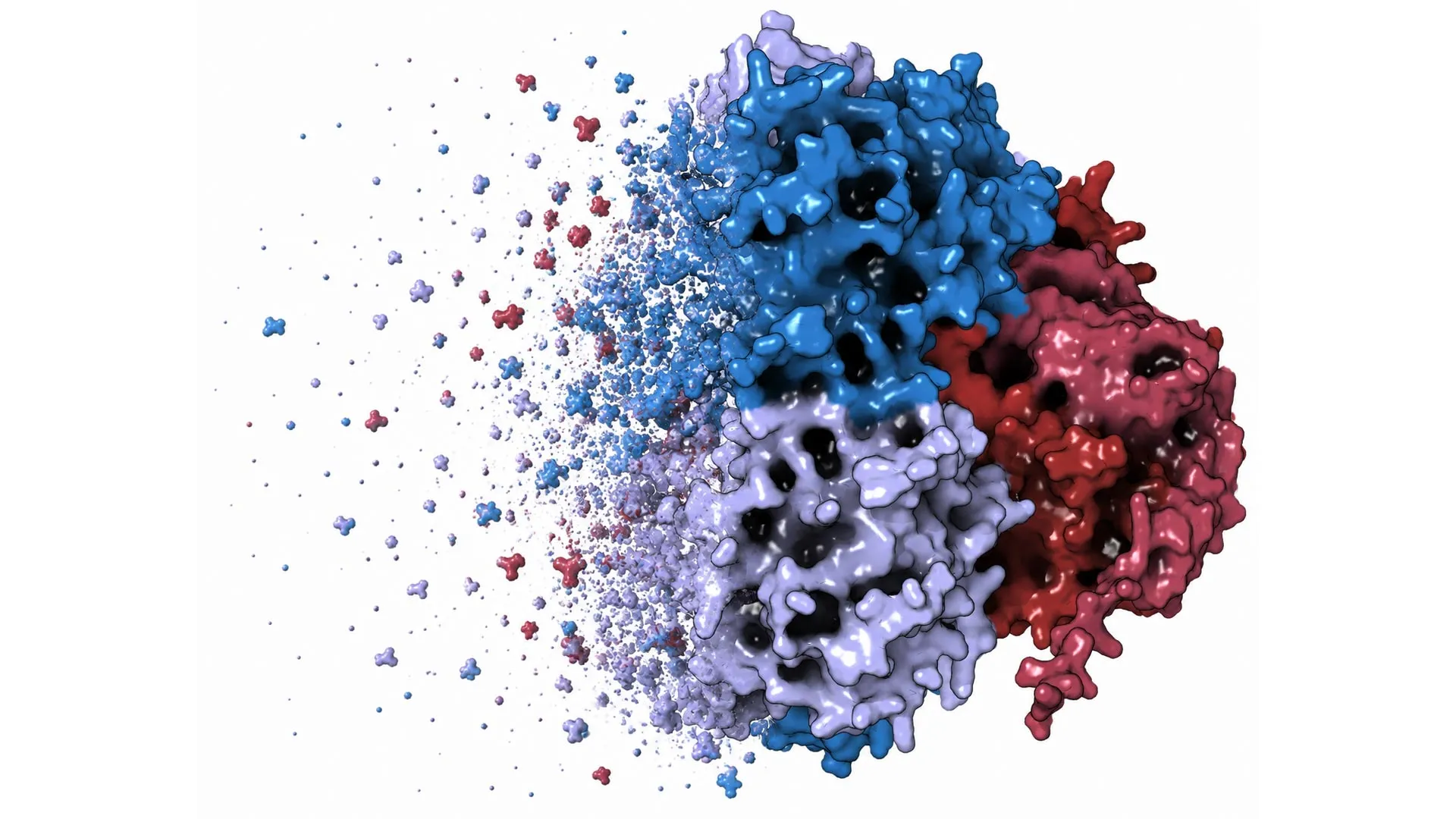
- Norbert Sträter's team at Leipzig University found that a π–π interaction between histidine and phenylalanine is required for self-cleavage of adhesion GPCRs, publishing the work in Nature Communications.
- The BAI2 receptor takes approximately 100 days to self-cleave because it lacks this histidine–phenylalanine interaction, despite carrying an apparently cleavage-prone amino acid sequence.
- X-ray crystallography of BAI2's GAIN domain by Sträter's team at the Institute of Bioanalytical Chemistry revealed the structural basis for the missing interaction.
- Peter Hildebrand's molecular dynamics simulations at the Institute of Medical Physics and Biophysics showed the π–π bond enables the GAIN domain to adopt flexible conformations needed for the cleavage reaction.
- Sträter and Tobias Langenhan modulated BAI2 cleavage by swapping its loop regions and inserting a phenylalanine, cutting the reaction time from roughly 100 days to under two days.
- The team also found that some adhesion GPCRs function without self-cleavage, challenging the assumption that autoproteolysis is universally required for receptor activity.
- Adhesion GPCRs remain an untapped drug target class even though GPCRs as a whole are the target of roughly one-third of all approved medicines.
Why it matters: Adhesion GPCRs are a major receptor subgroup that, despite belonging to the most-drugged protein family in pharmacology (GPCRs are the target of one-third of approved medicines), has never been exploited therapeutically. Leipzig's structural finding gives drug hunters a concrete molecular handle — the GAIN domain's π–π switch — to design modulators of receptors implicated in cancer, neurological, and inflammatory disease.
Ask SkimNews