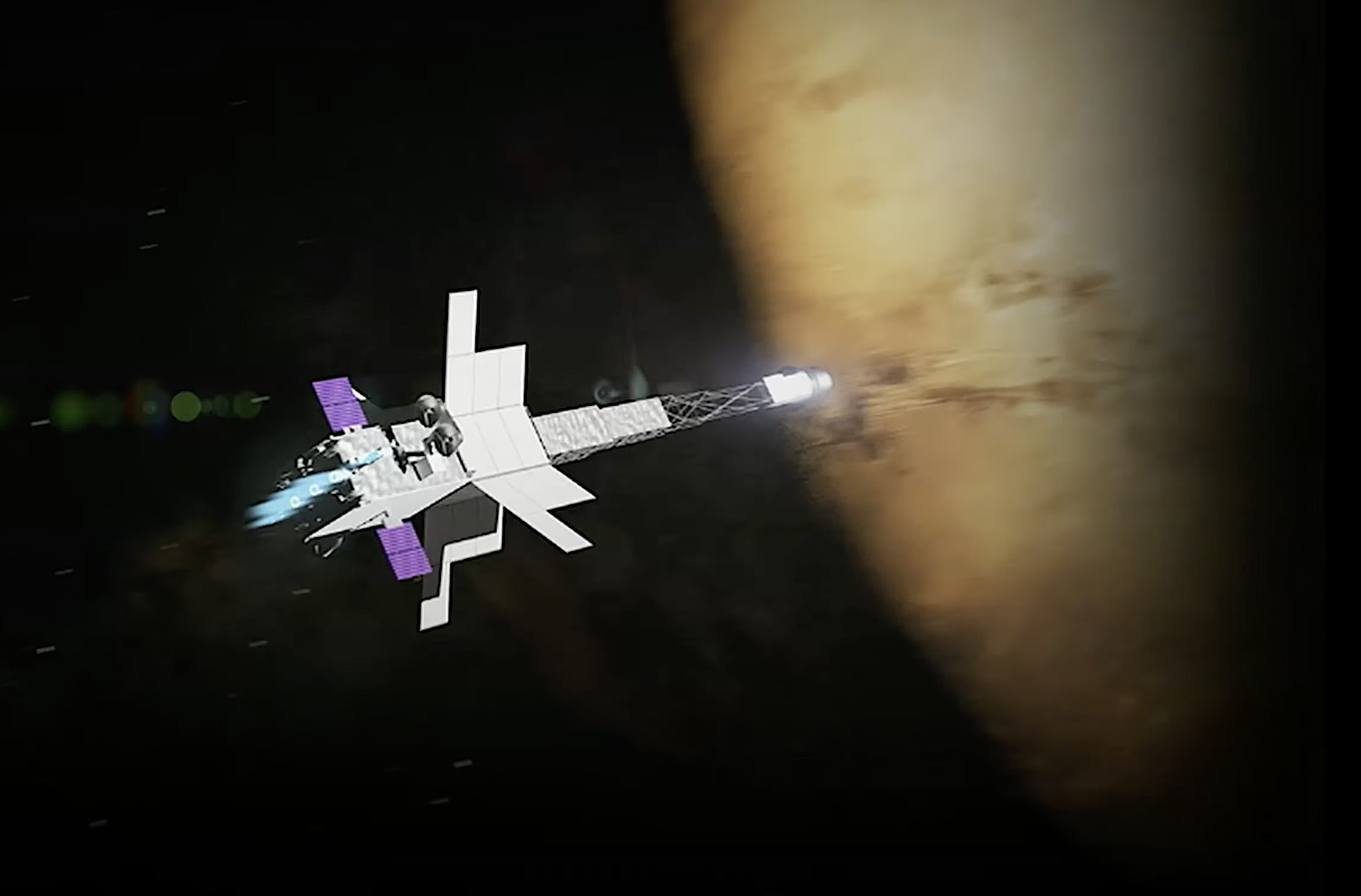
Nuclear Rovers Proposed for Moon's Dark Craters

SkimNews Take
The extreme environmental conditions on the Moon's permanently shadowed craters necessitate a technological leap, as conventional solar power is insufficient for sustained exploration and resource harvesting.
Get the Health newsletter
Daily health & science — research, biotech, public health, the studies worth knowing. Free.
- A.C. Charania of Zeno Power and Charlie Crouse of Advanced Space authored a study proposing nuclear-powered robotic explorers for the moon's permanently shadowed regions (PSRs), where temperatures below -240°C (-400°F) eliminate solar power as an option
- The South Pole-Aitken Basin hosts the PSRs of interest, where water ice deposits could enable habitat construction, in-situ resource utilization, and scientific research into billions of years of solar system history
- Americium-241 is recommended over traditional Pu-238 because it is commercially available; US Pu-238 production ceased in 1988, domestic production only resumed in 2015, and Russian imports are blocked by sanctions, leaving stockpiles running low
- Two mission concepts were proposed: an initial Americium-powered Radioisotope Heater Unit (RHU) Compact Lander optimized for descent into a southern polar crater, followed by a more complex Radioisotope Stirling Generator (RSG)-Powered Enhanced Lander
- The study was presented at the 2026 Lunar Planetary Science Conference and could support NASA's Artemis Program, the ESA's Moon Village, and the Sino-Russian International Lunar Research Station (ILRS)
- The authors write that the concepts would enable 'persistent operations in the coldest environments on the moon for both robotic and crewed missions' by allowing direct landing and entry into PSRs rather than traversing in from the rim
Why it matters: The study targets a real bottleneck for sustained lunar exploration: Pu-238, the standard isotope for space nuclear power, is in short supply after a decades-long US production gap and sanctions blocking Russian imports. Americium-241's commercial availability offers a workaround that could keep exploration of the moon's water-ice-rich shadowed craters—and the Artemis program's resource-prospecting goals—technically and economically viable.