Rummy-nose tetras focus on one neighbor in VR — SkimNews

Get the Health newsletter
Daily health & science — research, biotech, public health, the studies worth knowing. Free.
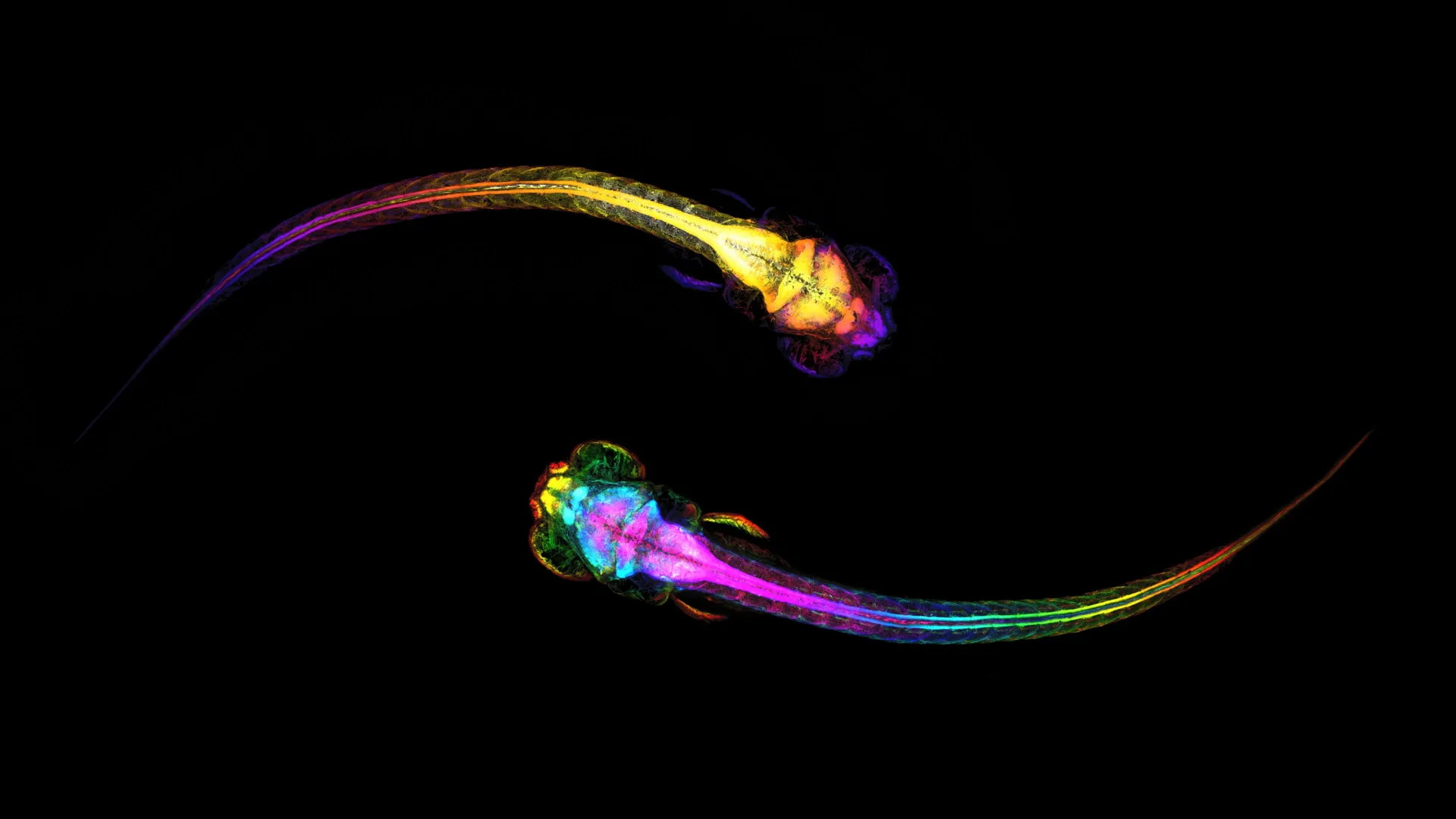
- Guy Theraulaz and University of Toulouse colleagues placed one real rummy-nose tetra (Hemigrammus rhodostomus) in a hemispherical bowl, tracked it by camera and projected four virtual tetras that adjusted to the real fish through a feedback loop.
- Guy Theraulaz’s team tested three hypotheses—single, joint and all-four influence—and found clear evidence for one most influential virtual neighbor at a time; Theraulaz suggested that focus reduces sensory and cognitive demand.
- Iain Couzin at the Max Planck Institute of Animal Behavior said the result confirms past ideas about tetra behavior, largely pioneered by Theraulaz’s group, and described VR as a powerful tool for probing how animals make decisions.
- Guy Amichay at Northwestern University said researchers can technically design any virtual world, while controllable virtual fish sidestep the difficulty of isolating a real fish without disturbing the group behavior being studied.
- Iain Couzin said it would be exciting to apply the method to other fish species for which no mathematical models exist.
- Guy Theraulaz’s team plans to make some virtual fish act stressed, as if facing a predator, and test how that affects the real tetra.
Why it matters: Theraulaz’s team gains a way to vary one fish’s behavior while retaining one real tetra and four virtual companions. That directly addresses the isolation problem that disturbs group dynamics, making tests of social influence more controlled than isolation-based experiments and enabling the planned predator-stress test.
Ask SkimNews