Singapore's Brownfield-First Argument Has Hidden Costs
Get the Geopolitics newsletter
Daily geopolitics — wars, elections, sanctions, the diplomatic moves that move markets. Free.
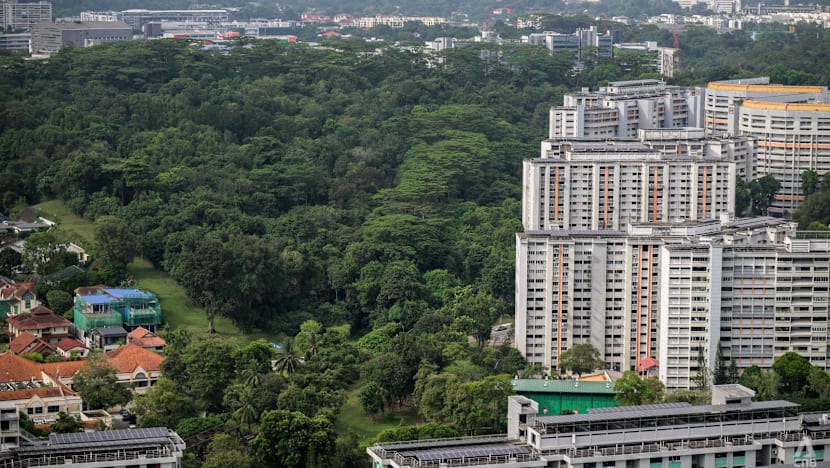
- HDB announced in July a plan to clear nearly two-thirds of Maju Forest for a new Sunset Way residential estate — 15ha of secondary forest to be felled, 8ha set aside as a wildlife refuge — and said the plans are "not final" as it weighs residents' concerns.
- Singapore is already pursuing brownfield redevelopment through multiple projects: Gillman Barracks (86 buildings, 25 retained for heritage), the Old Police Academy's conversion into the Mount Pleasant estate with about 6,000 new flats, the Selective En bloc Redevelopment Scheme, and two golf courses earmarked for housing once their leases expire in 2030.
- Brownfield redevelopment carries hidden costs the public debate typically skips — displacing existing residents and businesses, demolition waste that releases end-of-life embodied carbon, and strain on neighbourhood amenities like supermarkets, preschools, and clinics when even small green pockets are tapped.
- Sembawang's new housing site will set aside 6ha of forest, grassland, and scrubland to preserve part of a freshwater swamp forest, echoing the approach at Bidadari estate, which won a 2024 FIABCI gold award after conserving knolls, hills, and heritage trees into the development.
- Overseas models show nature can be woven into dense housing: Sweden's Hammarby Sjöstad connected an oak forest to surrounding development via pedestrian and cycling paths, while Finland's Tapiola garden city integrated a suburban forest into a 238ha district.
- Dr. Woo Jun Jie, Assistant Dean (Academic Affairs) and Senior Lecturer at the Lee Kuan Yew School of Public Policy, argues that a true "City in Nature" requires more than preserving every green space — it also means creating new green and blue spaces as some existing ones yield to development.
Why it matters: Singapore's housing pipeline already relies on brownfield projects like Mount Pleasant's ~6,000 new flats and two golf courses whose leases expire in 2030, so framing the choice as forests-versus-flats misstates the policy on the table. The tradeoff the public debate skips: brownfield work still means displacing residents, releasing embodied carbon, and straining local amenities — costs Maju Forest opponents rarely price into their alternative.