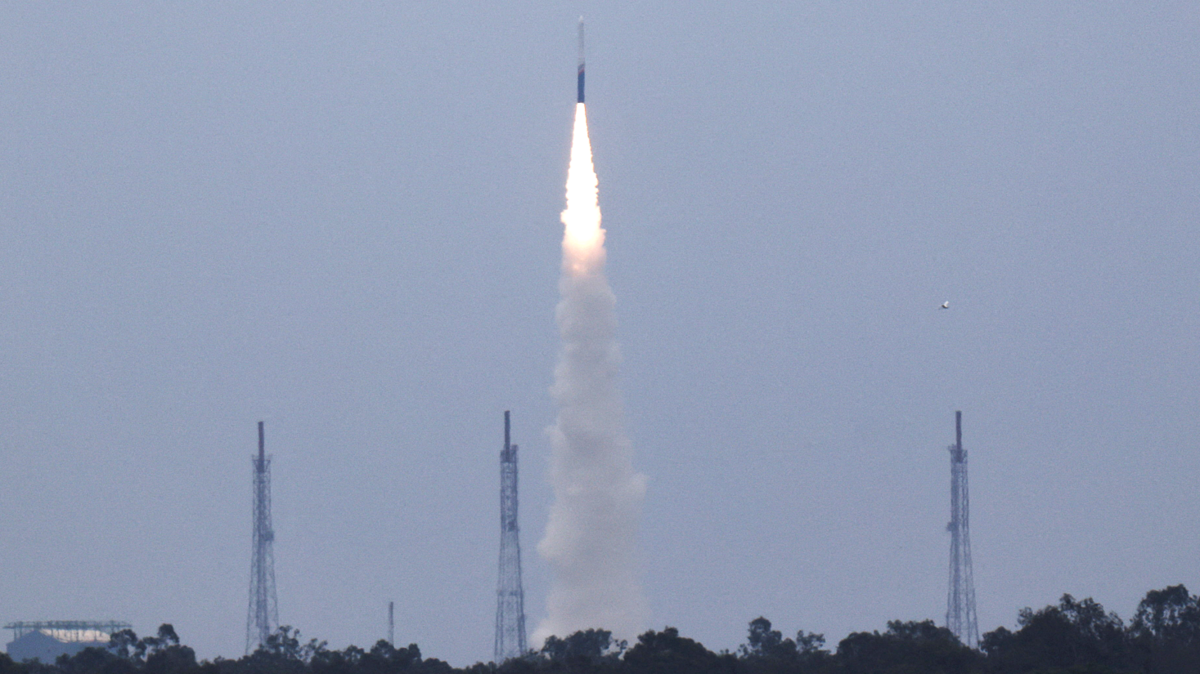
Agnikul flies rocket with 3D-printed single-piece engine — SkimNews

Get the Health newsletter
Daily health & science — research, biotech, public health, the studies worth knowing. Free.
- Agnikul Cosmos developed Agnilet, the world's first single-piece 3D-printed semi-cryogenic rocket engine, and holds the patent for its design and manufacturing process.
- On May 30, 2024, the company's Agnibaan SOrTeD demonstrator lifted off from Dhanush — India's first private launchpad — at SDSC SHAR, Sriharikota, reaching 20 km altitude and completing all mission objectives.
- The launch was also a first for India in running Linux-based flight computers and Ethernet-based architecture on a rocket, and the first semi-cryogenic engine-powered Indian launch.
- Agnikul was founded in 2017 by Srinath Ravichandran and Moin SPM at IIT Madras Research Park and in December 2020 became the first Indian spacetech startup to sign an agreement with ISRO via the IN-SPACe initiative.
- The startup has raised $40 million to date, including a $26.7 million Series B in 2023, and is valued at over $500 million as of 2026 with a stated target of 50 launches per year by 2028.
- TIDCO took a Rs 25 crore equity stake in Agnikul — the first time an Indian government body took equity in a space startup — as the company was recognized by the Ministry of Education at Bharat Innovates 2026 in Nice, France.
Why it matters: Agnikul's single-piece 3D-printed engine replaces the hundreds of separate parts in traditional rocket engines, simplifying production and directly addressing the slow, expensive launch access that has constrained small satellite operators. With TIDCO's first government equity stake in an Indian space startup and a $500M+ valuation, private spacetech is now structurally embedded in India's space ambitions.
Ask SkimNews