Harvard, Princeton Release Fruit Fly Full Connectome — SkimNews
Get the Health newsletter
Daily health & science — research, biotech, public health, the studies worth knowing. Free.
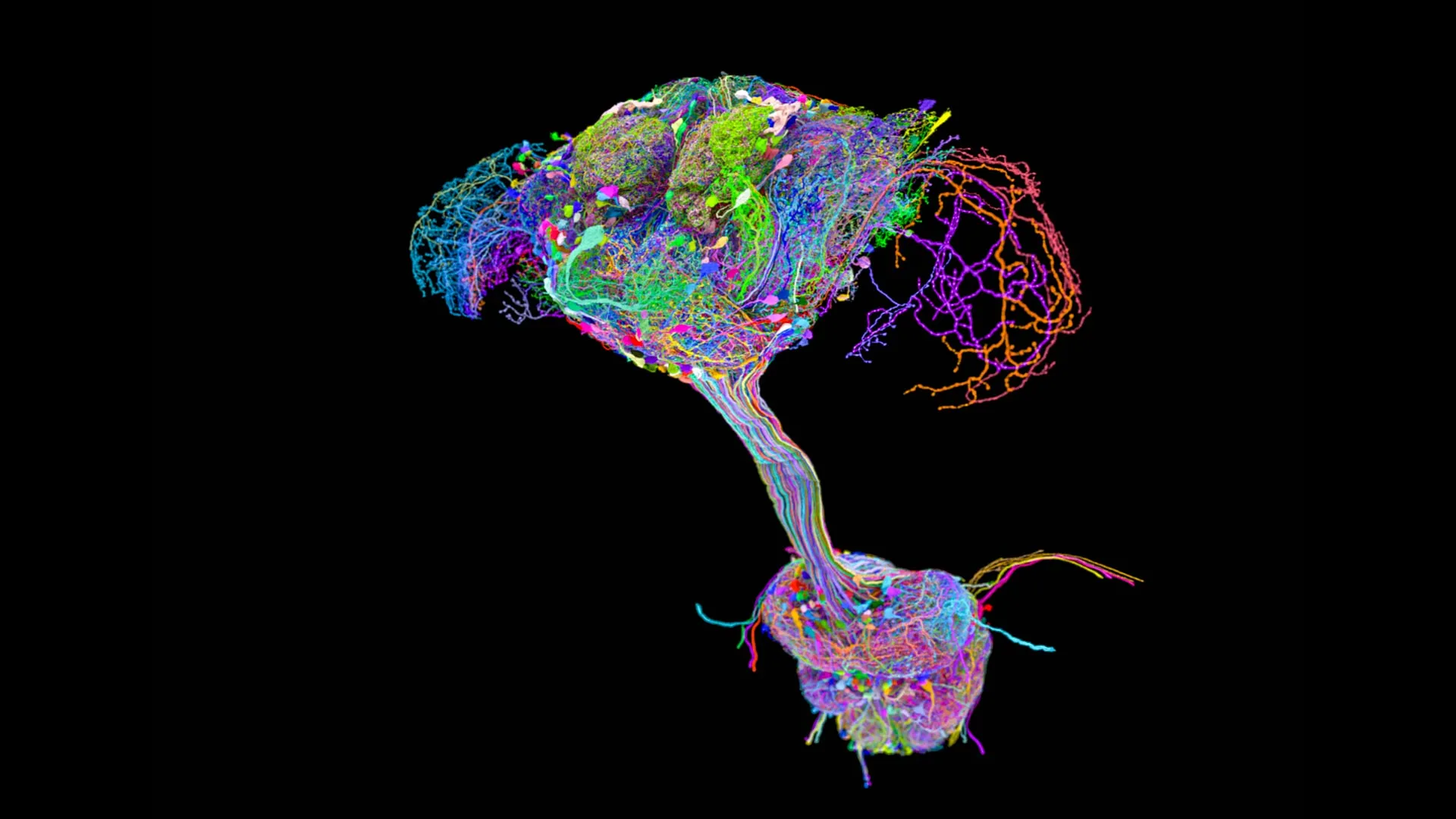
- Harvard Medical School researchers, together with Princeton collaborators, released the first full brain-to-body connectome of an adult fruit fly in Nature on June 8, 2026.
- Connectome adds the fruit fly’s nerve cord to the previously published brain connectome, linking brain and body circuits for the first time.
- Rachel Wilson said the map shows many behaviors are driven by local neural circuits in the relevant body parts rather than a single central command.
- Wei‑Chung Allen Lee emphasized that a complete central nervous system connectome is essential for studying behavior holistically.
- AI tools were used to align millions of electron‑microscopy images from thousands of serial sections of a single fly, assembling a synapse‑level 3D map.
- BRAIN Initiative funding, together with NIH and NSF support, helped produce the map, which is now publicly available online for worldwide research.
- Artificial intelligence researchers may draw inspiration from the distributed local control observed in the fly’s nervous system for designing more capable agents.
Why it matters: Neuroscientists worldwide gain a freely accessible, synapse‑level map that lets them test distributed‑control hypotheses, while AI designers may draw inspiration for decentralized agents, potentially reshaping research on intelligence and motor control. The resource also challenges the long‑standing view of a central brain command, prompting a shift toward local circuit dynamics across species.
Ask SkimNews