RMIT's nanopillar plastic film kills 94% of viruses in tests — SkimNews
Get the Health newsletter
Daily health & science — research, biotech, public health, the studies worth knowing. Free.
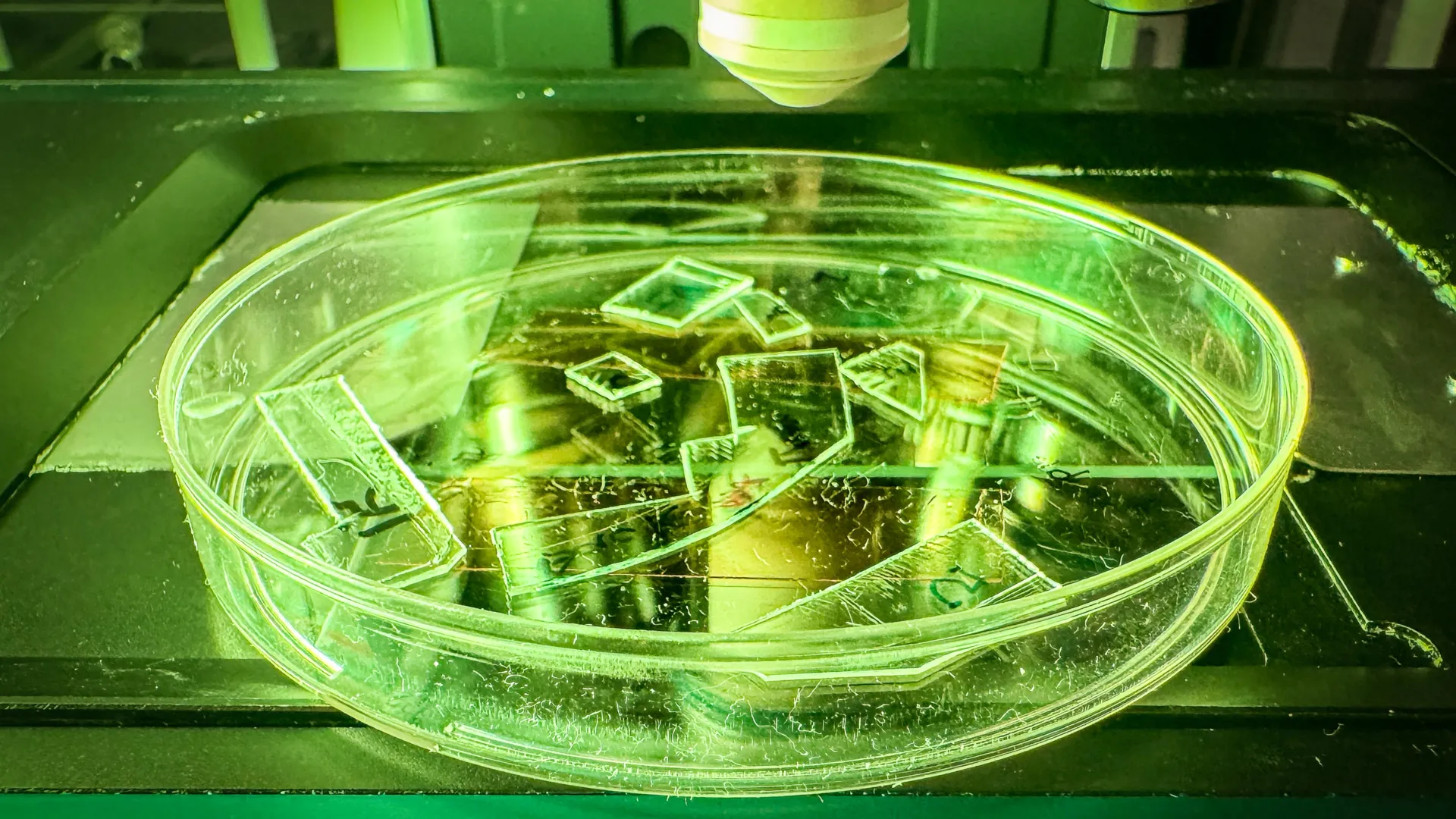
- RMIT University researchers created a thin acrylic plastic film covered in nanopillars that grip and stretch viruses until their outer shells burst, disabling roughly 94% of human parainfluenza virus 3 (hPIV-3) particles within an hour of contact in lab tests.
- Lead author Samson Mah, a PhD candidate at RMIT, said the team's mold can be adapted to roll-to-roll manufacturing, meaning antiviral plastic films could be produced at scale with existing factory equipment for use on phone screens, keyboards, and hospital tables.
- The nanopillar spacing was the critical design variable: surfaces with pillars roughly 60 nanometers apart were most effective, while 200-nanometer spacing nearly eliminated the antiviral effect — and pillar height proved far less important than how tightly the structures were packed.
- The study, published in Advanced Science, also established that both sharp and blunt nanoscale features can destroy viruses when arranged correctly, expanding on earlier work with rigid nanospike silicon and offering a clearer design rule for future antiviral surfaces.
- Co-author Distinguished Professor Elena Ivanova said the textured film is "a strong candidate for everyday use" and the team is ready to partner with companies to refine it for large-scale manufacturing.
- The research has so far only been tested on hPIV-3, an enveloped virus with a fragile fatty outer membrane, and the team plans next to test smaller non-enveloped viruses and curved surfaces, where nanopillar spacing can shift with curvature.
Why it matters: Unlike earlier rigid metal or silicon antiviral surfaces, this acrylic film is flexible and compatible with roll-to-roll manufacturing using existing factory equipment — meaning the 94% inactivation result could translate into cheap, mass-produced covers for high-touch surfaces in hospitals, schools, and consumer electronics rather than remaining a lab curiosity.
Ask SkimNews


