Light‑driven nanorobots capture and relocate bacteria — SkimNews

Get the Health newsletter
Daily health & science — research, biotech, public health, the studies worth knowing. Free.
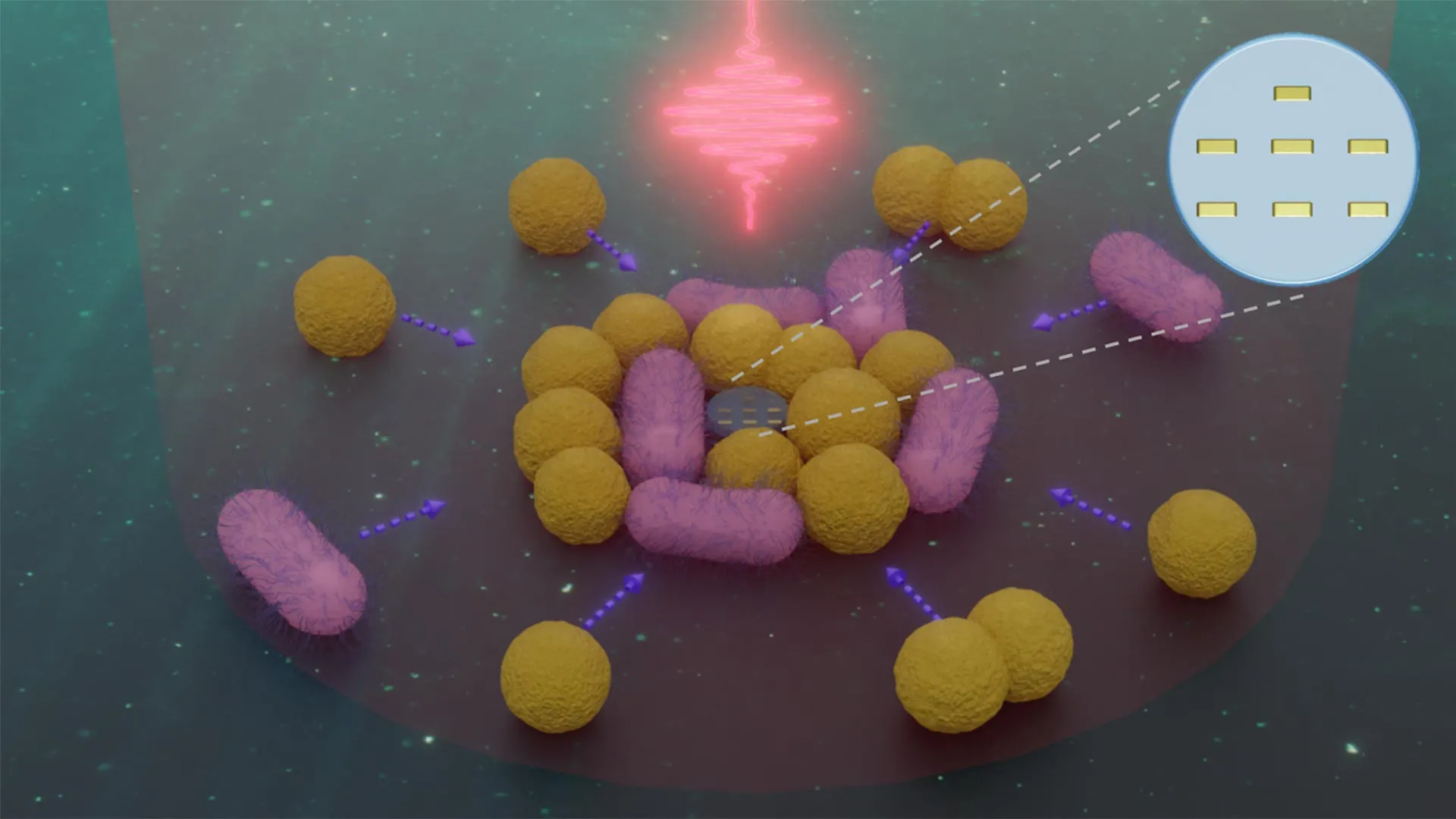
- Julius‑Maximilians‑Universität Würzburg' research team led by Professor Bert Hecht developed sub‑micrometer light‑driven nanorobots that can locate and collect bacteria.
- Nanorobots use photon recoil from plasmonic nanoantennas to generate propulsion, and their orientation can be steered by controlling the polarization of incident light.
- Nanorobots can perform rapid 90° turns and selectively capture, transport, and release significant numbers of bacteria, allowing them to "clean" microscopic environments in lab conditions.
- Nanorobots remain maneuverable when transporting larger clusters of bacteria, though at slightly reduced speed, demonstrating robustness for future microbiology and biomedical research applications.
- Nature Communications published the study by Jin Qin et al. in 2026, documenting the nanorobots' capabilities.
Why it matters: The ability to steer and transport bacteria with light‑driven nanorobots gives microbiologists a direct tool for cleaning samples and studying microbial behavior, potentially accelerating research and reducing reliance on chemical agents. It also opens pathways for precise delivery of therapeutics at the cellular level, which could transform infection‑control protocols in labs and clinics.
Ask SkimNews