Unitree crash exposes physical AI's 'GPT-2 era' data crisis — SkimNews

Get the Tech newsletter
Daily tech — startups, AI labs, chips, the launches that shape the next decade. Free.
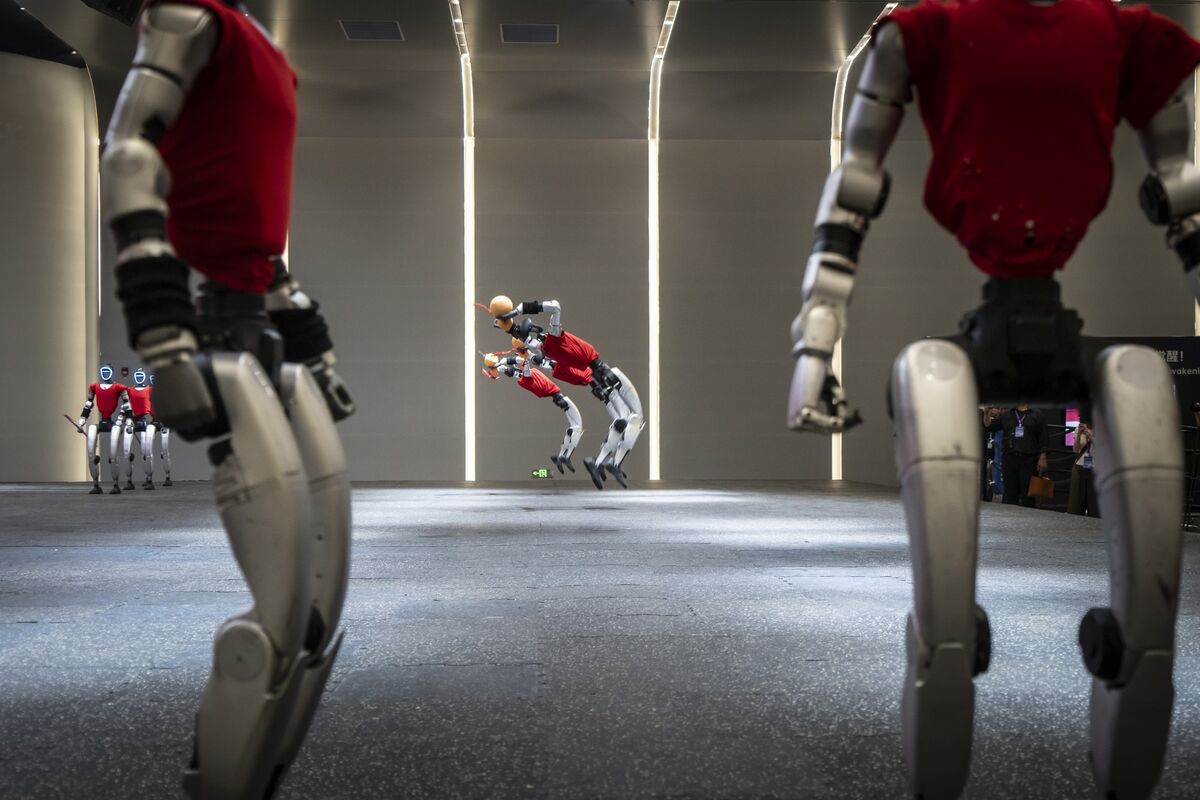
- Unitree, China's leading robot maker, lost nearly half its value after a $66 billion post-IPO valuation on China's NASDAQ-equivalent exchange, with analysts citing robots whose physical capabilities are improving but still lack value-creating know-how.
- Foxglove's Actuate conference tripled in size since 2023 to 1,500 attendees, while a booth sign from Avala pitched solving "the robotics data crisis" — the lack of high-quality training data for physical AI models.
- Foxglove launched a new product built on Nvidia's Cosmos open-weight world model that lets engineers search dense visual and lidar training data using natural language queries for faster triage, debugging, and simulation.
- Harry Mellsop of Antioch said physical AI is in its "GPT-2 era" and will need more data, compute, and GPUs optimized for ray tracing to advance past the current capability hump.
- Wayve, Uber, and Tesla have launched or expanded humanoid robotics labs betting that autonomous-vehicle ML tooling transfers to manipulation; CEO Alex Kendall said it's too early to commit to any single hardware platform.
- Genesis AI CEO Théophile Gervet said "no customer cares about the general purpose robot that works at 80% success rate," favoring vertical focus while warning that narrow-vertical builds on GPT-2 capability "will get crushed by the company building on GPT-4."
- Foxglove CEO Adrian Macneil said there will be no ChatGPT moment for robotics — the harder real-world distribution makes an "Apple II moment" or "IBM PC moment" more likely, when consumers can buy useful home robots.
Why it matters: The Unitree crash shows a successful physical-AI IPO doesn't guarantee product-market fit — when robots can move but not manipulate reliably, capital retreats fast. Vertical players like Gritt, Agility, and Bedrock are collecting real-world deployment data while general-purpose humanoids stay in the lab, creating a divide that determines who survives the GPT-2 era and who waits for GPT-4.
Ask SkimNews