Starship Reaches Orbit for First Time Despite Engine Failure — SkimNews

Get the Health newsletter
Daily health & science — research, biotech, public health, the studies worth knowing. Free.
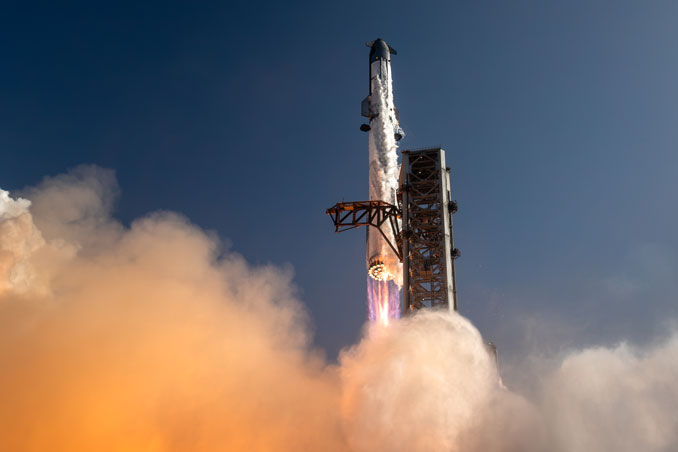
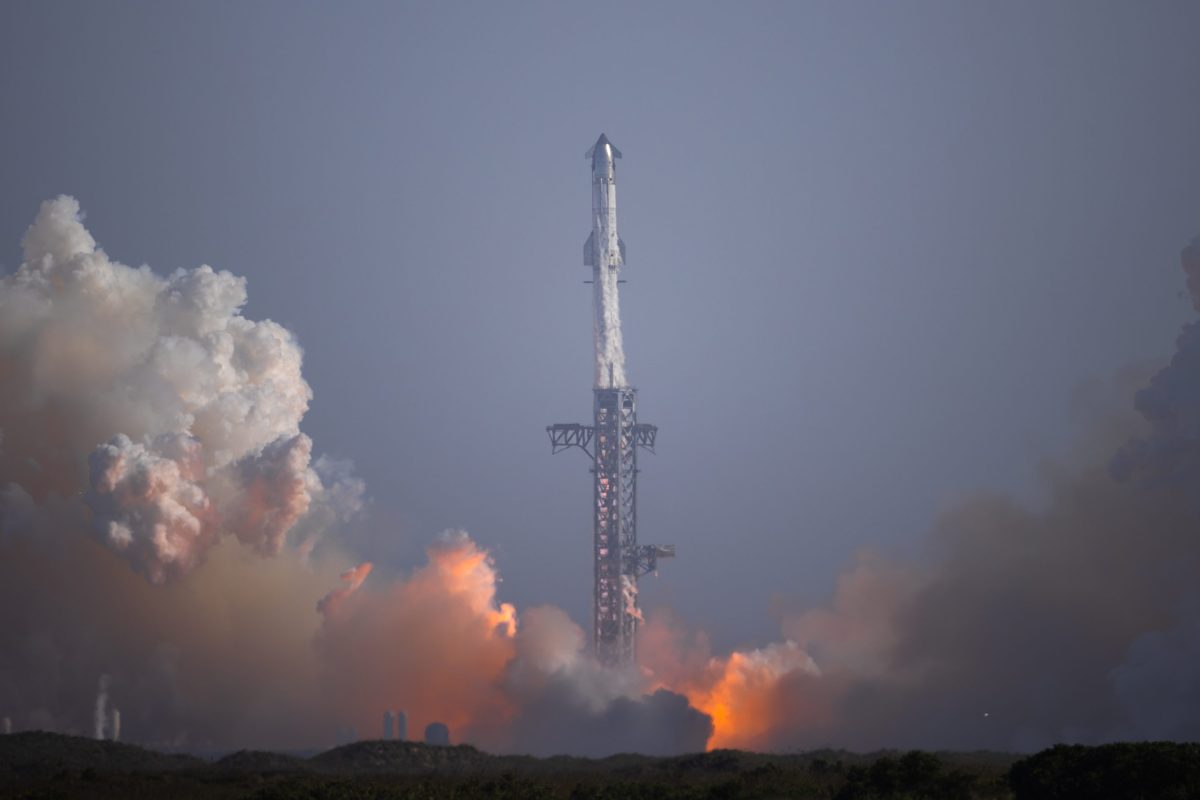
- SpaceX launched Starship from Starbase, Texas at 7:48am local time on its 14th test flight, with the 120-metre rocket reaching an altitude of about 171 miles (275km) — the first time the vehicle has completed a full orbit of Earth.
- An engine failure on ascent initially raised fears of mission abort, but flight controllers opted to proceed with the orbit burn; engineer Daniel Hewitt declared "Starship is in orbit" as cheers and applause broke out at SpaceX.
- Starship was originally planned to circle Earth six times over nearly 10 hours before splashing down west of Chile, but SpaceX cut the mission to roughly three hours, ending with a north Pacific landing where the ship bellyflopped and erupted in flames.
- The flight deployed 26 next-generation Starlink satellites, including three carrying cameras designed to photograph Starship's heat shield for future-mission testing.
- The Super Heavy booster separated and made an offshore Gulf of Mexico landing without the mechanical-arms catch used in a 2024 test flight, after engineers modified hardware and software to fix ice-clogging that had previously left only 8 of 13 engines reigniting.
- Martin Barstow, professor of astrophysics and space science at the University of Leicester, called the achievement "the beginning of the transition from the testing and development phase to becoming a working vehicle" for delivering large payloads needed to return to the moon.
Why it matters: The flight validates the vehicle architecture NASA is counting on for Artemis lunar landings and reduces program risk after a streak of high-profile failures, including a March 2024 explosion that scattered debris over the Bahamas. It also lands at a delicate moment for SpaceX commercially, following the stock's sharp post-IPO swing in June.
Ask SkimNews