Nuro Touts 'Second Mover' Edge Over Waymo Robotaxi — SkimNews

SkimNews Take
Nuro's "second-mover" strategy suggests that the initial infrastructure investment and public acceptance challenges faced by pioneers like Waymo create a more receptive and cost-efficient environment for later entrants.
Get the Tech newsletter
Daily tech — startups, AI labs, chips, the launches that shape the next decade. Free.
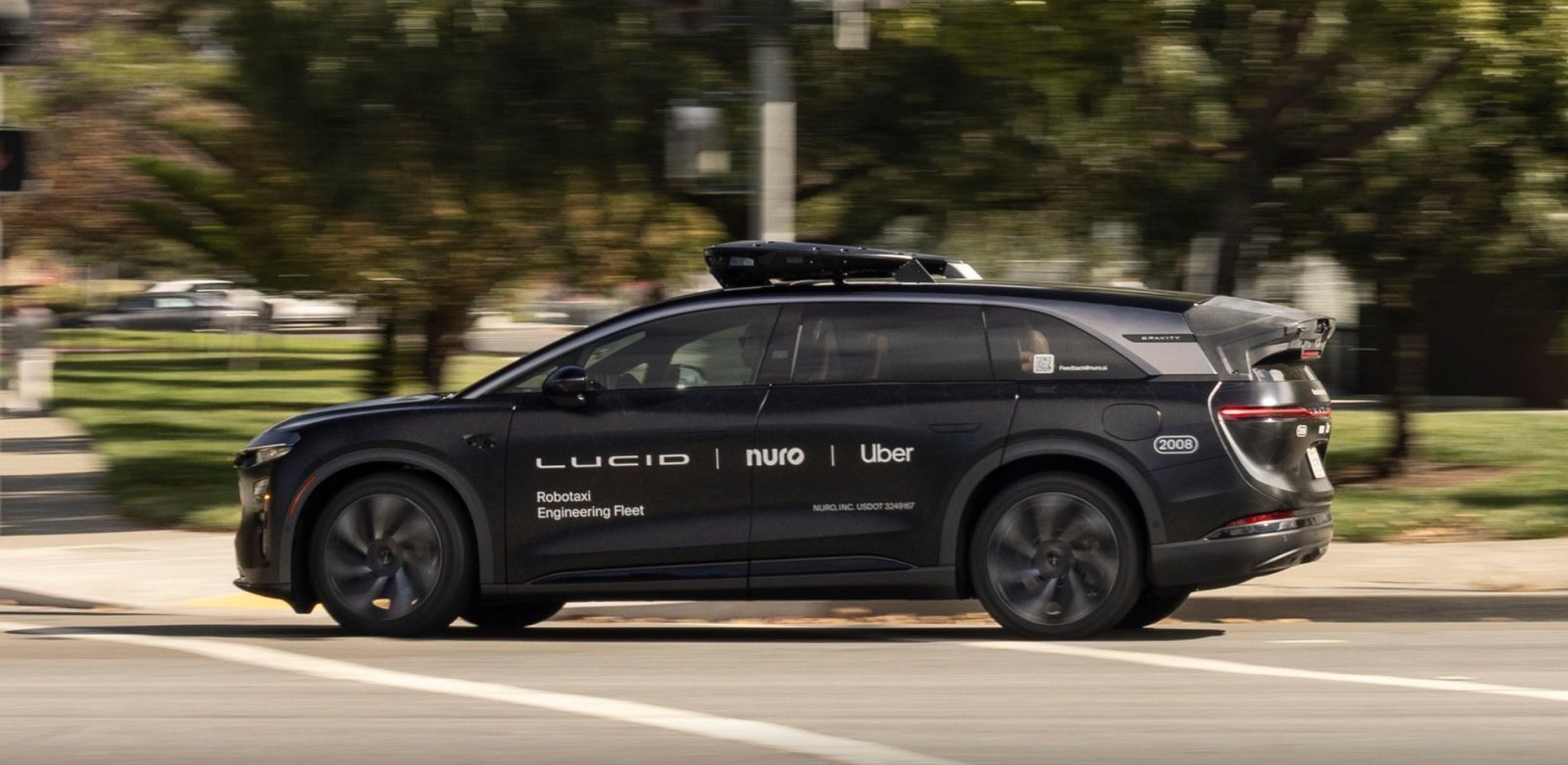
- Nuro struck a deal with Uber and Lucid in 2024 to deploy tens of thousands of robotaxis across the US, netting hundreds of millions of dollars in Uber investment, and plans to launch in San Francisco later this year.
- Nuro was recently granted the first of several permits needed to operate its planned San Francisco robotaxi service, and earlier this month secured the initial regulatory green light.
- Nuro co-founders Dave Ferguson and Jiajun Zhu both came from Google's self-driving car project (which became Waymo), leaving in 2016 to found Nuro first as a delivery robot company before pivoting to robotaxis in 2024.
- The Uber-Lucid-Nuro arrangement is a three-company deal: Nuro develops the sensing and compute stack, Lucid integrates it into the Gravity SUV on its production line for Level 4 autonomy, and Uber owns and operates the fleet plus depots and remote assistance.
- Ferguson argued Nuro's 'second mover' position is an advantage because it can study Waymo's stumbles, and said the launch will have a broad operational design domain from day one rather than incrementally expanding scenarios like 'protected intersections first.'
- Nuro also plans to license its autonomous driving technology to outside companies for advanced driver-assist systems and personally owned autonomous vehicles, though it has yet to announce any such deals.
- Ferguson pushed back on misconceptions about remote assistance — describing it as answering questions and providing prompts to confused vehicles, not remote human control — amid recent Congressional scrutiny of the practice at Waymo and others.
Why it matters: Nuro's Uber-Lucid partnership puts it in direct competition with Waymo's 3,000-vehicle fleet spread across at least 10 US cities, but its 'second mover' thesis means the San Francisco launch will be benchmarked against Waymo's operational track record from day one — and Ferguson's stated commitment to publishing driving statistics is a direct bid to overcome the public trust deficit he acknowledged the robotaxi industry faces.
Ask SkimNews