The Paradox of Victory: When Winning in Ukraine Raises the Nuclear Stakes — SkimNews
Get the Geopolitics newsletter
Daily geopolitics — wars, elections, sanctions, the diplomatic moves that move markets. Free.
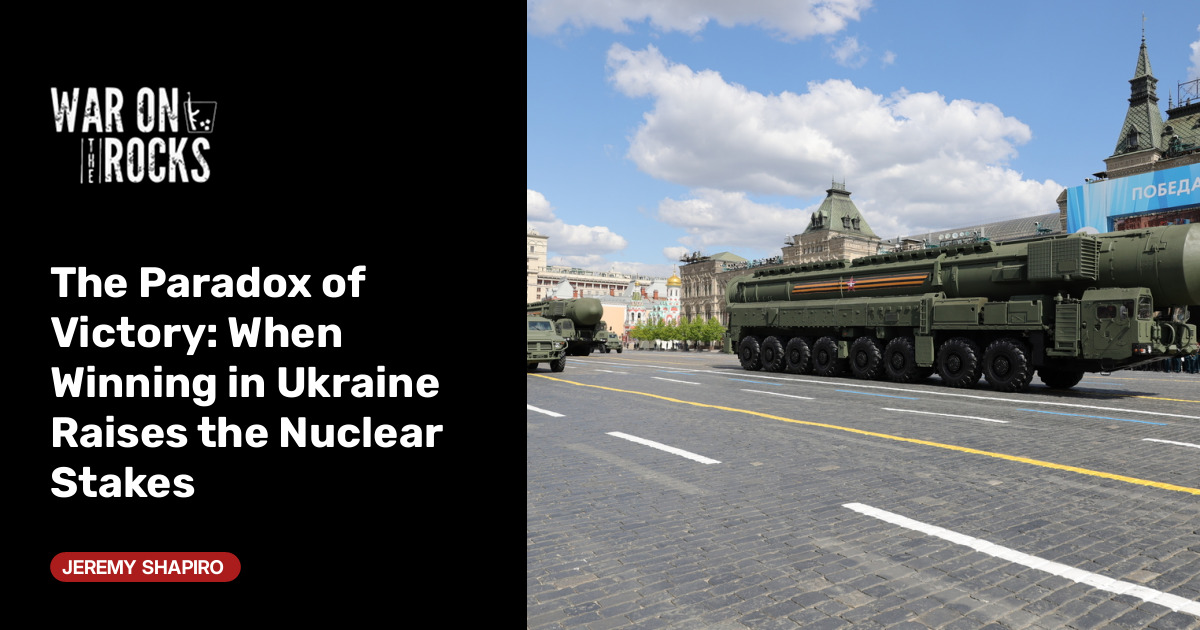
- Jeremy Shapiro warned in his 2022 piece 'We Are on a Path to Nuclear War' that the Russia-Ukraine war was heading toward nuclear escalation, and four years later he argues 'we are still on that path'
- Shapiro defined the nuclear threshold as requiring 'one side to feel that it is losing and that a military defeat will have catastrophic consequences for their regime and the personal safety of its leadership'
- Russia appeared to approach that threshold in fall 2022 but 'managed to rally its forces and turn the tide,' avoiding serious reconsideration of nuclear use
- Multiple rounds of negotiations have stalled, and the front line is 'near-frozen,' moving 'at a glacial pace,' which Shapiro credits with keeping escalation in check
- Shapiro warns that successful implementation of 'Ukrainian and Western plans to roll back the Russians in eastern Ukraine and Crimea' would return the parties 'to the brink of a nuclear exchange'
- Shapiro says he 'feel[s] more at ease' about immediate nuclear escalation than he did in late 2022, even as the underlying risk persists
Why it matters: The paradox Shapiro surfaces is that Western and Ukrainian battlefield success — not stalemate — is what would most sharply raise nuclear stakes. As long as Russia isn't facing catastrophic defeat in eastern Ukraine and Crimea, the immediate nuclear threshold stays distant, but any decisive breakthrough in those regions could reverse the calculus, making the slow pace of front lines the primary de-escalation mechanism.
Ask SkimNews