China's oil stockpile blunted Iran war price shock — SkimNews

Get the Geopolitics newsletter
Daily geopolitics — wars, elections, sanctions, the diplomatic moves that move markets. Free.
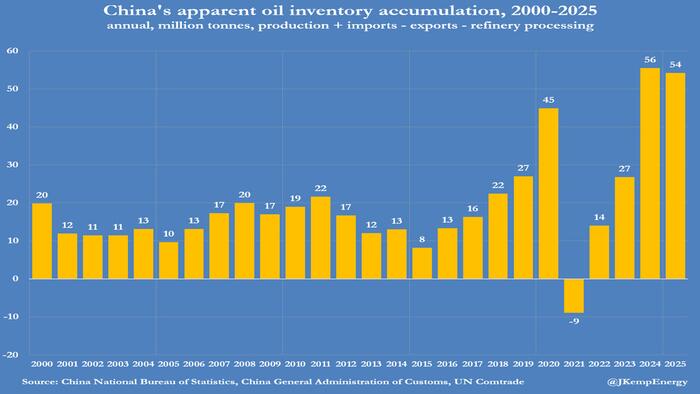
- China's strategic petroleum reserve — estimated at roughly 1.4 billion barrels by the US EIA — and a sharp cut in crude imports of about 4 million barrels per day (down 32% from Q1 to Q2 2025) helped contain global oil prices six months into the US-Iran war, according to US trade data cited in the article.
- Brent crude averaged about USD 69 a barrel last year, was near USD 100 at publication, and briefly touched USD 126 in late April; Bank of America expects an H2 2025 average of USD 83 but warns of USD 95–120 a barrel if violence worsens, and up to USD 150 with major infrastructure damage.
- Rear Adm. Mark Montgomery (Foundation for Defence of Democracies) credited Beijing with building a strategic reserve in 10 years "what took us 25 years after the 1973 oil crisis to do," while Rosemary Kelanic of Defence Priorities said the US has "been free-riding off Beijing in a weird way" as China's drawdowns softened prices for American consumers.
- Fresh Middle East disruptions — a temporary Saudi pipeline shutdown after Iran-backed militia attacks this month, Houthi seizures of two strategic islands in the southern Red Sea, and postponed Gulf talks on reopening the Strait of Hormuz — are keeping the oil outlook fragile ahead of Xi's Washington visit.
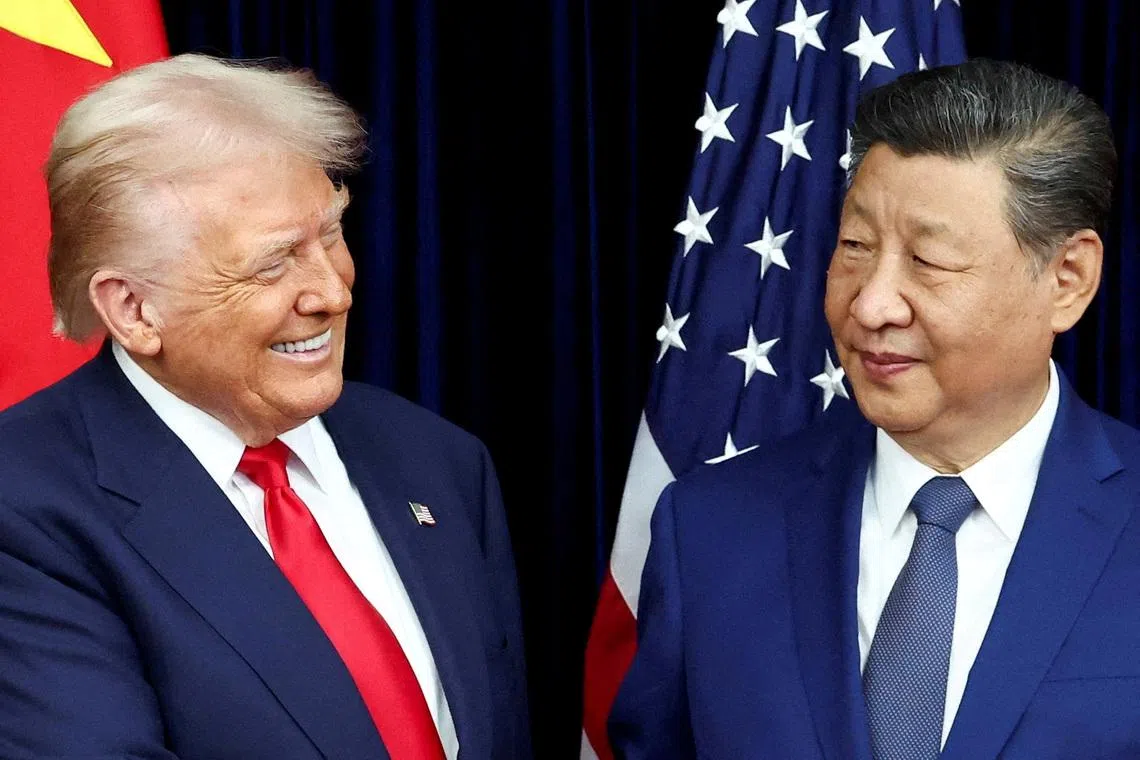
- Trump played down a Wall Street Journal report that Chinese entities provided satellite imagery of a Jordanian military base before an Iranian strike in July that killed three US soldiers, telling reporters: "when they say that China spies on us, I say you're right, and we spy on them too."
- Trump is due to meet Gulf Cooperation Council leaders (Saudi Arabia, UAE, Qatar, Oman, Kuwait, Bahrain) in New York on Tuesday on UNGA sidelines before his summit with Xi; Iran is expected to feature in the talks even as Trump tries to preserve a fragile US-China trade truce.
- Analysts say Beijing's stockpile was partly built as contingency for a possible military move against Taiwan, and Jonathan Czin of Brookings said Xi's handling of the volatile market is seen in Beijing as "a vindication of Xi's last five-year plan and his focus on self-reliance."
Why it matters: Beijing's drawdowns gave US consumers and the Trump administration an indirect price cushion at home just as Trump faces domestic pressure over petrol prices — Kelanic called it 'free-riding off Beijing' — while handing Xi a credibility win on energy self-reliance heading into talks where Iran, Taiwan, and trade will all collide. But Saudi pipeline attacks, Houthi seizures, and stalled Hormuz talks mean that buffer could erode fast if disruptions escalate.
Ask SkimNews