BYD Overtakes Tesla as Top Global Battery Storage Firm — SkimNews
Get the Energy newsletter
Daily energy & climate — solar, EVs, oil, the policy fights and tech bets shaping the transition. Free.
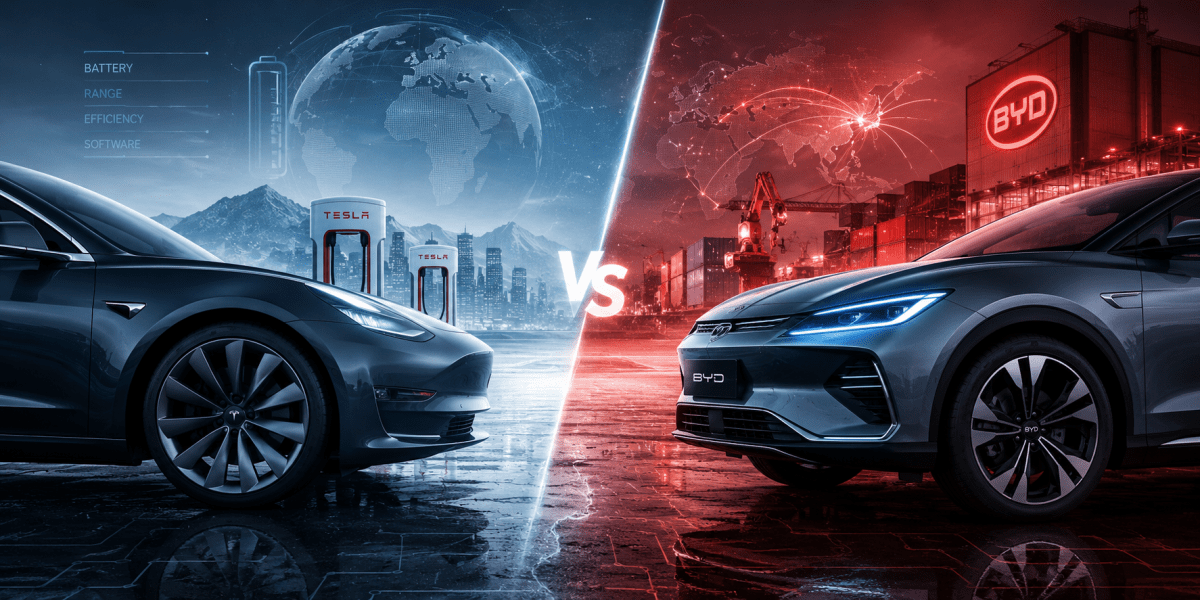
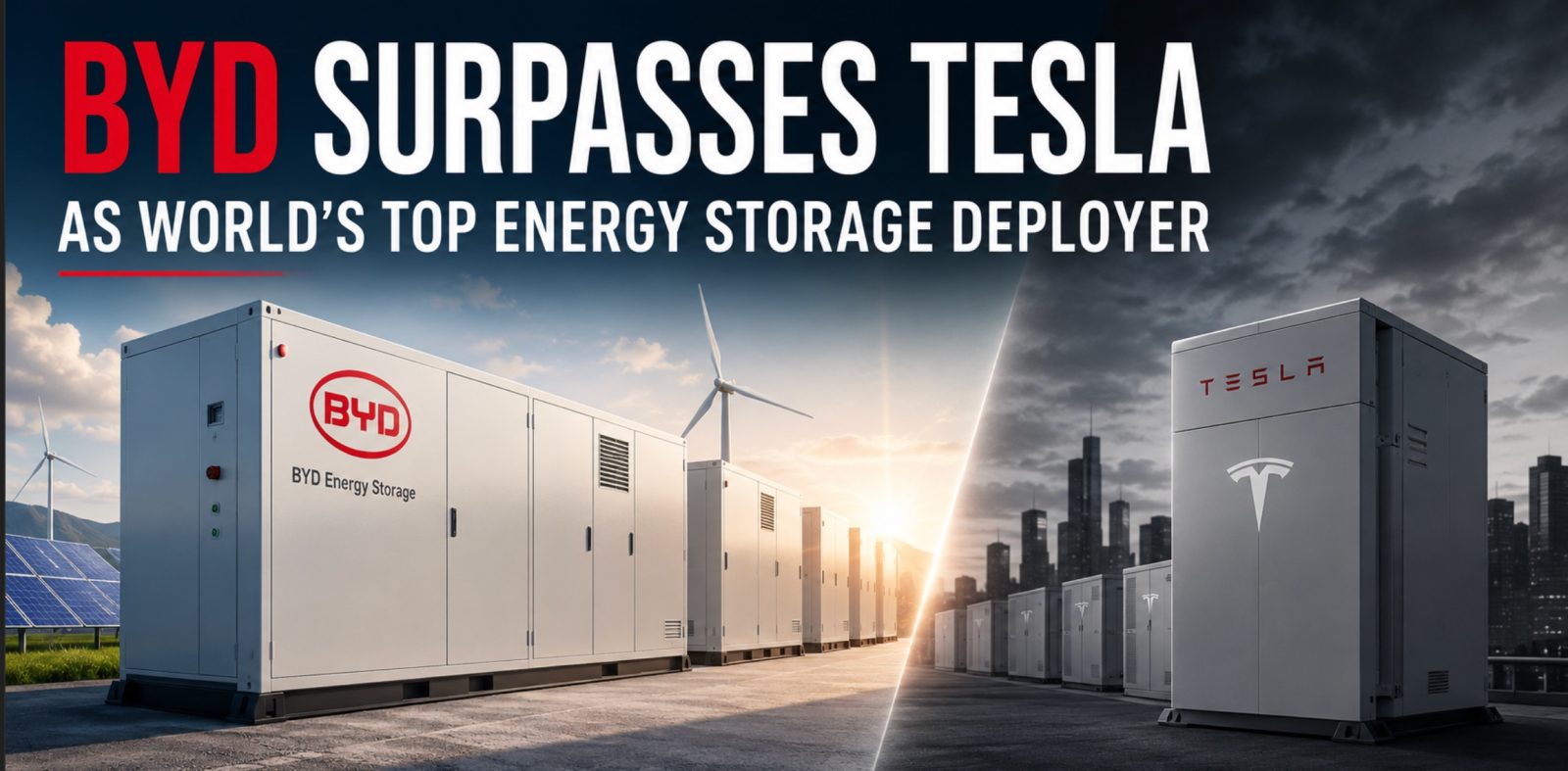
- BYD shipped over 60 GWh of battery energy storage systems globally in 2025, versus Tesla's 46.7 GWh — a 49% year-over-year increase for Tesla that still wasn't enough to keep pace.
- Chinese manufacturers took eight of the top 10 BESS integrator slots in Benchmark's rankings; only Tesla and Fluence (a Siemens-AES joint venture) represented non-Chinese players.
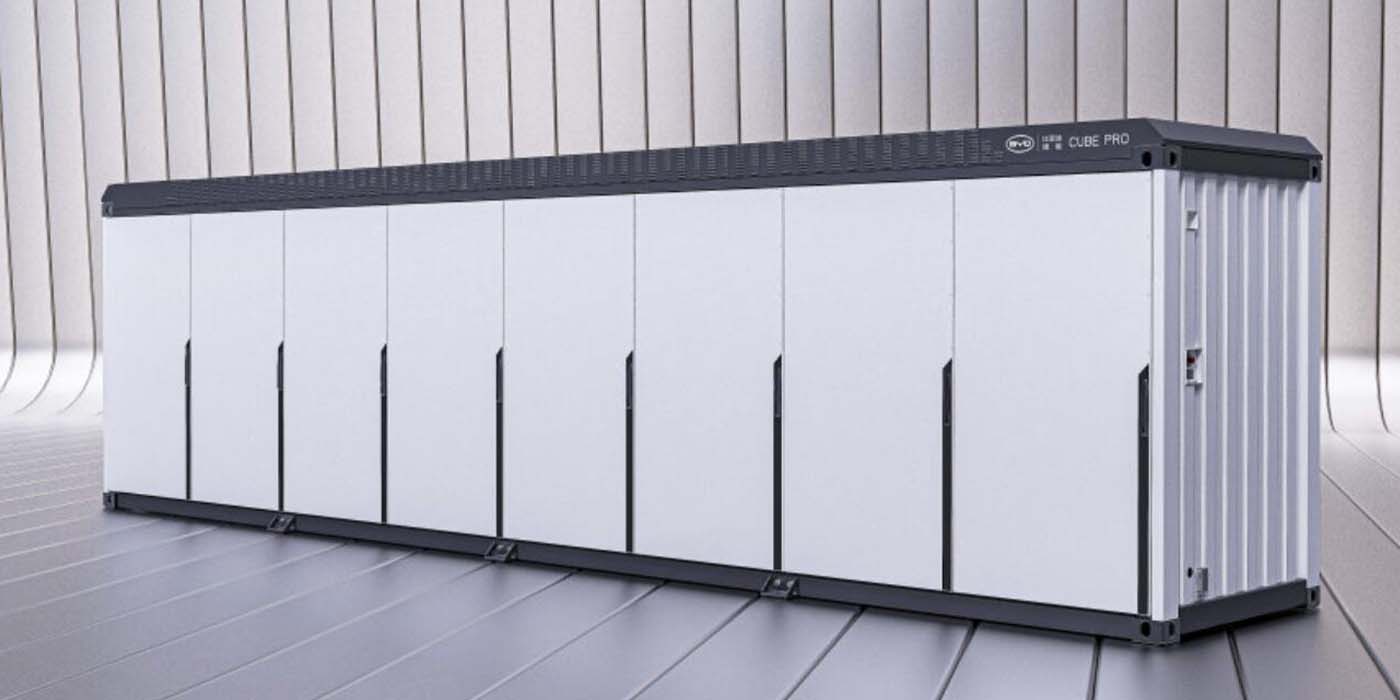
- BYD launched its HaoHan energy storage system in September 2025 with 14.5 MWh of capacity in a standard configuration — nearly three times Tesla's Megapack — and is already deploying it in a 12.5 GWh project with the Saudi Electricity Company in Saudi Arabia.
- Tesla sources Megapack cells from competitors CATL and BYD, with a confirmed $4.3 billion LFP deal with LG Energy Solution set to begin supplying cells in August 2027, while its Houston Megafactory targets 50 GWh annual capacity by late 2026.
- Global BESS installations jumped 51% in 2025 to roughly 315 GWh, with China alone installing 65 GWh in December 2025 — more than the entire United States deployed over the full year.
- Vertically integrated cell-and-system manufacturers have lost market share since 2023 as pure integrators (Sungrow, CRRC, Hyper Strong) grew their combined share from 20% to 30% — but BYD's cost and scale kept it on top regardless.
Why it matters: Tesla's 49% growth still fell short in a market that nearly doubled, and its structural vulnerability — buying cells from BYD, CATL, and soon LG while competing directly with them — gives Chinese rivals a cost advantage the Houston Megafactory and 2027 LG deal must close or risk further share erosion.
Ask SkimNews