Cells That Cheat Death Rebuild Tissue — and Fuel Cancer — SkimNews
Get the Health newsletter
Daily health & science — research, biotech, public health, the studies worth knowing. Free.
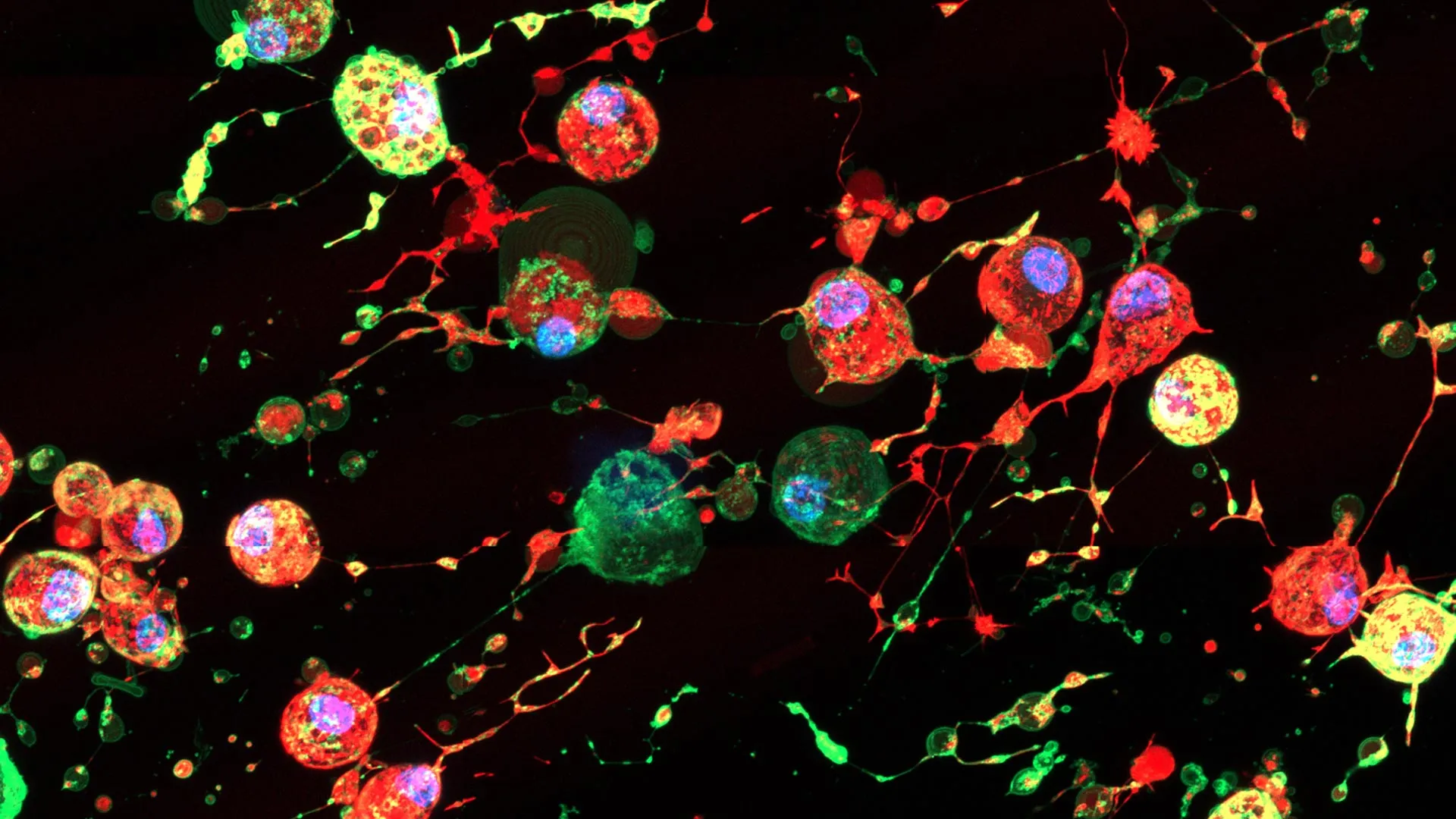
- Weizmann Institute researchers led by Dr. Tslil Braun in Prof. Eli Arama's lab exposed fruit fly larvae to ionizing radiation and tracked cells that activated the initiator caspase but survived, naming them DARE cells; these survivors multiplied and replenished nearly half of damaged epithelial tissue within 48 hours, according to the Nature Communications study.
- A molecular motor protein tethers the initiator caspase to the cell membrane inside DARE cells, blocking executioner caspases from completing apoptosis; silencing the motor protein restored normal cell death and impaired regeneration, and prior work has linked overactivation of the same protein to cancerous tumor growth.
- DARE cell descendants were seven times more resistant to cell death than cells in tissue that had never been irradiated, and a second radiation dose halved overall cell death — with most dying cells now coming from a separate 'NARE' population whose initiator caspase was never activated.
- Dying neighboring cells send the signals that activate DARE cells, while DARE cells secrete growth-promoting signals to NARE cells and NARE cells send inhibitory signals back, forming a negative-feedback loop that limits runaway proliferation during regeneration.
- Removing DARE cells from the system abolished compensatory proliferation entirely even though NARE cells remained, and dying-cell signals were required to trigger the regenerative burst — establishing DARE cells as the indispensable drivers of the response first documented in irradiated fly larvae in the 1970s.
Why it matters: Cancer radiation therapy works by pushing tumor cells into apoptosis, and the study gives a concrete molecular reason (a tethered initiator caspase and 7x inherited resistance) why some epithelial tumors re-emerge more aggressively after treatment — the same 'cheat death' machinery that heals healthy tissue can be hijacked by cancer, pointing drug developers toward the motor protein as a dual-use target for both wound healing and preventing recurrence.
Ask SkimNews